

 Apple Podcasts
 PocketCasts
 Overcast
 Spotify
 Podcast Addict
 Amazon Music
 iHeartRadio
 PlayerFM
 TuneIn
 Audible
 Castbox
 Podchaser
 Goodpods
 Pandora
 Audacy
 Deezer
 Spreaker
 Stop Selling Tools, Sell Outcomes (EP 992)
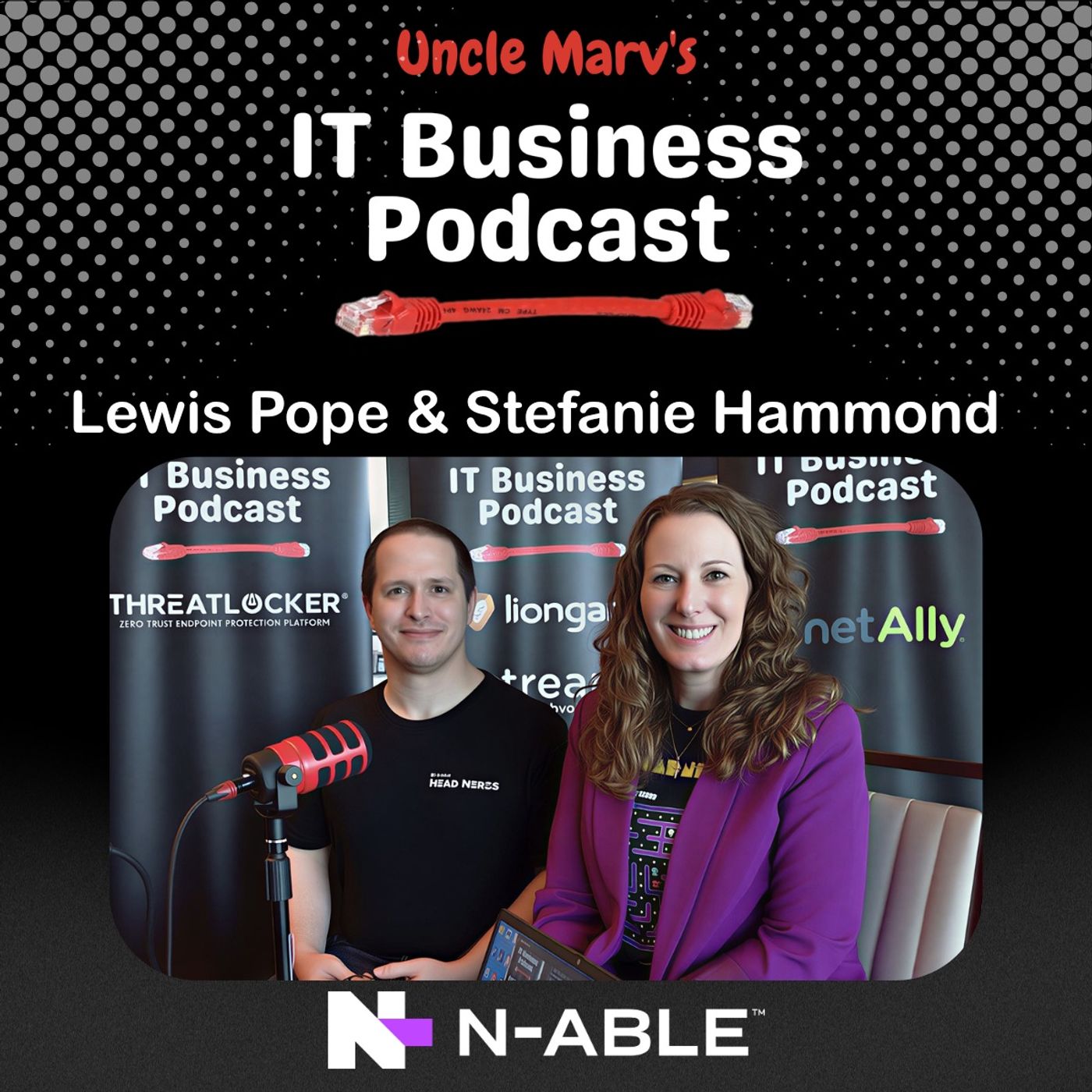
Lewis Pope and Stephanie Hammond from the N‑able Head Nerds team join me live at Empower in Fort Lauderdale to talk about shifting from selling tools to leading with business resilience, governance, and real executive conversations your clients actually care about. We dig into CMMC, compliance, EBRs, and why MSPs need to stop hiding behind tech jargon and start stepping up as advisors.
I sat down with Lewis and Steph from the N‑able Head Nerds crew to unpack what’s really changing in the MSP game: your clients don’t want another tool, they want outcomes and business resilience. We get into the shift from “cybersecurity” as a tired buzzword to a more powerful story around keeping doors open, maintaining revenue, and helping business owners survive their worst day without getting lost in the weeds of MDR, UEM, or whatever the latest acronym is.
We also talk through CMMC, governance, and compliance as real revenue opportunities instead of scary alphabet soup. Lewis shares how he’s building executive‑level tabletop exercises and resiliency pulse checks, while Steph walks through practical ways MSPs can package services, improve their websites, and run profitable executive business reviews without immediately throwing money at another tool. We close by talking about why events like Empower matter so much for MSPs who actually want to grow and not stay stuck in a vacuum.
Chapters
- 00:00 Cold open and conference setup
- 01:15 Introducing the N‑able Head Nerds
- 05:20 What the Head Nerds actually do for MSPs
- 07:40 Training, bootcamps, and CMMC‑ready N‑central
- 10:45 Stop selling tools, start selling outcomes
- 12:35 Building a “resilience‑ready” service program
- 16:00 Governance, GRC, and business resiliency table‑top exercises
- 19:15 Over‑investing in tools vs under‑investing in process and soft skills
- 22:20 Spreadsheets, EBRs, and practical MSP growth tactics
- 26:35 Final takeaways: embracing governance and getting out to peer events
Guests
- Lewis Pope, N‑Able (Head Nerd): https://www.linkedin.com/in/thesecuritypope/
- Stephanie Hammond, N-Able: (Head Nerd): https://www.linkedin.com/in/stefanie-hammond/
Shout-outs
- Mike Adler: https://www.linkedin.com/in/mikeadlercto/
- Laura DeBoer, Company: N‑able (GVP of Product) – LinkedIn:
- Craig Fisher: https://www.linkedin.com/in/craigfisher23/
Companies / Vendors / Products Mentioned
- N‑able: https://www.n-able.com
- N‑able Empower Conference): https://www.n-able.com/empower
- Technica Solutions: https://technicasolutions.com
=== Connect with Uncle Marv
🌐 Website: https://www.itbusinesspodcast.com/
🎙 Host: Marvin Bee
🛒 Uncle Marv’s Amazon Store (gear & tools I recommend): https://amzn.to/3EiyKoZ
☕ Support the show: https://ko-fi.com/itbusinesspodcast
If you found value in this episode, share it with another MSP, IT provider, or tech entrepreneur. Your support helps keep practical, no-nonsense IT business conversations coming every week.
[0:13] Hello, friends. Uncle Marv here with another episode of the IT Business Podcast, the show for IT professionals and managed service providers,
[0:21] where we help you run your business better, smarter, and faster. And I'm doing another interview here live from Empower 26 in my home state, but it's also my home city of Fort Lauderdale, Florida. I drove 15 minutes here, folks, to get over here and get these interviews. And right now I am joined by two of the head nerds, Lewis Pope and Stephanie Hammond. And we are going to ask some really interesting questions now. Lewis, Stephanie, welcome to the show. Thank you for having us. Pleasure to be here. You look really nervous.
[0:58] No, no. We do this quite a bit. But yeah, normally we're given some questions ahead. So it's kind of interesting to see hmm unscripted yeah well normally i get a chance to do a little pre-show chat find out meet people and stuff but no not here no not here a chance uh and it's my first time actually podcasting at a solar winds enable slash empower event so.
[1:23] I know. I just say that because I've been with it for so long. I was there in the GFI days. Oh, wow. Hound dog. Yeah. Uh-huh. So, yeah. So, my mouth messes up sometimes. Okay. But I don't censor and edit, so this is going on air. Not SolarWinds. Not affiliated. Not anymore. Yep. 21. You had your own. You did an IPO. Yeah. Everything's fantastic. And I've been asking other execs, is it time for something else? Time to buy any companies, anything? But you guys won't know that. That is above our pay grade. We are not involved in that. All right. Lewis, so you're the head nerd of cybersecurity? Security and compliance. Security and compliance? Very broad label, but it's a, well, I came up from the MSP space. So I've worked almost every aspect of that. Is it physical security? Is it on-site security? Is it access controls? Is it cybersecurity? So I've been doing a lot of that. And marrying it with compliance because, well, that is the trend and the motion of the market. That's right. I did. So I did read a little histories and I saw that you were an MSP before. What made you switch over and go to the dark side?
[2:39] Happenstance of good, good happenstance, really. I was looking for a transition and I just happened to see that at the time, oh, hey, there's a job posting for a sales engineer for the RMM platform that I've been using for the past five years. Let me give this a shot. And it was, Wonderful. And it was great. And it was really easy because, you know, I was going in and doing a presentation to current sales engineers that had only been using the product as a sales engineer for two years. So I kind of passed with flying colors and pressed Jamie Smith and a few others. And they were like, yeah, sure. Come on in. We'll take you. All right. And Stephanie, you came from a different route. You're like a banking person, right? Yes. So I always joke there's eight head nerds that are part of the team. I'm always the nerd that doesn't belong. I'm the one that doesn't fit because I'm not technical. Yes, I have a Bachelor of Business Administration degree with a specialty in personal finance was my background. And I worked at a bank for about eight years before I came to it. Listen don't feel bad my uh degree is a bachelor of administration with a minor in math.
[3:56] Wow. That's a smarty pants. So a lot of us, you know, nowadays kids, you know, start off wanting to be in tech. A lot of us back in the day ended up in tech. Fell into it. Yeah. Yeah. If you had asked me when I was, I started in ABLE when I was 28, if you had thought, okay, she graduates with basically a finance degree and she's going to spend her career in managed services and IT, I would have been like, that makes no sense.
[4:24] I do not see how that is going to lead me there. But yeah, it's been interesting. All right. So let's go ahead and get a little bit of Enable talking here. Let me first start with the concept of the head nerds. Now, I understand the titles kind of rolled around a bit, but officially it's been around, what, five, six years? I think we're like five and a half. Okay. We had our five-year anniversary last year. Okay. It's a total of about 145 years of combined experience on the team between us. Yeah. Because each of us have been somewhere around the 15 to 25 year mark in IT or in the MSP space in some way, shape, or form.
[5:03] So it's a great title. Did you guys... You think so? Was it something that you embraced or something that you fought for? I will fight to the death to maintain it and keep it. Okay. It is, I mean, I was a child of the 80s, or at least the last half of the 80s, and I grew up watching Revenge of the Nerds like moral role models. Ding, ding, ding, ding, ding, ding, ding, ding, ding.
[5:29] Why are you laughing at that? No, because I watched those movies. Um, I, I am still embracing, and I say this very tongue in cheek, I'm still embracing the head nerd title. The fact that, you know, that's what my business card says that I'm head nerd. And that's what I, my kids get a joke out of it. Um, I know when I first came into the role, I asked like, do I have to be called a head nerd? Like I just, but it's something that I now wear as a badge of honor. I love being part of the team and, uh, I just, yeah. So I'm, I'm growing. So how does it feel to be a head nerd, even though you didn't grow up as a nerd, you didn't start out in tech, like a lot of nerds? And I'm still not technical. That's why I joke that I'm the one that doesn't fit, because I'm all about sales and marketing. I'm the one that helps take all of the products that my colleagues talk about from a UEM, from a CO, from an MDR security perspective. And I basically teach our MSPs, how do you package it up? How do you price it? How do you go out and market and sell it so you can make money off of it? So if anything...
[6:37] If I'm going to say I'm a nerd about something, one of the things that I started last year was an MSP sales and marketing book club because I love reading. I love learning. So I am now geeking out on sales and marketing books. And I cannot wait to have like my next sales and marketing book club meeting so we can talk about the latest marketing book or sales book bestseller. Okay, go ahead. And Stephanie always says she's the least technical of the nerds, but she's probably actually second to me as far as compliance knowledge goes. Really? Yeah. That's because I take what's in Lewis's head. There's a lot of great stuff in there, but sometimes Lewis will talk and it's way up here. And I like to think I can speak Lewis’s and I can kind of bring it down. So you're translating for everyone else. I think so. I have to rely on her a lot to say, you know what, we need to bring it down to a different level for a different audience. Yes. Very interesting. Now, let me ask this. So for people outside of the Enable ecosystem, they hear about the Head Nerds and they think, oh, it's just a goofy title that
[7:38] we came up with for this sphere of leaders and stuff. But Head Nerds is actually a program. So there are workshops and education tracks and all of that. Can you guys describe that for people that are listeners on my show that have no idea what that means.
[7:58] So there is a lot of educational content because what we are first and foremost almost exclusively is education and advocacy. Now we're filling that role internally, externally at multiple different levels, but one of those is going to be the technical training boot camps that we offer. Those are hands-on. You're going to be in the platforms with us guided through how you use the platforms to achieve your operational outcomes. It's not just here's what a button does. It's why are you going to do this? How is it going to impact your operations? How is this going to be part of why your business can scale, why your business can take on new challenges? So there's a ton of that, but there's also the more one-on-one education that we, And I know quite a bit of my conversations for the past few months have been centered around CMMC. We now have our CMMC ready version of N-Central available. And I have a lot of MSPs with those smaller customers that are sub primes, contractors, and helping them get through that evaluation of, you know, should I be tackling CMMC? Should I not? Is this something I just need to tell this client? Sorry, you know, you should have been talking to me about this a year ago and your renewal for your federal contracts coming up in two months. I can't get you there that fast.
[9:25] So there's a lot of the technical, the business, operational cybersecurity compliances. We can find ourselves educating on a lot of different things at any given point in time. And we're given the latitude to be able to do that. Yeah, we are. We're given a lot, like our mandate is we each have our own individual role, but within that mandate, yeah, we are just whatever is needed to help the MSP improve their business, grow their business, we are the team to kind of help them do that. Okay. And we also get to turn that internally as well. Yeah. Because not only are we advising and helping externally. For enablement, for internal N-Ableits as well. Yeah, because we are out there having those frontline conversations with our customers, with MSPs. We hear the pains, we hear the impacts, we know what's happening, and we get to bring that back in and have conversations with product managers, with other internal decision makers so that we can, we've got our finger on the pulse of a lot of what's happening with our MSP customer base. And we are about vital feedback loop for what we do and how we, what we do at Enable affects and impacts the MSP base. A lot of education in recent years has been developed.
[10:47] From other vendors, I'm going to start there, has been designed around helping MSPs learn how to take their tools, their stack, how to sell it to their end-user clients. We're now trying to figure out how to, you know, change that conversation because
[11:04] customers don't want to be sold a tool. They want to be sold a solution. Oh, and the, okay, what nerve did I hit there? That is a big, big chunk of my masterclasses, my bootcamps, my sales and marketing book club is to have MSP stop talking tech and start talking outcomes. And John talked about that explicitly as part of his keynote this morning, Adler, Mike Adler, our CTO, but he has another letter in there, CEO.
[11:39] Chief Technology and Product Officer talked about that in his keynote.
[11:43] I get those questions all the time. Steph, I just bought MDR. How do I sell it to my team? And I got that question today in one of my sessions. And we have to stop selling tech. We have to stop selling tools because as a non-technical business owner, which the majority, I'm not talking co-managed, I'm carving out co-managed, it's an entirely different conversation. But for the traditional managed services customer type, I don't care what your tool is. Really, I care about the outcomes. I care about what you're going to do for my business. And so one of the things that I'm passionate about, and I talked about this in my marketing workshop yesterday, when I go to your website and I'm seeing 15 bullet points of all the technical services that you offer, the technical products that you offer, as a prospect, I don't know what I need. I don't know what I don't know. So I come to your website and I see 15 different bullet points. You're leaving it up to me to have to decide what I need to do to fix my problem.
[12:41] MSPs are natural problem solvers. They are fixers, but they're not the best at communications, I find. Like when you look at their websites, you look at their marketing material. And so I'm a big proponent of you package up your services. I'm about to do a bootcamp series on building a resilience ready program. When you go and market a resilience-ready program to a non-technical business owner, I kind of get the gist of what you're saying there. The MSP's goal for that customer is keep the doors open, keep the revenue flowing, prepare them for the worst-case scenario that can happen.
[13:16] You do not want, as a business owner, the revenue to stop. You don't want your employees to become unproductive.
[13:21] If these are concerns for you and your MSP is saying, hey, I have a resilience ready program that could help us address with the worst day of your life, because that's really what MSPs should be striving for. Those are the conversations. I want to help you survive and thrive in the worst day of your life. Keep the revenue going.
[13:38] We're going to do that with my resilience ready program. Right away, I kind of understand that. and I don't need to know everything that goes into that resilience ready program, but I understand what you're trying to accomplish with that. That is going to make it stand out. If I'm comparing, you know, three different websites and these two websites are giving me 15 bullet points of the different things that they do, I don't know what that means. Yeah, but here's the question. I'm going to stop you real quick to say that most of the time we teach that by saying, well, we have this tool that'll fill this gap. So how did, how did they make the switch? Because I mean, I hear you. I have talked to MSPs all the time. I've talked to vendors all the time and we're still stuck with, yeah, we want to get you cyber ready. We want to clean up your cyber hygiene. We're going to do it with this tool. Yeah. And so, um, and I don't know if this is a popular, actually I said it in front of Laura and she didn't say anything. Laura DeBoer, um, G, G, uh, GVP of product. But I feel from a conversation standpoint for MSPs with their customers, cybersecurity is kind of tired. We've been talking about cyber for a few years now. The message is business resilience. The message is keeping the doors open. The message is how do we keep business going for you?
[14:53] And there's going to be a series of tools that you need to include. There's preventative tools that you need to do. Something might happen. So there's going to be a set of tools. So if something happens, time of the essence, we've got to stop that threat. We've got to neutralize that threat because we can't allow that threat to proliferate within the environment. But then worst case scenario happens, we have the data resilience. We're going to get the data back so you can get back to work.
[15:18] Again, as a non-technical business owner, I don't need to know what all of those pieces are. Because once you introduce a tool, that signifies to the business owner, oh, they want to charge me more money. Of course. MSPs that sell on tools, the business owner is thinking, oh, here's another thing. They're just trying to sell me. The nice thing, if you can kind of bundle up your services into a package and you just sell it as a package, you are stopping the competition on pricing. You're stopping the competition on tool sets because you can't compare my Resilience Ready Package to another MSP because they're not talking about resilience. Oh, but some of them can now because they've heard the tools. They know what's out there.
[16:00] Our clients are getting younger, but they're also getting smarter. And now they've got this thing called AI where they'll go out and say, tell me what I need to protect my business. Yes. My nephew said. Oh, yeah. It is the current generation's version of my nephew said that we don't need to do this. He can take care of it. Well, he can cloud code now and do the tools and not use you as an MSP. Right. And good luck when it messes up. Of course.
[16:32] And that's part of the changing story, though, is that's fine. That's great. You can cut corners that way. But then you're completely avoiding, and you as an MSP, I think this is something MSPs need to get a lot more comfortable with, is you have to transition to business resiliency story. You need to transition to the GRC play. You need to transition to the reason why I am advocating and advising you to do these things is because you, hopefully, you've been able to have a conversation with a client and a prospect and help them self-qualify what they need. Don't tell them what they need. Don't sell them what they need. Work through it as an advisory step first. I'm a very big proponent of one of the things I'll be launching and making available here at Empower this year is a business resiliency tabletop series, this business resiliency pulse check. And it's meant to be a, instead of a, um, a security and an operations focused tabletop exercise, which they're great. They're wonderful. I love them. I'd advocate every single MSP needs to be doing them internally, but you need an executive focused tabletop solution and program. And that's kind of what I'm building out is as a deliverable service line, tabletop exercises that are themed and targeted towards the executive level.
[17:57] You don't really need to get down in the technical weeds with them because, again, like Steph says, they don't need to know the tools. They don't need to know how you're making the sausage. They just want the tasty sausage.
[18:11] And it's like a 60-document stack of a bunch of things. It's boring. You have to sit there and read it, but it's if you're going to do it, if you're going to break through the noise, if you are going to be able to come through this from a different angle. and tell a different story. And I feel like there's, you know, everything runs in cycles. And I think MSPs need to look back a little bit further to where the roots of it were in even past the 2000s, back into the 80s and 90s. It was business advisory. It wasn't, I provide you with computers. It was, I'm solving a business problem. I'm going to be your trusted advisor. Right. And I have to know and understand almost the entirety of your business before I sell you this $2,000 beige box.
[19:05] Because back in, that was a very significant investment. It wasn't just everybody needs one. It's a, I had to make a very concrete reason and have a very good story why I need you to invest this money.
[19:16] And I think that has, we have to bring a little bit of that back. We've got to come back, yeah. Okay. So let me ask that, since you said the word investing. I had a question rolling around in my head where are we over-investing or under-investing when it comes to this cybersecurity landscape that we're in, you know, even if we, you know, include AI, we're still stuck heavy in our stack world. And we've got investments in our tools and our contracts and stuff. So I imagine that you guys have had conversations with people about how to balance that out. So do you guys have an idea of where, you know, we as MSPs are either over-investing or under-investing in how we deal with our customers? I think for Steph, I'd like to hear you on this one because I've heard you explain it before, is the trying to run before you can walk, before you can crawl when it comes to your marketing budget and what you're trying to do with marketing. Yeah, kind of what I was thinking with that. And this question actually came up in my session I just completed on how to conduct profitable executive business reviews. I don't call them quarterly business reviews. I call them executive business reviews.
[20:28] And even when I talk about, you know, how to do the sales process, I'm a big advocate of doing a pre-sales cyber assessment with all of your customers. You could easily go out and buy tools to do your QBRs. You can buy a tool to do your pre-sales cyber assessment. But I teach that, again, I guess going on your, you know, walk before you can run.
[20:49] The question came up with my EBRs, oh, what tools should we use to deliver EBRs? And if you're not doing EBRs today and you don't have a process or a structure around EBRs, you don't have experience with that, maybe let's work on figuring out the plan and figuring out the process and figuring how you're going to structure it and figure out how you're going to implement it and have those conversations. Get some experience from that first before you run out and go buy a tool. Because as one of my panelists, Craig Fisher from Technica Solutions said.
[21:21] You know, he has an old school process using a Excel spreadsheet. He goes, this is working extremely well for me. I am building so much pipeline just using my Excel template. I guess I could go buy a tool to help me do my EBRs, but then I'm changing my EBR structure to match a tool because I don't know any better. Versus now I know what works for me for my EBR And unless I found a tool that can map to what is already not working for me, then maybe I'll look at it. So I think that's a good point is if you don't have experience, and I'm going to keep using the old school way, like without bringing in the tool, if you don't fundamentally understand what you're trying to achieve as the outcome, investing in tools is a waste of money. So I think with the run before you are. Exactly. It's the tool is not going to replace, you know, like a little bit for the tabletop exercises and conducting them.
[22:21] A tool is not going to replace soft skills. But that's what we're being told still.
[22:27] We're also being told, OK, you mentioned it. Well, not me. But I'm talking about what's being said out in the channel still. I mean, it's, listen, we got how many vendors in there and half of those vendors, I'll put my neck out and say half of those vendors are going to say, buy this tool, that'll take care of your problem because they'll say you can't, you can't scale with it to sell spreadsheets. I don't know. I think Craig would tell you differently. He's doing quite, quite well with my little spreadsheet that I created, and he uses it. It's your spreadsheet? It's my spreadsheet. Oh, I need to see this spreadsheet. It's very basic. And there is the obvious difference between we're having the business and the sales motion conversation, and there's absolutely, I still believe, there is absolutely still the place and the time for the soft skills, the personal touch, the interactions, the manual way of doing things. They still can yield results if it matches what you're trying to do. But, of course, whenever we get into cyber and everything else and the AI, genic AI use, machine learning, hard data science rules, and all of those other things that provide the means by which we scale and accelerate, oh, absolutely. You're not replacing any of that with a, I'm going to have somebody sit down on a Friday afternoon and read server system logs like we used to do 25 years ago. That doesn't fly no more. Please, I am not. I'm tired of system logs.
[23:55] Tired, tired, tired. All right, we've got a few minutes because I know we've got a hard stop here. I'm going to go way off track here, so I hope you're ready for it. Carolina? Yes, North Carolina. And Canada. Good. How in the world are you two, like, translating for each other?
[24:18] I'm holding back a little bit, actually. You're holding back. Hold on a second. Let me loosen it up a little bit.
[24:25] My natural resting tongue is actually a little bit more closer to this, but I spent a lot of time on multiple different southeast states over the years. Okay. So I got a lot of influence. Hang on. Let me now see if I can pinpoint it even more. So, because I grew up, I didn't grow up. I went to grad school in Raleigh. Okay. But you're west, right? Right. We're talking. No, I am. I'm out of the Piedmont area, but I'm out of a little bit south of the Piedmont area. OK. I actually grew up in between Raleigh and Fayetteville. Fayetteville. That's OK. That was what I was thinking. So you're probably hearing a little bit of that influence of Fayetteville, Brunswick, a little bit of that. OK. Yeah. I was going to say Cary for some reason. But I mean, I'm not nowadays. I don't live too far from Cary, North Carolina. but born and raised on a dirt road in between a hog farm and a goat farm in the woods on a dirt road. Step one. Do you have these conversations often? No, but I do think it's interesting because I've seen Louis present so many times over the years and how he is does a great job of reeling it in. And the professional voice comes out when he's on stage. And yeah, when he lets loose, it is hilarious. But it's also fun to see him. Oh, he's being professional Louis today.
[25:49] And you you're trying to hide that Canadian accent. Well, it's good on you. But I actually grew up right on the border. Well, I still live there between Michigan and Canada. So there's a river that separates us. And so growing up and still all my TV, all my radio, you know, we're Detroit Lions fans, we're Detroit Tiger fans, Red Wings fans, Pistons fans. And so we throw up watching and listening to Detroit television. And so I think there's some, I'm not pure Canadians. I think there's some of that influence coming through. But I do have people say, yeah, well, you're trying to hide your Canadian. Yeah. Yeah. Gotcha. Didn't think I noticed, did you? Yeah. Very good.
[26:35] All right. So just one last thing each. If there's one thing you would like for people to take away from this conference and, you know, into 2026, what would it be?
[26:49] I think it is do not be scared of governance. Do not be scared of compliance because those two things are very important. And if you can talk about them the right way, if you can position them the right way, back to what I said earlier, you can start setting up conversations and interactions that help your clients and your prospects self-qualify. And you no longer have to sell them a solution for a problem they don't know they have. You get them to tell you what the problems are, them verbalize it as something they need to take care of because it is a business impact. It is a liability exposure item. It is a, I do not want to be the person that is accountable and sitting across the table from somebody at a Kiwanis meeting trying to explain to this other company in town why one of my people sent them a phishing email and they got ransomware. Mm-hmm. Steph? I'd have to say, very different from what Lewis is saying, but I agree with everything that he said.
[27:54] I love Empowers because I love when MSPs can come together and actually share ideas and share their problems and have another MSP say, I've experienced that, this is what we've done. And the MSPs that aren't out there networking, that aren't out there attending MSP industry events, that aren't out there in peer networks because they're afraid that someone's going to steal their secret sauce, that's holding you back. Being in an environment like Empower, we have 800 attendees here this year. It's a sold-out event. All the 10 years we've been coming to Empower’ s and different capacities. Well, I've been coming for 10 years, different capacities. But we've never had a sold-out event. And I love seeing the MSPs coming here, talking, engaging, learning, asking questions like our, we do a lot of education, but our sessions are really peer led. We're moderators. We bring up, you know, the MSPs that we feel have done a really good job on the subject that we're talking about. And they're up there freely sharing their knowledge, their expertise, their guidance, answering questions. The session's over, they're answering questions in the hall. That is where MSPs if you're truly you want to grow your business you want to learn the right way to grow your business you can't grow your business in a vacuum you have to be out here with, people and with other MSPs who are also in the trenches. All right. Great words. And we will end on that. And I will say thank you guys very much. Thank you.
[29:24] To the handlers off to the side. So just so you know, I've been a part of the Enable family for a while. I've wanted to get Head Nerds on here before. I'm glad we finally did this time. So we'll have to do this again because I... It's been a pleasure. I think you guys are holding back on me. And I got some other questions for you.
[29:43] For next time. All right. That's going to do it, folks, here at Empower in Fort Lauderdale, Florida. You know what? If you guys want to sell out more conferences, just keep coming back to Fort Lauderdale. I think that has something to do with it. You know what? It has been very lovely down here. It's been nice. As a Canadian, we're not seeing this yet, so it's been lovely being here this week. We're here all year, so. All right, folks, that's going to do it. We'll be back with more from Empower. We'll see you soon.
Head Nerd
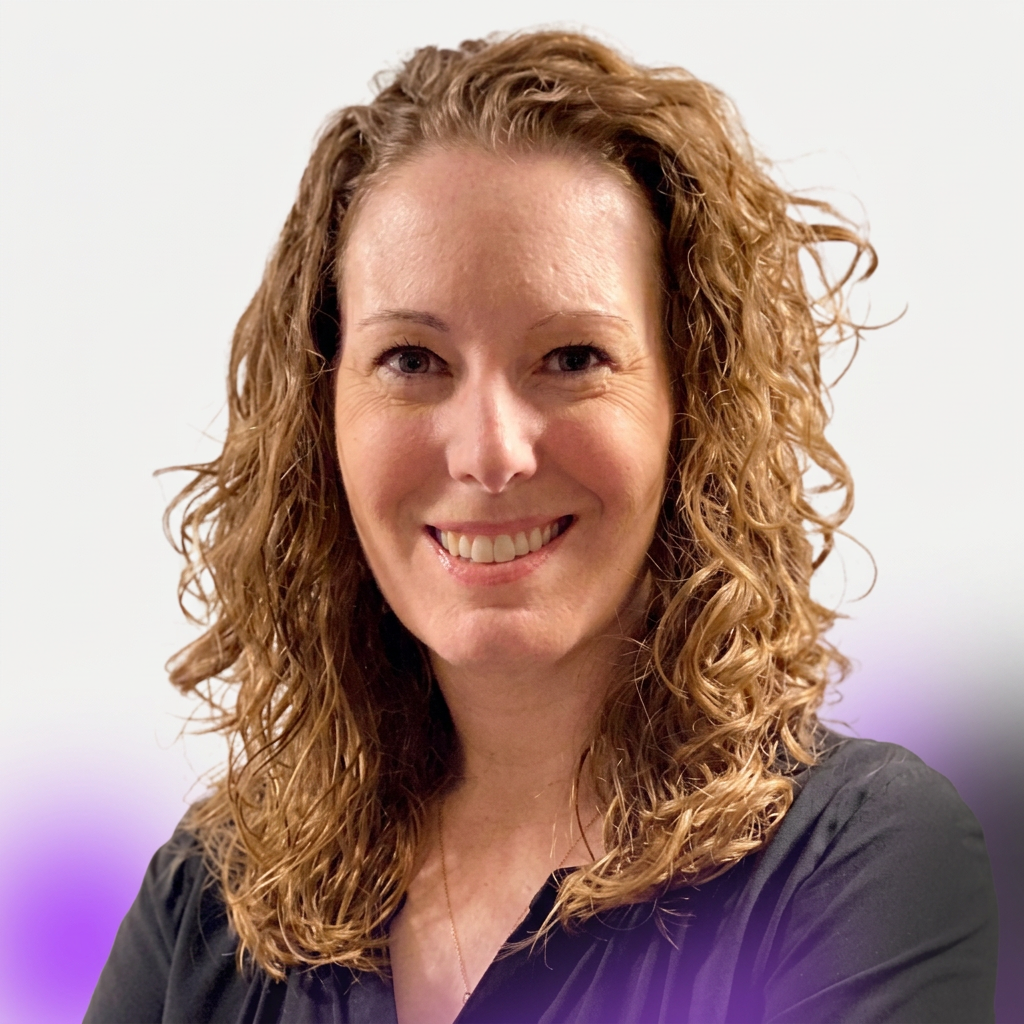
Stefanie Hammond is the Sales and Marketing Head Nerd at N‑able, where she helps growth‑minded MSPs evolve their businesses through practical, real‑world sales and marketing strategies. With more than 20 years in the MSP and channel space and nearly two decades at N‑able, she’s known for turning complex security and service offerings into clear, compelling stories that resonate with business owners. Stefanie leads partner trainings, digital playbooks, and Head Nerd programs focused on building, pricing, and selling bundled security services that drive profitability and long‑term client relationships. She has been recognized multiple times by CRN as a Channel Chief and Women of the Channel Power 100 honoree for her leadership and impact on the IT services community.
Head Nerd
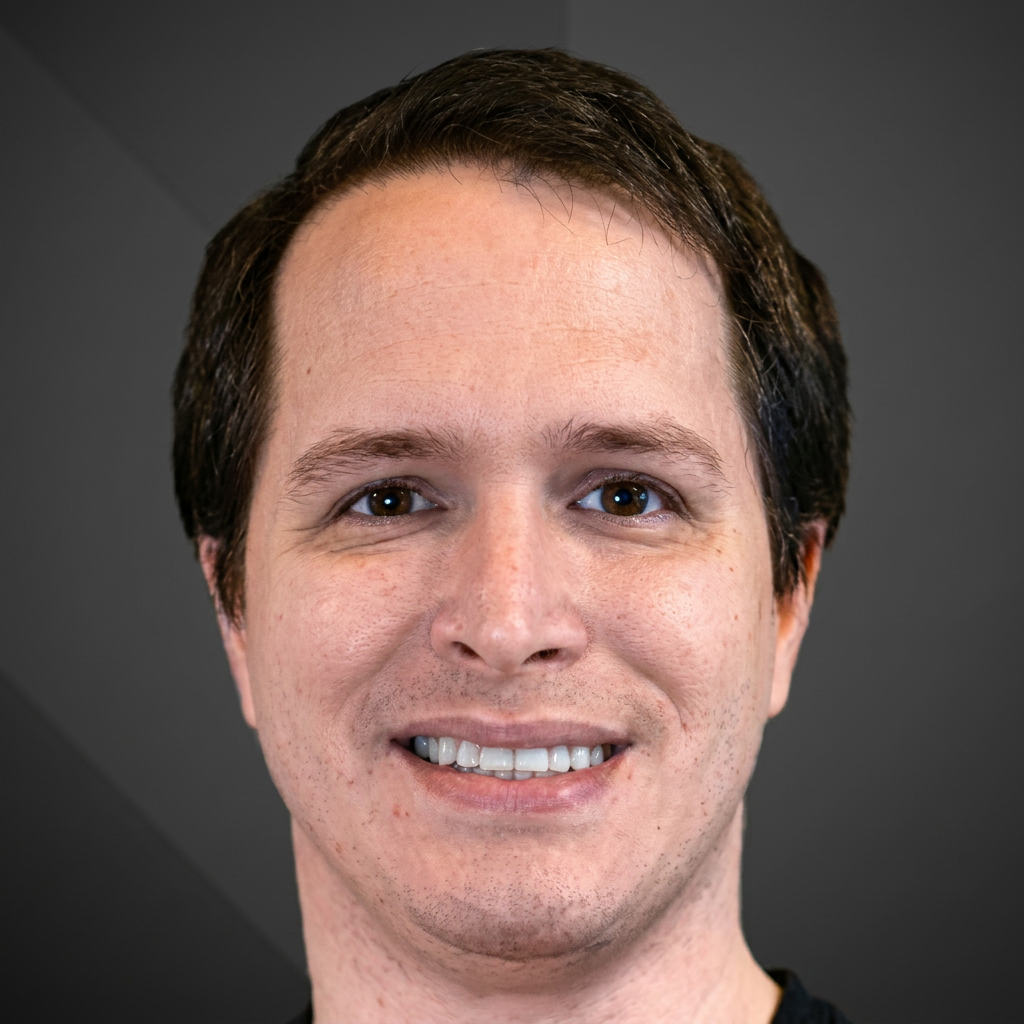
Lewis Pope is the Head Security Nerd at N‑able, where he helps MSPs mature their cybersecurity posture and turn security from a reactive fire drill into a repeatable, profitable service. With years spent in the MSP trenches as a service manager and system/network administrator before moving to the vendor side, he brings a rare mix of practical frontline experience and big‑picture strategy to every conversation.
At N‑able, Lewis leads enablement, training, and “Head Nerd” programs focused on security operations, incident response, and building security‑first services that actually work for small and mid-sized providers. Known online as @cybersec_nerd, he’s a CISSP‑certified practitioner, (self‑proclaimed bad) movie buff, and dark‑mode evangelist who makes complex cyber topics accessible for busy IT business owners.


