


 Apple Podcasts
 PocketCasts
 Overcast
 Spotify
 Podcast Addict
 Amazon Music
 iHeartRadio
 PlayerFM
 TuneIn
 Audible
 Castbox
 Podchaser
 Goodpods
 Pandora
 Audacy
 Deezer
 Spreaker
 Facing Fear in Business (EP 1042)
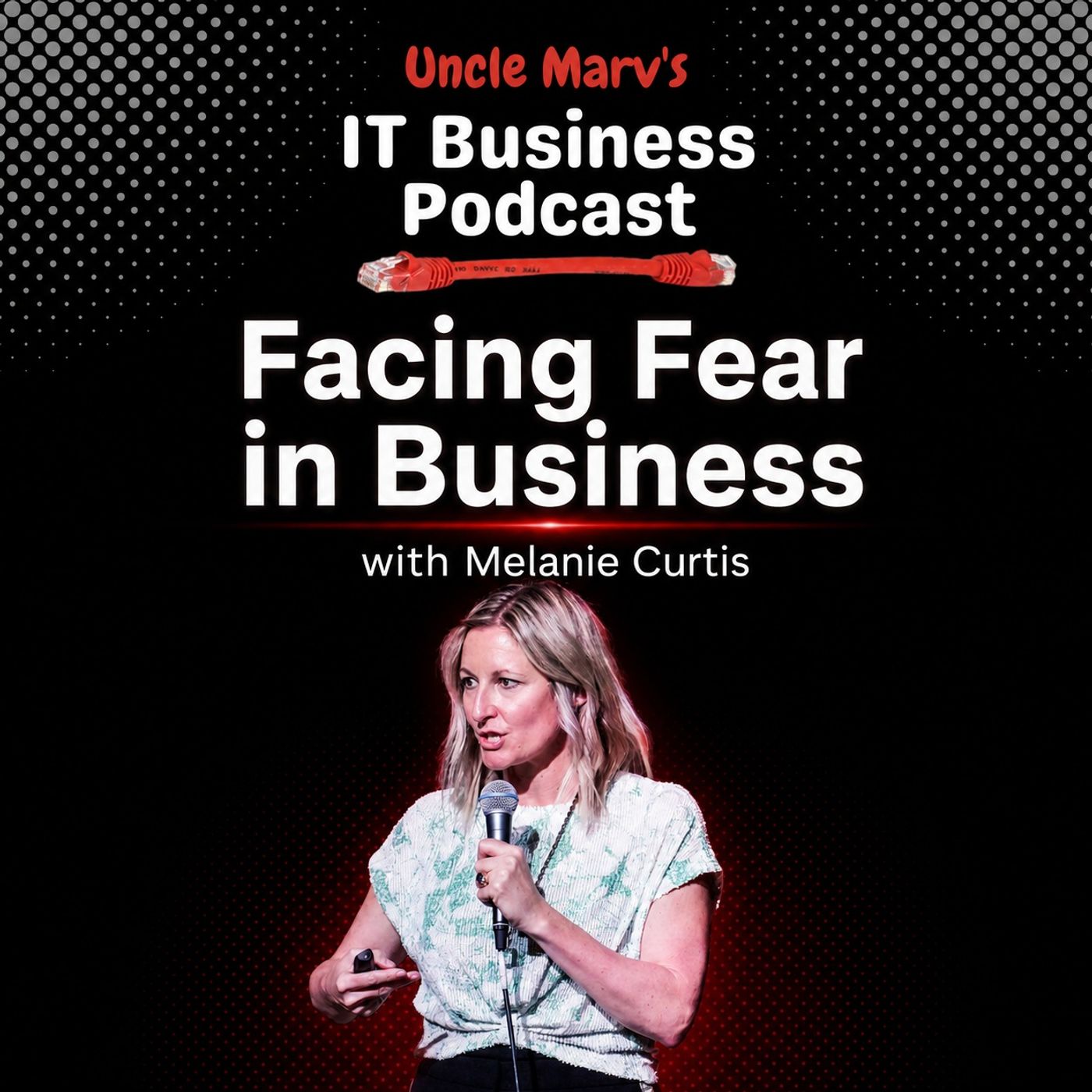
Melanie Curtis and I dig into how her world record skydiving career translates directly into how we handle risk, fear, and growth in our IT businesses. We talk about moving on from a “safe” job, planning big transitions, and why lasting MSP success comes from discipline, discomfort, and years of consistent work.
Melanie Curtis joins me to unpack how skydiving, world records, and adversity actually map to client issues, cash flow stress, and growth decisions inside an MSP. We explore smart risk‑taking, realistic timelines for “overnight” success, and how to build an IT business that matches the life you want instead of someone else’s revenue goals.
Melanie explains why fear around leaving a steady paycheck feels like mortal danger, and why that reaction is normal for MSP owners whose livelihood supports families, staff, and clients. She shares how she spent eight to ten months saving money, paying off her car, and pitching a brand‑new role at her drop zone so she could move into skydiving with a safety net instead of a blind leap.
=== Chapters
- 00:25 Welcome Back, Melanie Curtis
- 06:38 Leaving Banking Behind
- 10:59 Working Through Fear
- 16:12 Chasing Bigger Goals
- 24:07 Success Takes Time
- 26:10 Redefining Business Success
- 28:45 Books, Coaching, and Resources
=== Guest: Melanie Curtis, Melanie Curtis Coaching
- Website: https://www.melaniecurtis.com
- LinkedIn: https://www.linkedin.com/in/melaniecurtis11/
=== Companies / Vendors / Products / Books
- ACES Conference: https://acesconf.com
- How to Fly Book: https://amzn.to/4vk3A9T
- How to Fly Challenge: https://go.melaniecurtis.com/howtoflychallenge
- Gratitude Challenge: https://go.melaniecurtis.com/gratitude-challenge
- Build or Rebuild Your Bucket List: https://go.melaniecurtis.com/build-your-bucket-list
- What Color Is Your Parachute?: https://amzn.to/4f0qs86
=== SPONSORS:
- Technology Partner, NetAlly: https://www.itbusinesspodcast.com/netally/
- Technology Partner: Bvoip: https://www.itbusinesspodcast.com/bvoip
- Travel Partner: TruGrid: https://www.itbusinesspodcast.com/trugrid
- Digital Partner, Designer Ready: http://itbusinesspodcast.com/designerready
=== SHOW MUSIC:
- Item Title: Upbeat & Fun Sports Rock Logo
- Item URL: https://elements.envato.com/upbeat-fun-sports-rock-logo-CSR3UET
- Author Username: AlexanderRufire
- Item License Code: 7X9F52DNML
=== Connect with Uncle Marv
🌐 Website: https://www.itbusinesspodcast.com/
🎙 Host: Marvin Bee
🛒 Uncle Marv’s Amazon Store (gear & tools I recommend): https://amzn.to/3EiyKoZ
☕ Support the show: https://ko-fi.com/itbusinesspodcast
If you found value in this episode, share it with another MSP, IT provider, or tech entrepreneur. Your support helps keep practical, no-nonsense IT business conversations coming every week.
Transcript
[0:19] Hello friends, Uncle Marv here with another episode of the IT Business Podcast.
Welcome Back, Melanie Curtis
[0:25] The show for IT professionals and managed service providers where we help you run your business better, smarter, and faster. Folks, today is going to be one of those interviews where at first you're probably going to go, does this really apply to me? And the short answer is, yes, it does. My guest today, we actually met her, well, just a couple of months ago. She was at the ACES conference when I took my first and probably only trip up to Minneapolis, Minnesota. And you might remember her episode is 1007. I will put a link in the show notes because if you haven't heard that yet, you might want to hit stop, go back and check that out first, and then come here because we're not going to really recap. We're just going to get right into it. But you know her as a world record professional skydiver. She is a keynote speaker, coach. She is Melanie Curtis. Melanie, welcome back to the show.
[1:26] Yes, Uncle Marv. I'm so glad. It's time. It is time. Part two, part one, part two, part three. Let's go. Well, first of all, I want to say thank you because it was one of those things where I'm recording you. We got 20 minutes at most. I think it was 18, actually. And it's like, we are not going to get to the heart of the matter here. So I asked you about coming back. You said, absolutely, no problem. And here we are. Yes. So let me start with- It was fabulous. I'm so glad we did that because, you know, it's always hard to get everything into a short form anything, but at least it's something. You know what I mean? Like you can drop some value bombs in short form content too. I just really love getting into it. So I'm happy that we have some long form, you know, we have the long form option. Well, so I had another question I was going to start with, but let me start with this because you said that. I know that, you know, when I talk to other keynote speakers or people that are doing, even if it's just a presentation in a breakout session or something, what always ends up happening is they get bombarded.
[2:39] In between the sessions. And usually there's maybe five minutes to try to get stuff out. And then people end up having hallway conversations and stuff like that. Now, the ACES conference is a small one, so it had a little bit more flexibility. But when you were out at a lot of these events and stuff, do you have that time to actually deep dive with people after you've, you know, dropped some stuff on them? Yeah, got it. That is a great question. And the answer is, I wish I had more time. So the answer.
[3:14] In short is no. I don't have enough time to deep dive with people. What I try to do as a keynote speaker, I really try to, as much as I can, attend the events that I am hired for. That way, if I'm doing an opening keynote, I really try not to run out the door for the airport. I really try to stick around so that over time and over the multitude of breaks that might happen the rest of the day or whatever, I'll be able to, have some space with some folks, get to talk to them, and get to get a little bit more deep with folks. Yeah. Okay. So that tracks because I know that most of them don't. You did. And I like that. So now let me ask you this. One of the things that, happens a lot of times at these conferences, keynote speakers are brought in, and they're not necessarily in our space. You know, they're brought in to be the motivational speaker. They're brought in because they're semi-famous or really famous. And yes, they'll drop some nuggets, but a lot of it doesn't always translate to what we do. You know, we're IT business owners, managed service providers, we're techs.
[4:33] And a lot of times it doesn't translate. You've been going to ACES for a while, and I know that you've talked to other tech companies. So let me ask you, what do you say when people ask, is your message going to translate to us? Yeah, the short answer there is that I am always a non-industry speaker, whether I'm speaking to a tech company, whether I'm speaking to a financial firm, an insurance firm or whatever, or even a, women's organization that is of an association of any industry, it's essentially.
[5:10] Being a pro skydiver, world record holder is not a thing that, you know, like that is just such a weird scenario. It is not all that I am, obviously, but it's usually the door opener to open the conversation about how do we access the far edges of our potential? How do we take risks that are strategic and smart? How do we work through fear? There's lots of stuff in the conversation around potential, taking risks, that type of thing that apply to any professional who is driven in some way. So that even applies to people who are not entrepreneurs that are really driven to get a promotion or whatever, grow in some way inside of a company. But those universal subject matters are super applicable to anyone running a business. So if somebody is running an MSP and as an entrepreneur are having to deal with client issues, cash flow, you know, marketing, wearing all the 18 million hats, having conversations with their employees, dealing with their own stress around a, week, month or something like that, losing a big client. There's a lot of feelings that come up around that stuff. So all of that stuff is very, very applicable to the tech world.
Leaving Banking Behind
[6:39] So let's go back and i didn't want to recap what we talked about but, there's still something i wanted to get a little deeper on because you made a transition this wasn't, where you started like a lot of us a lot of us didn't start in tech or if we did we didn't start out as an i.t business owner i certainly didn't i had no intention of being a tech, yeah i was a jock I was a student government president. I was going to do other stuff in the corporate world. And I ended up here. Yeah.
[7:15] You were in investment banking. And it wasn't working for you. And if I remember correctly, I don't know if we talked about this, but you knew it wasn't working. But did you, we didn't go into the moment that you realized it wasn't working. And I saw a story where you snapped at your boss. Oh, yeah.
[7:40] Yeah. I recount this often because I was a young person. So I was in my 20s and my early 20s, and I was working at an investment bank. And I had a really great boss, to be honest. He was actually really respectful and asked for my opinions and really thoughtfully included me in conversation. It was as best as you could get working in corporate America, working in finance, and being a young person who didn't really know anything, just kind of growing as a person and as a professional in this career path. What helped me and finally made me realize that I was going the wrong direction for myself was I was starting to dread going to the office.
[8:29] I would completely spend as much of my time during the day working on like skydiving event posts and like sneaking time on the internet in old skydiver blogs. Like this is a long, long time ago. So it was like blogs, you know, that don't exist anymore. Some do, some do. Blogs are still there. Yeah. Yeah. And I was, and I very clearly to your exact point, I was snapping at my boss. I was being a person that even as a 20 something, I knew was not the person I was or wanted to be. And that realization made me go.
[9:11] Well, what should I do? Like, you know, what do I like? What am I good at? Like, and I got the book, What Color Is Your Parachute? Have you ever heard of that book? I have. It's a job search book for people who don't know what it is. So it's a very, it's an old book. Kind of really quite well known if you're looking for a job and that type of thing. And so I bought that book because the word parachute was in the title. Let's just be clear. Okay. So I'm reading this book, obviously already very obsessed with skydiving as this young person. And a question in that book changed the trajectory of my life. And it's going to sound like a pretty cliche question. And the question is this, what would you do if money were no object? And for me, even at a young age, because I was so passionately involved in skydiving already, my immediate answer was well skydiving but as soon as I answered the question as soon as skydiving came out of my mouth just as immediately boom like doors of limiting thinking came in well I don't want to live in a trailer on the drop zone I don't want to eat ramen noodles for my life I don't want to I had some picture of what professional skydiving could be and, once the immediacy of the answer came to me, I started to be like.
[10:38] Well, that person is a professional skydiver and they have a home and a family and they have a life that seems like one I would like. And so it started to help me open those doors of limiting thinking around what was possible. For me, it just happened to be the path of professional skydiving.
Working Through Fear
[10:59] Okay now the thing that you kind of.
[11:04] Glossed over there was those those limiting factors those doors closing on you, that's the stage where a lot of people don't get past they see the risk you know of leaving a secure job leaving the money like you said, how do you pivot when you've already invested a ton of time there's a lot of business owners like me that we've been doing this a long time Um, I T has changed and some of us have not changed quick enough along with it. And it's like, we might want to get out. Let me ask you in terms of examining that risk.
[11:43] How would you explain how you worked through it and what would be some things that you could help some of us work through it? Yeah, great question. And I think it's very relevant to dig in there specifically. Basically, I was not and have never been a reckless person. I've always been quite like, what do I need to do? If anything, over-controlling, white-knuckling, like really wanting to know the outcome, right? Which is, of course, another version of fear, another version of, I think, wise reflection. Fear is there to keep us safe. It is there to help us. It's just that fear so often feels like mortal risk, right? Like skydiving is a good example relative to thinking about fear because there is mortal danger there. I can actually physically die. And anytime we feel fear relative to being a business owner or making some big leap into the unknown that's connected to our livelihood, right, that is very connected to survival.
[12:54] Money on the table means a roof over our head, food on the table, taking care of our families. It means some really deep things. So we think that it's not connected to this mortal risk and it.
[13:06] It isn't, but it feels like it is. Right. So the potency of it needs to be noted for people. And so to like I say that because I want people to honor when they feel that and not feel like they're failing when they feel the potency of, oh, crap. Oh, my God. Can I do this? I don't think I can do this.
When those thoughts come up, it's totally normal. So to actually share what I did is that I didn't recklessly say, wee doggies, skydiving, that's what I want to do. Let's just tell my boss tomorrow I'm going to quit and be done with it. No, no, no. I took the next like eight, ten months to think about how can I leave this situation and still be safe, as it were. I thought about how I was participating at the drop zone that I worked at that I was trained. I didn't work at it yet, but I trained there as a competitor. I coached there. So I did work there in a sense. I kind of ran and helped run events. And I recognized a gap in their business that I was uniquely positioned to fill. And so I said, I basically pitched the skydiving center that I trained at, that I was a fun jumper at. And I said, you need to hire me for this role that doesn't exist yet.
[14:34] And long story very, very short, they did. And that is how I eventually left investment banking and sort of took a chance on this dream life of being a pro skydiver.
[14:50] Very interesting. Eight to 10 months. That's a long time. Yep. I saved money. I made sure to pay. I paid off my car. Like I really used the money that I was making wisely to set myself up for making much less. Right. Because it was going to be a huge salary cut. And it was. And so I had to plan for that. Very interesting i took two weeks to plan my exam when i told my boss i was done.
[15:23] I love it but i did do you know and also once i had a plan and once i was moving towards something i knew was better for my heart and my soul and my just value set, i was less tortured in the current job. Like I was able to reframe the current job. Trust me, I didn't love going to it. I wanted to be done. Like I wanted to be out of there. But I also was like, I know this is helping me get to this thing that I never even could have thought up as possible. So that helped. You know what I mean? So a lot of times we feel so resistant to what we're currently experiencing because we are We're not working towards something that lights us up and creates life force and aliveness inside us. Okay.
Chasing Bigger Goals
[16:12] Let me ask you this this one last question to kind of reframe where we were, sure everybody identifies you as the world record skydiver, you did talk about all the preparation that went into it how you had to work together and you know, almost a hundred of you made the jump but some didn't and stuff like that yeah but can you talk about what made you want to go from, i don't want to say casuals jumper because when you left the financial world obviously you you found a career there but what made you make that jump to be in the world record level and what was the daily discipline and training that you had to go through.
[16:55] I'm laughing yes because not everyone will want to do that. And that is okay. There is nothing superior about wanting to go to the insane levels that world records require. So I just want to say that because why I'm laughing is I'm laughing at myself in the sense that I am uniquely, and not necessarily even uniquely, but people listening will identify with this or they won't, and that's
okay.
[17:32] I am one of those people that is wildly drawn to the like far edges of things. I am really only excited or interested when I am taking things really, really far. Like it excites me to set really big goals. So when I talk about goal setting and like the science behind optimal goal setting and how there's a sweet spot in our motivation. This is one of the things I discuss in my keynotes and the professional development that I offer. We talk about like, how does this even work? How do I feel motivation for whatever thing? And we have to assess where do you sort of come alive? And some people need to start and it depends on the situation, the goal, the people, the players, Lots of things go into this stuff. But like sometimes if we set our goals too low, we are bored and unmotivated. So we're not challenged, we're bored. And then if we set our goals too high, we are paralyzed and unmotivated. We like can't kind of even get started. We're just stuck and immobilized, right? Right. In between there, in these in these goals that we set for ourselves, in the scenarios that we are a part of.
[18:51] There is that sweet spot where we're like, this is like exciting because it does challenge me enough, but it's not so challenging that it doesn't paralyze me. Right. And it's not so easy that I'm like.
[19:05] I could do this on a Tuesday. That's boring. Right. So everyone's different. I tend to come alive on the further edge of challenge. I like being challenged. That's why I am really equipped for entrepreneurship, because entrepreneurship is no joke. Any listener, any MSP owner knows being a business owner is not for the faint of heart. And so there's some like badassery in that. Does that make sense? It does. And I mean, I want to agree with you when you say that not everybody's cut out to do what you did. Just like in any other activity. I grew up in sports, so I can identify with, you know, not everybody's going to be a, you know, NBA player. Not everybody's going to make it to the NFL. And a lot of those players, yes, they have natural ability, but some of those players had to do all the things nobody else wanted to do and work harder than anybody else.
[20:08] I want to get that translated because I know that you've probably had this. Go ahead. No, when you say I don't, I think anybody can do what I do. I am not special. I am not saying that people are not cut out for this. I'm saying that there are drivers in us. Like I wanted to do it so much so that, I cut out lots of other things to do it. You know what I mean? So it's choice. space. You know what I mean? I do, but I also want to say I, because here's the thing in our space and I'm sure with other industries, everybody says that, oh, it's easy to be at the top. It's easy to be, you know, a $10 million MSP, but yet a lot of us won't. Now, some of us, some of us are in this situation where we'll just accept where we are and we're okay. We have different goals. Totally. Some people say they want to do that. But don't. Correct. So what I wanted to do is kind of get into the difference of there's a lot of people that might say they're great. They might say they're phenomenal. They might say they're badass. Yep. But yet they they don't. So I wanted to ask is, do you know if there is any difference in what makes somebody go from saying I'm a badass to being a badass?
[21:33] I mean, it takes an insane amount of hard work and a sane amount of discipline. One of the other things that I talk about at length and in depth is what and what one of the things that holds us back from our expanded potential is our avoidance of discomfort, our unwillingness to.
[21:55] Be uncomfortable, to do the really hard things. Right. So there is if you talk about pro skydiving world record holder things that you ask, what does it look like day to day training for that? That's not a day to day thing that it is. But it's a it's a year's thing. It required me to be on competitive teams, to get in the wind tunnel and do thousands of hours flying and coaching and learning basic skills and teaching basic skills. It forced me to do countless skydives where I'm learning different exit pictures, sight pictures, levels, how to fly my body, how my limbs push air. Like there's I could go on and on and on with a bunch of weird, obscure details about skydiving that I had to learn in order to even be invited to possibly perform on the days of the world record. Do you know what I'm saying? Like it takes a lot to get there. The reason why most people won't do it is because at some point along the way, it becomes too hard and they quit.
[23:06] And so I tend to be a person who is just really willing to just.
[23:13] Persevere and and take on discomfort because I the way I think about discomfort is I extrapolate forward the benefit that only comes from doing the really, really hard thing. One of my favorite quotes is that adversity is it. I'm going to I forgot it. Like it popped right out of my head. But something basically the concept is that adversity separates. Right. That a lot of people will quit when that when it's adverse. So there's actually opportunity in adversity, meaning if you can persevere through the hard, hard thing, you are going to end up in an area where few people can hang. You know what I mean? And there are different benefits that come from that. Does that make does that make sense? It does.
Success Takes Time
[24:07] So I wanted to then ask...
[24:12] Most of us live in a world now where we think success can be instant. If we just go, if we just go viral on YouTube, we're now in this automation, you know, world AI world where all we have to do is put the right systems in place and it's going to click. And there is no, you know, thinking that it's going to take years and stuff. So how do you translate your message to us you know in the corporate world this ai world this microwave society, yeah i mean listen i always point people to oh it's the whole joke of, it took 10 years to be an overnight success right you've heard that as an entrepreneurial quote, right? 10 years to an overnight success. I could go viral. Like maybe I went, maybe I could go viral, like, I don't know, 20 years ago, onset of my coaching career. Right. And I go, maybe I put out some video and people love it and I, whatever.
[25:18] I didn't have the years of my writing and building credibility. Now, if I go viral now, you know,
that type of thing, people looking at me now, anytime they find my stuff or find a company that is helping clients and has been around since X time and is this Apple partner or whatever, the things are that MSPs need, right? That credibility is built over time and it exists and it is found when people, if you get a pop like that, then that's what actually makes it stick. That's what turns overnight successes into overnight successes is all the foundational work that that new success can actually stand on. Fair? Yeah. Yeah.
Redefining Business Success
[26:10] Sounds good. Now, let me throw a little wrench in the gears there. Love wrenches. What if people don't want to be number one or, you know, they just, they want to do okay. They, they, they don't want to suck, you know, and they may say, I just want to be the best that I can be and be okay with that, but yet they're falling short. Yeah, I love that because what better goal to have than that? Just I want to be the best I can be. And that speaks to caring about what your actual goals and desires and values in your life actually are. Right. So if you want to just make a certain amount of money that affords you, safety and ease with your family, X number of vacations a year, this feeling when you engage your clients, so it doesn't always have to be this ever escalating revenue goal. I actually think that is a recipe for.
[27:28] Stress for most folks is if they are really only focused on escalating revenue goals, they miss the humanity and the original reason why I think most people want to be entrepreneurs. For me, it's rooted in freedom, creativity, freedom, the ability to choose what I want to do when I want to do it. And then I think what can happen is we can kind of box ourselves into approaches and ways of being that are earlier in our businesses that need to evolve as we grow and evolve and our goals grow and evolve. And if those goals include, I want to maintain, I'm feeling good about this. I want to maintain, I want to treat my clients the best possible way so that they stick around. Maybe a little business development, but I don't want to stress myself out about growing 25% a year or whatever that revenue goal may be. I really feel like it's different for each business owner. And I think it's really smart to get clear on what those goals are for each person. Without that clarity, then we're basically pre-prescribed the goals of just going after more and more revenue when that may not be what is going to fulfill us.
Books, Coaching, and Resources
[28:45] All right, uh, I want to do this. I'm going to make sure that before we end off here, MelanieCurtis.com is where people need to go and look at stuff. There are tons of things they can get just on the website, you know, not only ways to work it with you, where to see you coaching, but you, first of all, I want to tell people you're an author, your big book, how to fly. Is there, Lessons from a Professional Skydiver.
[29:17] I did not go, I forgot to look at the order. That wasn't your first book, right?
[29:22] Yeah, no worries. No, no worries. I've written a few books. How to Fly is definitely the most significant published work of mine. And I have, I basically set it up so that you have the Audible book version you can get on my website. But I've also set it up where you can get what I've called the How to Fly Challenge, which is a chapter a day for 132 days where you get one of the short form chapters as well as like a weekly action prompt. Because I'm like, how can people access my coaching at a much more accessible price point? So it's been a cool thing to create for people that just through an email a day and a quick listen a day, they can get a.
[30:04] Hit of inspiration, a hit of motivation of my energy, and some coaching through just prompts that go along with that content. So anyway, thanks for bringing it up. Well, I did want to bring it up because there's a lot of stuff there. I mean, if you go to the store section, I mean, you've got a bunch of stuff there. You've got the gratitude challenge, the build or rebuild your bucket list, the how to fly book and challenge, a healing Q&A call, a lot of stuff there, folks. So for now, go there, look at her stuff. We are going to come back and do a part two and we're going to dig more into what she's doing now, speaking, coaching, and how this all translates more into what we're doing, how we can incorporate a lot of this stuff into our business, into our lives.
[30:53] Structured accountability, goal setting, the inside out change. Those are things I want to dig more into. So, Melanie, good to see you, and we'll be back pretty soon here. Part two. All right, that's going to do it, folks. Click the links, share the show, do all that stuff. We'll see you back here for part two, and until then, Holla!

Keynote Speaker. World Record Pro Skydiver. Peak Performance Coach.
Melanie Curtis is a world‑record professional skydiver, keynote speaker, and peak performance coach who helps ambitious leaders push past fear and tap into their unrealized potential. After starting her career in investment banking, she traded spreadsheets for skydives, logging more than 12,000 jumps and coaching thousands of people around the world over the last 30 years. Today she works with business owners, sales teams, and leadership groups to translate high‑stakes lessons from skydiving—risk, resilience, preparation, and courageous communication—into practical strategies for growth in work and life.


