

 Apple Podcasts
 PocketCasts
 Overcast
 Spotify
 Podcast Addict
 Amazon Music
 iHeartRadio
 PlayerFM
 TuneIn
 Audible
 Castbox
 Podchaser
 Goodpods
 Pandora
 Audacy
 Deezer
 Spreaker
 Pivoting Beyond Your Dream Job (EP 1043)
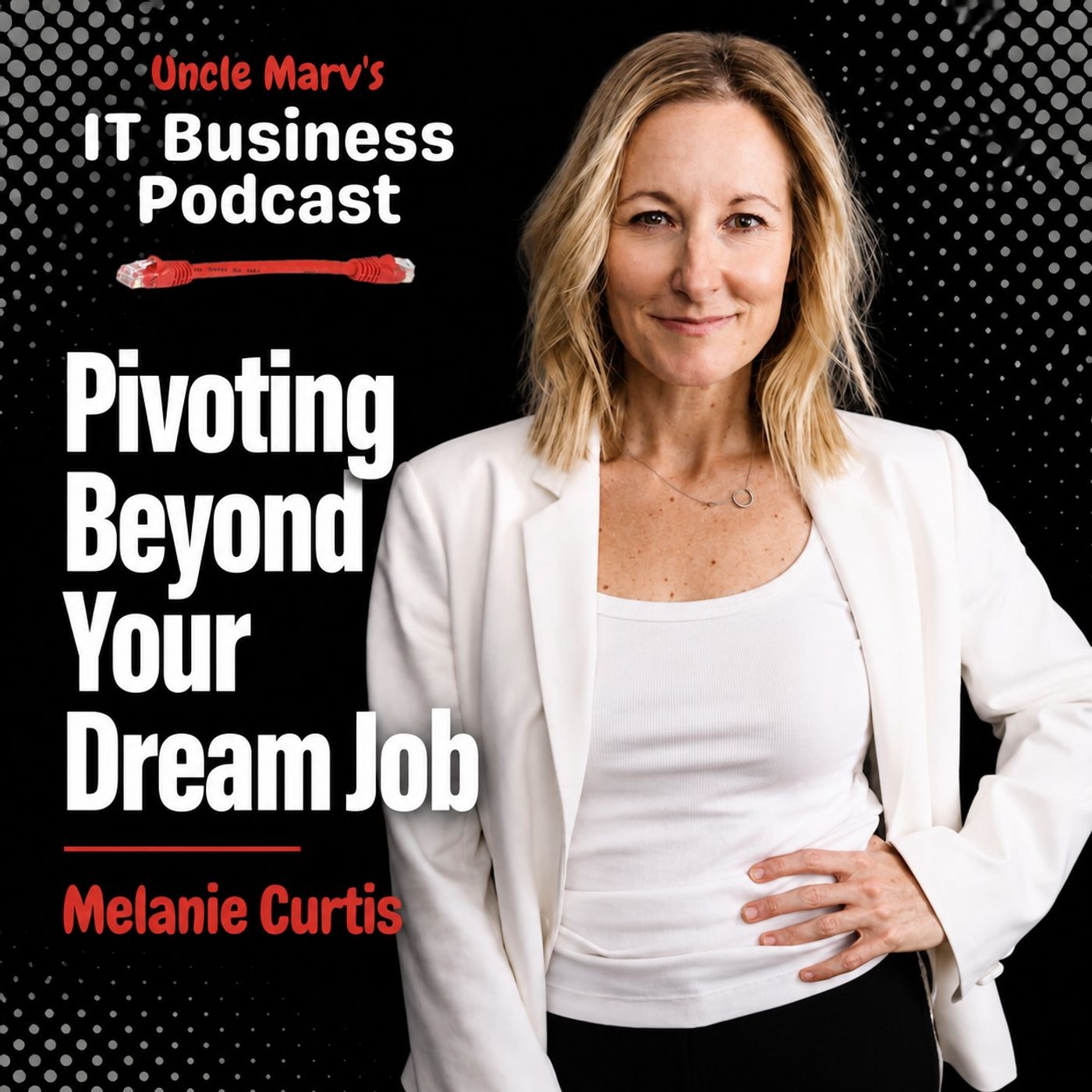
Melanie Curtis and I dig into what it really takes to pivot from a “dream job” into coaching and speaking, without sacrificing family, fun, or your sanity as a business owner.
Melanie Curtis joins me to talk about pivoting careers, building a coaching and speaking business, and choosing family, boundaries, and fun over the nonstop hustle grind.
We start with Melanie’s shift from investment banking into pro skydiving, then from skydiving into coaching, driven by a subtle realization that her “dream job” still wasn’t the whole story. She unpacks the decision to lean into life coaching when it wasn’t cool, how she navigated the fear of it being a scam, and what it took to trust that quiet sense of calling anyway.
From there, we get personal about missed flights to family events, the danger of filling your calendar with only client work, and the moment she decided she couldn’t outrun future regret. Melanie outlines how a coaching relationship starts with business problems and quickly hits deeper human patterns, why she pushes for year-long masterminds with real structure, and how she uses humor and her “comedy content creator” side to keep the pressure of entrepreneurship from boiling over. We close with her real-time experience of building a keynote speaking practice: long prospecting cycles, thousands of emails, warm intros that actually convert, and a clear stance on why discipline must sit alongside boundaries, rest, recovery, and connection if you want to stay in the game.
=== Chapters
- 00:24 Coaching Beyond Skydiving
- 06:32 Family Over Hustle
- 11:19 Coaching Deepens Personal
- 14:22 Commitment Behind Coaching
- 15:47 Peer Groups vs Masterminds
- 19:41 Fun Fuels Serious Work
- 24:48 Biggest Lesson in Pivoting
- 25:41 Speaking Becomes the Focus
- 31:02 Rejecting the Hustle Myth
- 33:06 Wrapping Up and Contacts
=== Guest: Melanie Curtis, Melanie Curtis Coaching / Speaking
- Website: https://melaniecurtis.com
- LinkedIn: https://www.linkedin.com/in/melaniecurtis11/
=== Companies / Vendors / Products / Books
- How to Fly Book: https://amzn.to/4vk3A9T
- How to Fly Challenge: https://go.melaniecurtis.com/howtoflychallenge
- Gratitude Challenge: https://go.melaniecurtis.com/gratitude-challenge
- Build or Rebuild Your Bucket List: https://go.melaniecurtis.com/build-your-bucket-list
- ACES Mastermind: https://acesmastermind.com/
- MelanieCurtis11 (Instagram handle): https://www.instagram.com/melaniecurtis11
- Spinal Tap (film): https://www.imdb.com/title/tt0088258
- Instant Teleseminar: https://instantteleseminar.com
- Zoom: https://zoom.us
=== SPONSORS:
- Technology Partner, NetAlly: https://www.itbusinesspodcast.com/netally/
- Technology Partner: Bvoip: https://www.itbusinesspodcast.com/bvoip
- Travel Partner: TruGrid: https://www.itbusinesspodcast.com/trugrid
- Digital Partner, Designer Ready: http://itbusinesspodcast.com/designerready
=== SHOW MUSIC:
- Item Title: Upbeat & Fun Sports Rock Logo
- Item URL: https://elements.envato.com/upbeat-fun-sports-rock-logo-CSR3UET
- Author Username: AlexanderRufire
- Item License Code: 7X9F52DNML
=== Connect with Uncle Marv
🌐 Website: https://www.itbusinesspodcast.com/
🎙 Host: Marvin Bee
🛒 Uncle Marv’s Amazon Store (gear & tools I recommend): https://amzn.to/3EiyKoZ
☕ Support the show: https://ko-fi.com/itbusinesspodcast
If you found value in this episode, share it with another MSP, IT provider, or tech entrepreneur. Your support helps keep practical, no-nonsense IT business conversations coming every week.
Transcript
[0:12] Uncle Marv here with another episode of the IT Business Podcast, the show for IT professionals and managed service providers where we help you run your business better, smarter, and faster.
Coaching Beyond Skydiving
[0:24] Well, ladies and gentlemen, welcome back to part two of my conversation with Melanie Curtis. If you have not listened to the first two episodes, I encourage you to go do that so that we can have this continuity with the show and you're not wondering, what are they talking about? Well, if you listen to part one and part two, you'll understand. But to introduce her, for anybody that decides to just keep on listening anyway, she is a world record pro skydiver, keynote speaker, peak performance and life coach, author. I'm going to add this in here. Comedy content creator. Melanie, welcome. That's a thing. That is a thing. For sure, we can be anything that we want, Uncle Marv. Oh, my goodness gracious. Let me ask you, when was it that you realized, I know that when you left the, investment banking world, you knew you wanted to do skydiving, but when did you realize that it could actually be the business that it is now?
[1:29] You know, I don't know if there was a moment that I realized it could be. Okay. There was a moment that I realized that skydiving, pro skydiving, wasn't going to be enough. And I'm not joking. This is a very vivid moment. I will never forget it. I was walking across the drop zone, which is the skydiving center that I worked at. And it was like this gravel driveway. And I had this just like very subtle, intuitive hit. Just like it wasn't like a Mack truck moment, like suddenly I'm changed person. It was just like, just like a like tiny little voice in the back of my head that basically, told me that that exact kind of premise that you're happy now. And I was. I was living this dream life. I was getting paid a salary to jump with my friends, to compete and train, to lead parties and dance on the dance floor. I had this very unusual job that I had created.
[2:46] And I knew somewhere in my depth of my being that it wasn't going to be enough. And so thank God I listened to that intuitive hit and I was like, well, man, like if I don't do this, like what else would I do? Like what do I like? What am I good? It just sort of sent me on this internal inquiry into sort of the unknown contemplation about what could actually possibly exist beyond this already dream job that I was living. And so that is a version of.
[3:27] The idea that we can do so much more than we ever currently think, right? My mind at the time could only house a certain level of possibility because I hadn't lived enough. And so once I realize, oh, there's something more, I have to take an active interest in and curious interest in myself and in what might call me forward into this vast unknown of possibility. So the very long story short there is that I ultimately found life coaching and I thought, and this is 20 years ago, I thought, life coaching, what?
[4:12] Like, oh God, like I thought it was total, like the worst term in the world. I'm like, this is gotta be a scam. But unfortunately, slash fortunately, Unfortunately, it also was an intuitive thing for me where I was like, either this is total crap and a scam, or it's a part of my calling. And so there was this vast divide. And I'm like, well, it's even a chance that it's a part of my calling, some dramatic thought about it. I have to at least figure out if it's a real thing. So I kind of begrudgingly learned more about this quote unquote life coaching thing, because back then nobody thought it was cool. Even me. Nobody thought it was cool. It was not accepted. It was not a thing. And so, again, it's one of the best decisions I ever made to trust to go toward that. And that's a version of being willing to certainly be brave, but to be willing to look stupid, right? To make a choice that feels right to you that might actually make you, set you up for ridicule or all kinds of not fun feelings. Right, right.
[5:30] Before I ask this question, let me ask you first, if I have permission to ask you about personal life, because where did family fit in with all that? If you were taking these chances and not going to, you know, the traditional route, where did family sit with that? Yeah, great question. You know, I share about this. I'm very open on my social channels. I am very, I believe quite strongly that being bravely and courageously self-expressed is both my highest healing and my highest service to others. So I share quite openly about my challenges, my personal life, my, you know, all kinds of things. And I also have boundaries about when I don't share. So just so you know, I'm very experienced on that level and I'm happy to answer the question or tell you I'm not interested in answering the question. You know what I mean? Yeah. But one thing I can share about the family thing is that.
Family Over Hustle
[6:32] This is years into my sort of pro skydiving thing where I ended up working at this drop zone and I decided to go toward life coaching and starting to build my business. At the time, I also my skydiving career was really going up the bell curve, really into where I became a full time freelance professional athlete where I was being hired around the world to go to events as a headlining coach. And so I met thousands of people during this part of my skydiving career and had so many experiences that I was very grateful to have and met so many folks. I just I cherish it. At the same time, in parallel, I was building my life coaching business and figuring out how to be an entrepreneur, how to put out content on the Internet. Back in the day, instant teleseminar.com long before Zoom was a thing. You know, I did all of that online classes, like just trying to figure it all out. And one of the things I, I had sort of a reckoning, a multitude of years into that part of my life, where I recognized that I really missed my family. And because I was living on the West Coast, I was far away from my family, I'm from the Northeast and upstate New York and I live in New Jersey now. Like it's, I.
[7:55] Made a conscious decision. I can talk about lots of different intuitive hits over the course of my life. And that's another one where I sort of saw regret rolling at me.
[8:12] I knew it that if I don't change what's up and instead of filling my calendar with only work stuff, right? Because again, young entrepreneur, we can get into the habit of only doing work and thinking and having so many justifications around why we can't do other things that are not work-related. And I was doing that. I did that for a long time. And then I made this choice, having this realization of how I was missing my family and I was going to regret. Years later, I knew it. I'm like, if I don't make this change now, it's going to be bad for me. I'm going to be real sad. I just kind of knew. Anyway, so that was like, God, 15 plus years ago now. And I made that change. And I started traveling to family events, going home for Christmas, suggesting things for my brother and me to do, my mom and me to do, like that stuff. Showing up in the ways that I hadn't been while I was so focused on being a pro skydiver and building the sort of infancy of my coaching business and speaking business. Okay.
[9:27] I'm glad i asked that question yeah because it's a big deal a lot of us a big deal yeah a lot of this is something i talk to msp is about the coaching that i do with the msps that i work with we talk about this it's not just about how can we make the business better although we talk about that plenty because those things absolutely matter they do but if you start missing family events, and I'll be I'll be hand I did, I literally there was twice that I missed an airline flight to a family event because a customer called and I was like I gotta take care of this.
[10:07] And breaks your heart that was not that was not okay not okay not in the long term right we're humans we can make mistakes we can make a choice that we think is going to be good And then we can feel a certain way, a regret in that moment or a dissonance with, ourselves, our values. And we can use that to make a different choice the next time. So it's not about being perfect and making all these perfect choices. It's tough to balance the decision making and priorities of being a business owner and a person and a family member of any kind. So I give people grace there as well as I give myself. And rubber meets the road at some point. And we have to make those changes. Otherwise, we may end up genuinely, not to be like fear mongering here, but like regret is the most dangerous thing because we don't see it coming.
[11:03] Hmm. Don't see it coming. Objects in the rearview mirror. Yeah. Well, so, okay, so...
Coaching Deepens Personal
[11:15] All right. I have a whole different line of thinking that I'm going to ask now. Do it. Let's go. How much of what you do ends up being personal life coaching versus business life coaching? Does that make sense how I'm asking it? Yeah, yeah, absolutely. Okay. Almost always people hire me for something business related. They have some challenge, some crisis, some existential sense that they're going the wrong direction or whatever, all of which is normal. You know, I've hired coaches and therapists myself for these very same reasons.
[11:57] Inevitably, if I work with someone long enough, it always goes to the personal, always goes to the human part of what a person and why a person is making the decisions they are making and why they are experiencing suffering in the ways that they are. Only once trust and emotional safety is built inside of a relationship, a coaching relationship, does a person, feel usually feel able to go there or willing to go there, right? Some people are really into that and are aligned values wise where they are ready to sort of jump into the deep end emotionally with any person, right? With a person they don't know well. So that happens too. And there's high value there. But for those that need some time, it's that's very common and it's OK.
[12:55] And that's partly why I highly encourage and personally prefer longer term engagements. Why I when I do a mastermind, it's a year long versus two months. Right. You can't get what you get relationally and thus what you get conversationally and interactively from a short term engagement that you can get from a longer term one.
[13:21] Do you get pushback on that where people are like, I don't I don't need a year? Yeah, absolutely. Absolutely. And they're not ready to make that commitment. They can you know, those folks totally get it. And not everything is right for everyone. So it's not like everyone has to do it. Like it's it's really depends on where a person is at. But it also depends on their framing around professional development and personal development. Is that what we talked about in part one of our conversation about people being willing to do hard things. That's what bigger goals can feel like is like what keeps people from their growth is their certainty that they don't need a certain thing. So like I challenge people to think and to look at That quite intentionally, the things they feel certain about are right or wrong for them. Because that, there's a lot of breakthrough found in those places where we feel certain.
Commitment Behind Coaching
[14:22] Interesting. So to follow up that thought, then, if somebody were thinking of working with you as a coach or doing something, what are some things that you would tell them that they need to be ready to commit to beyond paying the invoice? Yeah, right, right, right. Well, obviously showing up for the calls, you know, like showing up for the calls as in not rescheduling, like making it a priority on their calendar so that that recurring engagement happens with us. That's a big part of it because you can't you can't really get there you can't get to the momentum if you're only talking once every six weeks or something like that you just there it's too slow for people to feel like they get, you know moving whereas if you're talking to someone bi-weekly is even is enough but like that's that's what i would recommend if a person can talk to someone weekly, even better, right? So, but again, we have budgets, we have constraints, it's okay. But there is something to showing up with recurring frequency and, sticking with that over a long period of time where you get stuff that you just can't get other ways, this period, the end.
Peer Groups vs Masterminds
[15:48] You've been involved in our industry a while. You have probably heard the term peer group, right? Yeah. Part of me is thinking that there is a difference when you're talking about dealing with a coach versus a peer group, although many people probably feel more comfortable in a peer group because they can hide amongst the numbers. Yeah. What? Yeah. So I lead a mastermind group for the ACES community. And I've done that for almost 10 years, ACES mastermind. And what's good about me being a facilitator of that version of a peer group is A, that I am not industry. So I have a skill set of curiosity and asking questions and deepening.
[16:40] Conversation and rapport and also just conceptual exploration and expansion that is relevant to the person and their challenge that they're dealing with or the goals that they've set for themselves. I'm obviously also doing the sort of back end tracking of this is what the person said their goals were for this year. And this is what the person said they were going to do this month.
And so I'm I'm like very deliberately pragmatically keeping track of that and asking after that. But in addition, it's holding time so that because in peer groups, a lot of times what can happen is that there's no structure. And so it can just feel like we're just shooting the shit, you know, and did I get some did I get value from that? Yeah, you get relational value, like you're not alone. You have friends. Friendship is super important to the longevity of sanity as a human being. Don't even get me started on that. But relative to professional growth, personal and professional development, a facilitated mastermind, it doesn't mean I'm like.
[17:46] Not, I'm consistently asking for when a person shares a challenge, deliberately, I make everyone share a challenge. And then we crowdsource solutions from both myself and all the peers in the room to help that person and support them as they grow forward through that challenge or tweak something that's really easily tweakable or whatever. But that's how it's the amplitude of value comes when you have a professional sort of facilitator. Does that make sense? It does.
[18:19] It does. And I'll be honest, I'm going to be completely selfish here and let you know this was a question I asked only because I just had this conversation, with one of my peer groups the other day. It was like, what are we doing here? Peer groups can be great if you also share the facilitation and you agree upon a structure So you don't need a pro. It's not like, hey, everybody out there or the peer group, call me up, hire me to facilitate. That's not what I'm saying. You could do that. Not me with any facilitator coach that you might, whatever. But the idea is to how is this being facilitated and what is the structure we're going to hold such that each time we meet, it doesn't waste our time and we leave with some value. Right. Not everyone's going to be into structure. Some people really push back on that. They're like, oh, it's not fun or it's whatever. They're anti these types of spaces. There's lots of people that are averse to that experience. And those people are not a fit for that kind of structured shape. You know what I mean? So it really depends. But I highly encourage, even if it's just a peer group with no facilitator, that you share the facilitation and you agree upon how the structure and time is going to be kept. Right.
Fun Fuels Serious Work
[19:41] So I'm sitting here thinking, you've made the comment that somebody says it's not fun. I know that you purposely, inject fun into almost everything you do. So how can that be? Yes, it's true. No, it's true. I mean, only because, think about this, like I also experience doing this and holding space like that. So I know with great confidence and great capability that I'm holding the space and I'm holding the time and I'm listening and I'm with the people in the room. Right. So that's happening.
[20:18] And I also know from being a skydiver, from being a competitor, from being a world record holder, from being an entrepreneur, from being in relationships in life, like so many hard things. You cannot sustainably manage the stress of doing those hard things if you can't take the steam out of the pot sometimes. You got to have some jokes. You got to be light sometimes. You know what I'm saying? And jokes and being funny and just light and being a whatever nonsensical human sometimes, that does not change the ferocity of my commitment to my goals. Right? Okay. Those are not mutually exclusive. A lot of times people think if you are not serious or you're laughing or making some jokes, that that is actually evidence of your lack of seriousness toward the end that you are after. That is not the case. I think it's actually an aid to ultimately getting those things because as humans, we need to relax sometimes. All right. So that was a way of me asking you how you show your dork side publicly.
[21:42] Many different ways, Uncle Marv. Many. Yeah. You know, to be honest, my like humor, I'm, I, you said it earlier, but the fact that I'm a comedy content creator, I've really stepped into that with real, just super fun energy. I'm loving making nonsensical, dorky reels, dance videos on my Instagram channel. I highly recommend people follow me if they want to check out what I do. I do lots of different funny stuff. MelanieCurtis11, that is my handle. I'm saying it because for those of you who know spinal tap you will appreciate the reference to going to 11 that's a whole inside joke about the amp that goes to 11.
[22:31] Hilarity ensues yeah but for real it's like that i just same same i know that there's a part of me that's really really really really dorky and that part of me, just didn't get to live enough in the past like five years or so and i'm like that part of me i like, she wants to be seen and heard and and she wants to live and so i'm like honoring that and i'm really letting myself play and, dude it is so much fun i am loving it i mean like i'm totally cool with it. And I don't know where it's going. Well, I don't know what, you know, all I'm going to say is folks, go to her Instagram and look at the post that says, when in doubt, dance with you and Matilda. There.
[23:25] I just made that this morning. I just did that this morning. See? Oh, my God. Hysterical. Yes. Hysterical. You know, from a business perspective, yes, doing the comedy, you know, it grows my audience. So I get more followers when something hits a little bit more viral than something else. But it's very, very on brand for me. This is not new. Right. I've been talking about love and hilarity as the two most important things in life in that order for a long, long time. And I mean it. If I get and sense that I am becoming too serious, that I stop laughing at all, that I'm not finding things funny, that I'm just tense and holding energy, I know something's wrong. And I know that I need to self-reflect on my situation to be like, what am I stressed about? Because man, I'm not fun to be around right now. I'm not having fun right now. What's up? So that's a, it's a real cue for me, because I have a core value of, of comedy and hilarity in my like real deeper self. Yeah. So let me ask this. This is going to sound like a 180. Love it. But it's going to hopefully lend to some authenticity for you here. Yeah. Because obviously...
Biggest Lesson in Pivoting
[24:48] Changing your path is not a mistake, but I'm sure that there have been some times when you've thought, Oh no, what have I done? Or you've had these things, especially when it comes to the business and stuff. Is there a mistake that you've made? And I'm going to, I'm going to frame it this way. So it's going to look positive. What's the biggest mistake you've made that has turned into your favorite lesson? Hmm. Biggest mistake I've made. You know, honestly, what comes to mind is, and it doesn't feel like a mistake. I don't tend to subscribe to that, but I could share more. But what I want to share what is coming to mind, because I feel like it's very relevant in real time, is that, and we were talking about this before we started recording, and so I think this is like, kind of fits, is.
Speaking Becomes the Focus
[25:41] Being a keynote speaker. So I've been a speaker for a long time. So the first time I ever got paid to do a keynote speech was in 2009. I think I got paid $8,000 for that, which was like mind boggling money back then, right? And... Just so I've been doing speaking for business development for the almost entirety of my entrepreneurial journey, right? We go out, we're publicly seen. I do Facebook lives. I do podcasts. I do whatever, Lunch and Learns, like all kinds of things where I'm a speaker. So it's not that I'm not a speaker, but only in the last like three years have I deliberately switched my business to.
[26:25] Singularly position keynote speaking as what I do. It's what I post about. It's what I talk about. It's what I it's the only thing I talk about on LinkedIn anymore. So it's like really making that deliberate shift to grow that arm of my business. And where I was going with this about what we were talking about earlier is that people think, oh, it's easy. You just, you know, send some emails and you're going to be getting gigs or just post on LinkedIn and you're going to be getting hired and booked by all these event planners. Team, dude, it is the hardest thing I think I have ever done. Like if you are not prospecting and this is very applicable to MSPs, right? How do we get new clients? How do we generate leads? It's incredibly difficult, right? To how do I warm up a cold lead? How do I access a cold lead and then warm it up? 8,000 emails over four years time, right? It's incredibly difficult. And so that is really challenging me. And I would be lying if there weren't days when I felt super discouraged and super like, when is something going to convert?
[27:40] And things are, but man, I definitely had an expectation that it would be coming more quickly than it has been. Even though I'm getting booked, I'm still just like, oh my God, this is really, really hard. And so I'm committed, but man, have me on three years from now when the business is instead of three years old, it's six years old. And I'm talking about the speaking focus and we'll have a very different conversation, but I'm in the middle of the really hard part, which makes me go, is this even going to work? What am I doing? You know, I definitely have days where I think that. So you're at the stage where a lot of us as MSPs and business owners, we're trying to find that recurring revenue. We're trying to figure out, okay, how can we repeat this next month and the month after that? How can we make it consistent? Yep. How difficult is that for you? Because a lot of times, you know, it's a one and done if it's an event and you, you know, listen, I, I know you've been doing aces for a while.
[28:47] Please tell me that's not your number one gig. Oh, no, no, no, definitely not. No, definitely not. No, no, no. I mean, I don't want Justin yelling at me, but. Yeah, to be clear, I am, I'm getting booked for 2027. Nice. That type of stuff. Like, you know, it's just a interesting thing, learning the speaking industry about like who responds when. Right. When they actually start planning for their annual meeting, when they actually start planning for their fall sales offsite or whatever. Right. So it just depends. And then having warm introductions. I think one of the things that I've learned, and this I would hope is very applicable to MSPs, is that I have had, bar none, understandably, the best success with warm leads, with warm connections. So anytime a person can make a warm email introduction for me to anyone that is even like, kind of connected to maybe a company that would get me to a decision maker, that helps. That warm connection makes all the difference. And so if people are thinking about business wise, new clients and stuff like that, I would encourage them to consider how can they generate more warm introductions to people who might be able to help them eventually access a decision maker.
[30:15] Okay. I don't know how to bring this back to. I know. I know. But again, it's just the entrepreneurship. Do I think that's a mistake? I don't. I really don't. Because I know, I've said this a million times intuitively, I know I'm going in the right direction. I know the work that I do is adding value. I just need to speak more so people know that I exist and know that I'm hireable and will deliver at a high level so i i already know that but they don't know that okay well so, all right you did make a couple of the comments about you know going after leads going after prospects you know dealing with the emails and stuff so many emails so.
Rejecting the Hustle Myth
[31:02] But here's the thing, A lot of entrepreneurs glorify the grind and the hustle. Correct. Where do you think that that actually sits realistically? Is it damaging potential? What should replace it? What are your thoughts on that? Yeah, I think that it's dangerous to glorify it. I think it's unwise to glorify it. I think it is wise to have a value of both discipline and boundaries. So we need to understand, right?
[31:42] What does discipline really look like? That's the doing the hard thing that I keep talking about, right? But if we have no boundaries as to when we get to then rest, recover, connect with our families, connect with our loved ones, have fun, go out and have a good time, then we will burn out, right? If we only have discipline, we will burn out, right? And entrepreneurship, there are seasons, right? So we have to be careful of, and it's okay to have seasons where we are working harder as long as we don't let that become our lives. You know what I mean? Like, I can work and be like, okay, this week is no joke. This is a full on week. I got whatever. Or even this month, I'm going to work really, really hard. But I'm going to know that that could easily tip into bad habits. So I just need to, we need to be mindful of that and make sure that we bake in those rest and recovery periods. That's the only way to sustainably run a business in my experience. Otherwise, you're just going to be burning out and eventually having a really big breakdown that is not fun.
[32:57] But you'll make it fun. We'll make it fun. Talk to your best friends.
Wrapping Up and Contacts
[33:03] Make fun of being a human. All those things. All right, folks. Melanie Curtis, her website, very easy to remember, MelanieCurtis.com. Click on her store there. Things that you can do from as little as $14 to get started with things like the Gratitude Challenge and How to Fly, her book and her challenge, 132 days of daily audio. Weekly action, and how to fly in your ears every day. Melanie, thank you for doing this. Uncle Marv, I appreciate you. I'm so glad we did this. I'm so glad we met at ACES, and I appreciate you sharing.
[33:43] Me and sharing your audience with me.
[33:46] I never take that lightly. I'm very grateful. And if anyone wants to reach out to me directly, if they have questions, by all means, have them reach out anytime. Time. Well, this was an important thing that I wanted people to hear. You talk so much about peak performance. You talk about fear management, mindset, and habit. And honestly, we could have gotten so much more into stuff, but there's only so much time. We'll have to figure something out later for next year and stuff. But all of these things, listen, IT guys and gals are high-achieving type A, people, that's right up your alley. So thank you for agreeing to do this. Amen. Thank you, everyone. All right, folks, that is going to do it. Again, the contact information for Melanie will be in the show notes, her website, her books, all of her stuff. Reach out and see how she can help you. That's going to do it, folks. We'll be back with more. As always, head over to itbusinesspodcast.com, catch all the episodes, get all the links, and we'll see you soon. Until then, holla.

Keynote Speaker. World Record Pro Skydiver. Peak Performance Coach.
Melanie Curtis is a world‑record professional skydiver, keynote speaker, and peak performance coach who helps ambitious leaders push past fear and tap into their unrealized potential. After starting her career in investment banking, she traded spreadsheets for skydives, logging more than 12,000 jumps and coaching thousands of people around the world over the last 30 years. Today she works with business owners, sales teams, and leadership groups to translate high‑stakes lessons from skydiving—risk, resilience, preparation, and courageous communication—into practical strategies for growth in work and life.


