Apple Podcasts
 PocketCasts
 Overcast
 Spotify
 Podcast Addict
 Amazon Music
 iHeartRadio
 PlayerFM
 TuneIn
 Audible
 Castbox
 Podchaser
 Goodpods
 Pandora
 Audacy
 Deezer
 Spreaker
 Techies, Trekkies & Star Trek Fandom (EP 950)
Uncle Marv brings together marketer and lifelong Trekkie Kristin Spiotto, MSP and convention regular Joe Balsarotti, and legendary Star Trek insider Lolita Fatjo for a fast‑moving, story‑packed conversation about Trek and tech. The group explores how Starfleet principles, clear “North Star” goals, and great character‑driven storytelling influence everything from MSP operations to modern marketing. They also share behind‑the‑scenes convention stories, the changing TV/film landscape, and where Star Trek is boldly going next. === SPONSORS: Livestream Partner, ThreatLocker: https://www.itbusinesspodcast.com/threatlocker Legacy Partner, NetAlly: https://www.itbusinesspodcast.com/netally/ Internet Provider, Rythmz: https://www.itbusinesspodcast.com/rythmz Production Gear Partner, Liongard: https://www.itbusinesspodcast.com/liongard Travel Partner: Bvoip: https://www.itbusinesspodcast.com/bvoip Travel Partner: TruGrid: https://www.itbusinesspodcast.com/trugrid Digital Partner, Designer Ready: http://itbusinesspodcast.com/designerready === SHOW MUSIC: Item Title: Upbeat & Fun Sports Rock Logo Item URL: https://elements.envato.com/upbeat-fun-sports-rock-logo-CSR3UET Author Username: AlexanderRufire Item License Code: 7X9F52DNML
If you’re an MSP owner, marketer, or tech pro who also loves Star Trek, this conversation is for you. Learn how to apply Starfleet‑style clarity, storytelling, and optimism to your business, get a peek behind the curtain of Trek productions and cruises, and discover new podcasts and documentaries to deepen your fandom.
This is the crossover episode every techie Trekkie has wanted: an honest, funny, and insightful look at how Star Trek directly shapes marketing, MSP leadership, and community building. You’ll hear stories and perspectives you simply can’t get at a typical tech conference.
Takeaways:
- See how Star Trek’s optimistic, problem‑solving ethos can shape the way you run an MSP or tech business.
- Learn how to build marketing roadmaps around a clear North Star goal, inspired by Voyager’s drive to get home.
- Understand why character‑driven storytelling (like Picard in “Inner Light” or Data‑focused episodes) makes your customer the hero.
- Hear candid, funny stories from Trek conventions, cruises, and behind‑the‑scenes production days.
- Get a rare origin story of how a “Microsoft Word expert for a day” became a 15‑year Trek insider and beloved convention figure.
- Compare the culture and format of Star Trek conventions with traditional tech conferences—and why lobby‑bar conversations are the great equalizer.
- Explore how new production tech (LED walls, remote workflows, digital delivery) changes actor experiences versus the messenger‑and‑typewriter era.
- Gain perspective on AI’s impact on Hollywood, from auditions to crowd scenes, and what that might signal for tech and creative industries.
- Hear strong, nuanced opinions on Discovery, Strange New Worlds, the Kelvin movies, and the future of Trek storytelling.
- Discover new Trek‑adjacent content to check out: 455 Films’ documentaries and The Decon Chamber podcast.
Links from the Show:
- Decoded (marketing firm): https://www.decodedstrategies.com/
- Software To Go: https://www.software-to-go.com/main.php
- 455 Films: https://www.455films.com
- The D-Con Chamber Podcast: https://thedconchamber
- Star Trek: The Cruise: https://www.startrekthecruise.com
- Coalition (Chase Masterson’s anti‑bullying / anti‑hate organization): https://www.popculturehero.org
- The Subtle Art of Not Giving a F*ck (book): https://amzn.to/4j2KXmq
=== SPONSORS:
- Livestream Partner, ThreatLocker: https://www.itbusinesspodcast.com/threatlocker
- Legacy Partner, NetAlly: https://www.itbusinesspodcast.com/netally/
- Internet Provider, Rythmz: https://www.itbusinesspodcast.com/rythmz
- Production Gear Partner, Liongard: https://www.itbusinesspodcast.com/liongard
- Travel Partner: Bvoip: https://www.itbusinesspodcast.com/bvoip
- Travel Partner: TruGrid: https://www.itbusinesspodcast.com/trugrid
- Digital Partner, Designer Ready: http://itbusinesspodcast.com/designerready
=== SHOW MUSIC:
- Item Title: Upbeat & Fun Sports Rock Logo
- Item URL: https://elements.envato.com/upbeat-fun-sports-rock-logo-CSR3UET
- Author Username: AlexanderRufire
- Item License Code: 7X9F52DNML
SHOW INFORMATION:
- Website: https://www.itbusinesspodcast.com/
- Host: Marvin Bee
- Uncle Marv’s Amazon Store: https://amzn.to/3EiyKoZ
- Become a monthly supporter: https://ko-fi.com/itbusinesspodcast
Captain's log, Stargate. Sometime after Microsoft introduced the latest update to break the latest thing we were trying to fix for our client, although yesterday it was QuickBooks that downloaded an update that broke their client stuff, but here we are folks. Welcome to the IT Business Podcast, the show for professionals and MSPs where we normally help you try to run your business better, smarter, and faster.
However, today it is all about techies and Trekkies, the show where we will go boldly, where a few IT professionals have dared to go. Now, this all started just to give you a little idea. A year ago, somebody challenged me to do a Trekkie show because they didn't think I was a real Trekkie.
Eh, whatever, but I am folks. I'm a lifelong Trekkie. I had to hide that fact in my younger years because I was jock and jocks did not hang with Trekkies.
But over the years, as I started to do computers, I was able to let out the inner Trekkie in me. Yes, I did watch the original series. I really, really cut my teeth on the next generation.
I watched some of those other shows. Voyager is in the rotation a lot right now. DS9, not so much.
Enterprise, not so much. And all of you heard my journey with Star Trek Picard, the show that I thought started off a little slow, but man, did it pick up and seasons two and three were fantastic, in my opinion. But what are the things that techies really enjoy about the Trekkie show? I don't know.
We're going to find out today. Some of the things that we do are things where we will try to guide our life by the principles of Starfleet. Some of us may run our MSP according to Starfleet regulations, or maybe not.
Maybe we're just geeks and like a good entertaining show. But to help us get through this, I've got a couple of people with me. The person that I actually recruited first to do this show with me, you know her as the CEO and co-founder of Decoded, a marketing firm that specializes in simplifying complex technical offerings into clear, compelling positioning.
She is a certified storyteller. I am talking about Kristin Spiotto. Kristin, welcome to the show.
Hello, Uncle Marv. I'm happy to be here. Yeah, how are you doing? I'm doing good.
I could not be happier. You're talking about this and now that slide that was my intro slide needs to be my LinkedIn banner. I love it.
Really? Okay. All right. So, a lot of this started because after the last podcast we did, oh, six weeks ago or something, we got to talking and I, ooh, did not realize how into Star Trek you were.
I am. I think of it as a lifestyle for me, but I have to say I'm really nervous about this conversation because I'm not one of those people with total recall that can remember every little detail of every mission. So, I'm just, I'm nervous, but I'm here and excited to talk about Star Trek.
Yeah, but you know episode titles. I mean, that's a start. That's a start.
Yeah. And then you were talking about the fact that you, what was it, inner light? So, first of all, I had to go look that up because I thought, okay, wait a minute. Is that a new series that I hadn't heard about? And no, I found out it's an episode that's probably one of the more popular episodes.
And so, my first question is how often do you watch that one episode? Oh my gosh. Well, I think inner light on Next Generation is maybe one of the finest episodes of TV flat out. It's an incredible arc for Jean-Luc Picard and the journey that he goes on in just that episode.
So, I would say I watch it close to a weekly basis, if not weekly, at least once or twice a month. It's my comfort watch. I go to it.
I go to when I can't sleep, when I need cheering up, just when I'm living my life, inner light. Just that one episode? Well, I mean, I watch a lot of episodes, but for me, that is to me the pinnacle of great episodes. So, what was it about that episode that really grabbed you? I mean, I'm trying to think.
I mean, I understand the arc and for those that don't know, I mean, by now you have to know, that's the one where, you know, the Enterprise comes across this beacon in space and it telepathically links Picard and he lives an entire life on a planet and turns out it was only 20 minutes in real time. Well, it's such an interesting exploration of so many of the deep themes of Picard's character, where he bumps up against those things, his identity as a captain, that, you know, the running idea that he's not really a kid person. He's not, you know, he never steps into fatherhood in the show except for that.
Well, okay. Okay. Later.
That wasn't by choice, I mean. No, no. And he just goes through this whole journey of overcoming these challenges that are part of his character and living this whole life there while always feeling called back to the Enterprise.
And then for me, that last scene where he goes back to the Enterprise and he plays his flute and you know, he's thinking back on his whole life and his wife and his kids. I just find that one to be so deep and so beautiful. It's to me the perfect episode of television.
Very, very interesting. So, let me ask this question and only because I want to tie a little bit of tech into it because people will probably say, Oh, you didn't talk any tech. But I will do it this way for you and your business.
Let me first ask a question to set this up. When did you become a Trekkie or realize that you were a Trekkie? I became a Trekkie early when TNG was on when it was airing because my parents watched it. So, I was sitting watching The Perfect Mate with my dad, which sounds weird, but that episode of TNG.
And so, I watched it with them, but then probably in my 20s, I came back to it and then started going through all of the other series. So, it was really in my 20s and 30s where I really came home. All right.
So, now let me ask you this question in terms of the business that you do. Now, I know that before when I had you and Annie on in the very beginning, you guys were quoting movies and scenes and stuff like this. So, are you using any of the Star Trek universe to help guide the business? Totally.
I mean, of course, because Star Trek can guide us in all things. But if I was to point to one area of the Star Trek universe that I would feel connected to how we run marketing and how we do marketing, it's going to be Voyager. Voyager, I think, is such an incredible series and specifically because the goal is so clear, seemingly, which is to get home.
So, you have this North Star goal that you are always aiming for. So, in business, whenever we write these marketing roadmaps, we always start it with our North Star goal. What are we aiming for? So, that's crystal clear.
But the goal isn't the only thing that matters. The journey and how you get there matters, which is what we discover in Voyager. And I believe that wholeheartedly with marketing, which is the way that we get there and how we do it with our teams matters as much as that North Star goal.
All right. Well, we will get into that a little bit more. What I want to do now is bring on another guest.
And most of the people in our channel know this person and they know of him in a weird, odd way where they're like, is he still really running his business or is he just going to Star Trek conventions as much as possible? I am talking about Joe Balsarotti. And he is the owner and founder of Software to Go. But in reality, he is probably the most Star Trek aficionado that most of us know.
Joe, welcome to the show. Hello. Interesting intro there.
Thank you. I didn't read it off of AI, if that's what you're wondering. So, Joe, let me start by this.
I said, you know, most everybody knows you. You're very prominent in the ASCII group. And I think every time I've seen you at a conference, Star Trek has come up in some form or fashion of you talking about where you've gone, what you've done and all of that stuff.
But I don't think others realize how much you actually do. You don't just go to these things. You're actually active in producing stuff.
You've been on podcasts. You're helping put stuff together. How much do we not know about your Star Trek world? Well, the people who really know me know me.
And Lolita has put me to work for years and Chase Masterson before her as a handler is what I'm told I do, which means that I pester the actors and tell them you're supposed to be at photo ops five minutes ago, you know, close up and go. But no, it's interesting. I've met a lot of people.
I definitely consider friends at this point. And I do help a number of the celebrities with their private projects and their technical issues. But for those who don't, I mean, if I could turn the camera around, you'd see that the office has a lot of Star Trek, including pieces of the DS9 set.
So it's good to know people. So there's a lot going on. So let me ask this question only because I think it's going to be somewhat relevant.
Because you started your business when you did and Star Trek has grown up in that same time frame, you've been able to meet a lot of people there I would imagine that most of the actors are not really techs and you are. So how often are you asked to help with technical issues, even though you're supposed to be on a sci-fi technical show? I more than once I've got, I can't get the sound to work on my iPad during a convention. Can you help me? You know, as well as the normal things, but it is somewhat interesting that those that play technical roles, you find out that they have trouble finding the on switch.
And I'm not going to mention any names. And we've already got a comment. It is not Lolita.
It is not Lolita. I wasn't going to say a word, but I was going to mention that you've already got a fan in the chat. Joe is the best, but they either didn't log in or something because they're anonymous.
So maybe you paid somebody to do that for the show here. I'll have to see if there's money being withdrawn from my account. And you mentioned her name but let me go ahead and introduce our last guest here.
And I do want to thank you for helping to secure this. I am talking about Lolita Fatjo, who is a long time Star Trek production insider script coordinator and convention appearance manager. And she is so entrenched in the Star Trek world.
I have heard that she has been called Mrs. Star Trek. So let me start with that. Lolita, is that true? Well, I've been called many, many things over the last 30 years, but I have heard that.
But yes, thank you, first of all, for having me. And thank you, Joe, for inviting me into this. I must say, though, that Joe was being very kind because I'm the biggest pain in his ass with tech stuff.
Sorry for using that word, but it's true and he knows it. So thank you, Joe, for all your help with my tech problems. And listen, I'm behind the scenes.
You'd think I would know how to use all this techie stuff, but I don't. I'm an actress at heart. So but on another note, just while I'm talking about Joe, I did steal Joe from my dear friend, Chase Masterson, many years ago.
And he has also brought to me many other people that work with me now, which has been fantastic. And I have other friends who work with me. And I couldn't do any of these conventions or the Star Trek cruises without them.
I would be lost. And God bless them all. They do it for no pay.
They come on their own. And I do as much as I can for them. We get some autographs and some pictures with the actors.
And as Joe said, he's made some really good friends out of the actors and the other behind the scenes people. So thank you, Joe. I will always be indebted to you.
All right, well, let me ask this question. And I know you've been on a lot of podcasts. You are known throughout the Trek universe.
But for a lot of us, we're borderline Trekkies, I shall say. So I don't know a lot of the stuff that Joe or Kristin may know. So when I was doing a little bit of research to try to find out, OK, what can I talk about? What's a good podcast arc? Because I didn't want to do just the same thing that everybody else does.
But I think for the listeners here and the viewers, we may want to at least give a little background in case they don't know you. And one of the things that I found interesting is that you were not an original Trekkie. You, of course, were an actress doing your regular thing.
And you kind of came across this as just a job. It's absolutely true. I will give you the story in a short version because there's a long version.
But in 1987, 86, 87, there was a big writer's strike in Hollywood, as we see happening every few years. And I was an actress. I was much younger then, much, much younger, and not a Star Trek fan at all.
I grew up, I loved Lost in Space. So that was my kind of thing in that world. But anyway, I went to work for an employment agency and they put me to work in a factory.
And every day I would go and I was typing these legal forms. Remember when we had the white out and the pink out and the yellow out? So that's what I was doing to make money when there was no work in Hollywood. So as soon as the strike ended, the employment agent called me and he said, What do you want to do? I said, get me out of this factory, please.
But I knew that it was going to take a couple weeks at least for the production offices to get back up and running. You know, everybody's been out of work for months. So I said to him, if you could find me a job for a day or two at the most at Paramount, because I lived walking distance from Paramount, I'd consider taking it just to get back on my feet and in the studios.
He called me back and he said he had three jobs in writing departments. And I said, okay, never worked in a writing department. I have no idea.
But one of them was for Cheers. And I thought, well, that could be fun. One of them was for The Next Generation.
And one of them was, I don't even remember now. And I said, The Next Generation sounds interesting because I had taken acting classes from Patrick Stewart and I was friends with Jonathan Frakes from the Hollywood Softball League. So, and this was, like I said, after the first season of Next Gen, I'd never seen the show, but that didn't matter.
I thought it would be fun to see them for a day. So I asked him, what do I need to do if I take this job? And he said, you need to type scripts. And I thought, okay, I've never done that in my life, but I know what a script looks like.
Because the writers were still using long yellow legal pads. They didn't have computers yet. They were using Selectric typewriters or yellow legal pads.
So they were just getting computer systems. I said, okay, I guess I could type a script. What else do I need to know? You need to know something called Microsoft Word.
I had no idea what that was. I'm an actress, you know, I went to college, but I didn't ever use a computer. So I called my best friend who worked for Ralph Edwards Productions.
And I said, John, do you know what Microsoft Word is? And he said, yes, we just got it on our computers. Why don't you come over after work and do the tutorial? I thought, oh, that sounds simple. So I did that and I called the temp agent.
I said, sure, I'll take the job. So I remember it was a really bright sunny day and everybody's so happy to be back at the studio. And for those of you who have been to Paramount on the tour, Gene Roddenberry had his writers and himself housed in the building called the Hart Building.
It was an old four-story building. It's still there. It only has one door in and one door out and a very long, dark hallway.
And there's four offices on each side of this long hallway. So I walk in and I'm in my little mini skirt. And it's like I said, 30 plus years ago.
And I opened the door. And I did know who Gene Roddenberry was, by the way. And I see Gene Roddenberry standing there on the right side, right out of this door.
And then another man and another man and another man. There was eight men standing outside each of those offices. And I'll never forget it to this day.
The guy on the left who I had no idea who it was, he said, oh, thank God. You must be the Microsoft Word expert. And I said, yes, I am.
And that was the best acting job I ever did in my life. Because I was there for 15 years. And I had no idea what Microsoft Word was or how to type a script.
But I faked it till I made it. So yeah, it just goes to show you, you don't know where your life is going to go sometimes. You have no control over it.
You have to make a decision at some point. I did have to decide. Once I started to get comfortable there and was making friends and got involved in the conventions, which is another story, I had to decide if I wanted to stay or if I wanted to get back to acting.
That was a tough decision. But I have no regrets about staying because it became my life now, 30 some odd years later. Wow.
Very interesting story. All right. You said you stole Joe.
So how did you meet him and know that he was decent enough in what he did to steal him away? Well, my dear friend, Chase Masterson, who played Lita, the Dabo girl, who was actually named after me, by the way, just an aside. I've been friends with Chase and I've represented her for years as her convention manager. But Joe would be working with Chase on her coalition.
He can talk a little bit about that for her. But he was at the conventions a lot. And I watched him.
I thought, this guy's really smart. And my staff was growing. I had 30 some odd clients, including Chase.
But she only needed one helper. I needed somebody who could come with me and really get in some other people and really take... Joe really takes charge of my group, which I appreciate more than anything. So I kind of just talked to him.
I think one day, I don't really remember exactly how it happened and made him an offer he couldn't refuse, I suppose. But we're all still good friends. He still helps out Chase when he can, but he's my guy.
All right. And Joe, let's kind of circle back to how you got so ingrained in these conferences. I get going to conferences over and over and over, but going to the point that people start seeking you out for stuff, how did that turn about? Yeah, I don't know.
I will tell you the first time I met Lolita was in the Chicago conference and Chase's plane was late. And she's texting me and they wouldn't let me in because they didn't know who the heck I was. And so I was like, well, how do I get hold of Lolita? And so I text her and I see this force of nature coming down the hallway from the convention floor out.
And she's like, are you Joe? I was like, yeah. Let him in. And that was how we met.
Yep. So Kirsten, where do you see yourself on this spectrum of Star Trek aficionados from Joe to Lolita? Where do you fit in there? Do you attend the conferences or? Well, one, I'm envious. I want to know how I sign up to help out.
So that's where I have been. Always looking for good help, by the way. And if you're in California, we should talk.
We'll be talking for sure. Yeah, so yeah, we've been to conventions, love conventions. We went to one in Vegas a couple of years ago.
That was pretty excellent. So yeah, I'm right there with the conventions and love them very much. All right.
So I attend a lot of tech conventions. I've never, and I'm going to say this. Be nice, folks.
I have never attended a Trek conference. I've never attended anything like that, especially if you have to dress up. My last Halloween costume party was because my wife asked me to and I said never again.
So the idea of going to a Star Trek convention and dressing up is something I never wanted to do. You do not have to dress up. And Marv, I think it's time to take this show on the road.
We need to record live. You want me to come out to a... I'm sure they've got better podcasts and better live television stuff to record from a conference than my podcast. You don't have to dress up though, right? I mean, I can't resist buying all the t-shirts.
I bought at the convention that we went to, seven of nine, more like 10 out of 10. And that's my favorite Star Trek t-shirt that I have. Yeah, you definitely don't have to dress up.
Believe me. All right. So normally I have a checklist of talking points and questions, but I want to give you guys the opportunity to ask questions yourselves.
Or if you have something that you wanted to talk about that maybe I didn't bring up myself, who would like to start? Well, I'd like to... Go ahead. Oh, I'll kick... No, that's fine. I mean, yeah, we're taking questions from the audience too, but you two have such experience that I'm so curious what... We all have special episodes to us, as in my intro, I couldn't help but get into.
And I have several that are just near and dear to my heart. What are your... And Lolita, I'm curious, because since you've worked on the shows, if you find yourself going to those as a point of rewatch or comfort, or you know how the sausage is made so you don't. So I'd love to hear what episodes jump out to you and what it's like for you.
Well, I will tell you that I do have favorite episodes, but I have never watched all of the episodes by any means. And I used to go to conventions when I was still working on the show and fans would say, oh my gosh, there's this new novel out. Have you read it yet? And I would nicely say, no, really.
Can you imagine going home? You have 16 hours. You're looking at a Star Trek script. You don't want to go home and read a Star Trek novel.
That's just me. But so there's many episodes that I've never seen, but the ones that are near and dear to my heart, I have seen. One of them for the top, probably one is Take Me Out to the Hollow Suite from Deep Space Nine.
And for those of you who don't know what that is, that's when we actually got to go on location to Loyola Marymount and the actors got to play baseball and it was just so much fun. And any time that we could get out and go on location was rare, first of all. And to have that experience was great.
Michael Piller, our sadly departed leader at the time, was a huge baseball fan. And so that's why Cisco was a baseball fan and had the ball on his desk. So that was one of my favorite measure of a man from TNG by Melinda Snodgrass.
And I think if to just to wind up, deep, deep to my heart for many reasons was the last episode of Deep Space Nine for what we leave behind. It's just, it was so emotional and such an amazing seven years. And for all of us to be able to be in that last episode as extras in Vic's lounge, it was just special.
And that's because of Iris Stephen Bear who made that all possible. So, but there's an inner light. I always think of Picard playing the flute.
I mean, you could go on and on and on. And for me, it's so interesting because I saw these things grow from a little storyline to a full-on script and then produced. So there's just so much wonderful work there.
I mean, you can't, really can't put a pin in all of it. So Joe. Well, I mean, I started watching the originals.
I would, the elementary school was basically our backyard. I opened up the gate and went there. And it, all the reruns were on and it started with Lost in Space.
And I'm like, okay, how did they get all that stuff in the Jupiter too? My brain just never could buy into it and left the TV on afterwards. And, oh, there's another space show. And I don't remember which episode it was, but it's like, oh, this one makes sense.
And that was it. So it was probably 1976 or 77 when I started watching. But so the original series always has a place for me and DS9 now absolutely has a place for me because I know the vast majority of those actors and knowing the backstories and the people, that makes a difference too.
But I have to say the doomsday machine, I just, Scotty saves the day. And as Kirk says, earns his pay for the week. I learned a very important lesson that I use to this day.
ABC, always be charging. Scotty or Kirk wanted, I wish I had phasers. And through the intercom, Scotty, it's like, well, I got one bank recharged already.
And in life and in running a business, especially a tech business, that makes a lot of sense. But trouble with triples in the original, but I almost like the DS9. Not to triples.
It's better. Oh, I love that episode. Yes, yes.
And seeing Terry in the original uniform, sorry. Yeah, our dear friend Terry Farrell, she can still get into that uniform. It makes me sick.
No, that's another good one. See, I never watched the original series, so I can't really comment on those, but I know there are some classics. The fans of that always talk about.
What do you guys think of the character Barkley? I'd love to hear your thoughts on, I love Barkley. Barkley was such a hoot. And you know what's so sad is that Dwight Schultz, he used to be out on the convention scene for years.
And then all of a sudden he disappeared. And all of us have tried and tried and tried to find him. Because what a great guy, first of all.
But that character was really, yeah. I hadn't thought about that in a while. So yeah, some good stuff there.
But listen, how many wonderful, wonderful characters have come out of Star Trek? You know, people with a smaller role like Barkley. And just even one-off, one person that did one role. And they can go to conventions and they have lines of people wanting to meet them.
It's a trip. And then there's Jeffrey Combs. Then there's Jeffrey Combs.
Yes, who's wonderful and done so much. But yeah. Barkley was a good character.
I'm lost. I have no idea of half of the things you guys mentioned. I know bits and pieces and I know the triples.
Interesting. So you mentioned uniform. And I know that this probably gets talked about a lot.
But the uniforms have always been a weird thing from the original show where they were what? All scratchy polyester and stuff. And then the TNG. Of course, the college drinking game was made every time Jean-Luc Picard would stand up and straighten out his shirt and everything.
And then you'd get to Voyager and then you've got a seven of nine. Ah, what was up with that? That was more than a costume. That was a machine, honestly.
If you've ever had a chance to listen to Jerry talk about wearing that thing. That poor woman, God bless her. That was like wearing a suit of armor every single day.
So uncomfortable. Built beautifully by Bob Blackman, our wonderful costume designer. But between that and the makeup, she was a saint, honestly, to take that on.
And still willing to go back and do it 25 years later for Picard. Unbelievable. Yeah.
Didn't her and Brent Spiner both have similar things where he had to go through a lot of that as well, trying to maintain that data persona? Yes, but at least his costume wasn't made of armor. He had a regular Starfleet costume. Most of Brent's thing was that makeup that he had to endure and the contacts, which a lot of them did.
And that posture. That was a tough role to play for sure. But I think Jerry and anybody who's played a Borg like Alice Krieger or Susanna Thompson, those costumes by far were just horrible.
But classic, absolutely classic. So let me change the subject and throw in some, I don't know if it's going to be controversy or not, but the last big news that I've heard, and I know there's a bunch out there, but I had been waiting and waiting for the next Star Trek movie based on the Kelvin timeline. And I just found out last week that ain't happening.
And it was kind of a bummer because I thought they had done a really good job of rebooting that timeline. And then I'm not going to get into the politics of the reasons as to why, but the fact that they're not going to do it. And now that they've decided to go into another direction, what do you guys think about that? I'll just throw it out from my point of view first.
I think those movies were great, but I am not at all surprised they're not doing it for many reasons. One of them is so many of those actors are movie stars now, TV stars, and to get them to sign up for nine months to do a movie, I don't think they could have ever pulled it off that way. Also, there's been a huge regime change, sadly, when it comes to Star Trek.
There is not one ounce of Star Trek shot on the Paramount lot. And that is a sin. It's all done in Canada.
Picard was done in Los Angeles, but out in Simi Valley area, because Patrick refused to go to Canada. But other than that, what used to be home to Star Trek is no longer. And the people, quite honestly, I don't care, nobody's going to fire me anymore.
The people that run it now don't care. They do not care about the past or the history. And I think it's very sad.
And this is one of the things I'm very involved in the Star Trek documentaries with 455 Films. And our last one we put out was the Voyager documentary, which was an amazing thing to work on. But it's just, it's a different, what we call the legacy shows now, which were everything from the original series through Enterprise.
It was a whole different world. These new shows, whether you like them or not, I've never seen them. They're just not the same.
They're not run by the same people. They're not run in the same way. So I'm sad for the people that really wanted to see those movies, but I'm not surprised it's not happening.
I enjoyed that first movie quite a bit. I don't know that I felt super hungry for more of those movies because what I love about Star Trek is the exploring of new worlds, specifically the episodic nature of them. That's why I actually, I love Strange New Worlds.
Discovery, I liked it first, then I kind of fell off. But Strange New Worlds, I am super fan of because I feel like it's recaptured some of the magic of just week to week. We're exploring things.
It doesn't have to be some big epic story, even though there's some through lines. I don't want to speak for Star Trek fandom, but as a fan, that's what I love and felt really hungry for. So I actually felt okay with the shift of focus back to some of those shows, not in exploring some new worlds.
Even though it's revisiting old characters, it's doing it you re really interesting way, like Pike and some of those characters. Joe? Yeah, the movies, the Kelvin movies, they were space epics and shoot them ups. How many times did J.J. Abrams want to destroy the Enterprise? It was a big deal when the Enterprise blew up the first time because the Enterprise was one of the most important characters in the show.
So they were enjoyable to watch, but for me, I never really got into them. I will agree, strange new worlds, the Discovery did not do it for me. My wife is not a gigantic Star Trek fan.
As Lolita knows, she puts up with a lot of it for me. But when we're watching Discovery, she's like, how did Michael get into Starfleet? Don't they have any psych exam or something? It was that obvious that this is such a flawed character and you don't really want your head character crying in every episode. Okay, I said it.
So Discovery just never did it for me. Strange new worlds, whole different story because they know the old, they keep putting Easter eggs in. There are good stories and even though one was a musical episode, you have to remember one of the originals could be classified that way too, the Apple.
I'm sorry, not the Apple, the way to Eden. But I mean, they try things with strange new worlds and it's not, you know the characters and you care about them. I did not have that happen in Discovery.
Hell, you never even knew the chief engineer's name for multiple seasons. So the movies, that opens it up and hopefully, yeah, I'd love the strange new worlds people to somehow get into the movies or at least those running that show to have some input would be nice. I will say.
Oh, sorry, Marv, go ahead. I was going to say, I was going to ask, you know, what would you guys say to get me to watch strange new worlds? Because I almost lost it after Discovery. I could not get with it and it just was the way that they portrayed the Klingons and yeah, Michael Burnham was just a mess and all of that.
And then they tried to do the alternate universes thing and that's when I'm like, you know what? That's it for me. The Kelvin timeline, the first two movies I thought were okay. I mean, the first one was really good.
My wife actually liked that and she is not a Star Trek fan at any means. Star Trek, the second one, she understood because of Khan. And so that was a good retake on Khan.
But the third one again, just like with the original movies and stuff, there's always one that kind of takes a dip and that's why I was hoping there would be, you know, this version of Star Trek four, you know, just without the whales. What I think is so cool about strange new worlds is it recaptures some of the past magic where it's a little bit subversive and it's taking things that are happening in our actual lives and you see it through the lens of this deeply optimistic future and gives you a chance to examine and ask big questions. And I think that's why Star Trek has been so great over the years is because you're at like measure of a man.
What's the one, the ethics one where Worf like breaks his back and there's some deep questions that are being asked, deep and timely questions, but it's all through this optimistic lens, which I mean, we could use more of these days in this world with a deep hope and a belief that this is solvable and we're going to get there. So I think that's why strange new worlds is working so well because it's captured that magic and that filter again, which is what I love about all the series so much. And of course, that's why they canceled it.
Wait, they didn't cancel it. They didn't cancel strange new worlds, did they? Oh, you're about to break my heart. Is it really? I thought they were doing like five seasons or- Yeah, but they said that's it after five.
Oh, yeah. No one's ever going to do seven seasons like we used to do. I was going to say, isn't seven the magic number? Seven was until Enterprise.
Well, that wasn't, that was a different reason, I think. I think, I don't know. I think it failed because I didn't work on it.
Agreed. No, I just have to say about the strange new worlds, I've never seen it, but listening to fans, I've never seen any of the new shows, but listening to fans for hours and hours at these conventions and podcasts and whatever else I do in documentaries and my whole world is that the strange new worlds does seem to really be the biggest hit out of all of these new shows, except for Lower Decks, which is different, obviously. People were really sad that that got canceled.
Now I know we're waiting for this new Starfleet Academy with Bob Picardo. Hopefully that will do well, but nothing is ever going to run seven seasons like we did. And first of all, TV has changed so much.
Nobody does 26 episodes of anything anymore like we did. All of us that worked on those shows look back and think, we were insane. We were only doing 26 episodes of one show, but many of us worked on both shows at the same time and also the movies for the next gen at the same time.
So I would never be able to do that now. It would kill me, but TV in general has just taken such a shift. Lolita, how hectic was your life to be doing all of that? It was insane.
How did you manage? I was young. I was young and pretty much single and we would wrap on a Friday night very late and I'd get on a red eye and go all over wherever. Back in those days, there was conventions everywhere in this country.
Creation Entertainment had three conventions every weekend somewhere. And so we'd get on a plane Friday night and fly back Sunday night and show up to work Monday morning and work another 16 hours. That's what I'm saying.
I could not do it now, but it was the glory days. It was wonderful. And I have so much love for it and absolutely no regret, as I said earlier, of making that choice to stay there and get involved.
So you mentioned having to do stuff on paper and it's electric typewriters and stuff like that. If we were to take the tech that's available today and put it back in those days, how much easier do you think life would have been or what would have been like some major things that would be different? Well, you're talking to someone who knows not much about the tech of today, by the way. Joe will help you.
He'll jump in here. But I guess any, I don't know, what can you do to make looking at some of these long yellow legal pad easier to decipher? That I don't know the answer to. But as things did progress on when we got better computers and this and that, it did get a lot easier.
Once the writers started using computers, life was so much better because we didn't have to sit and retype their scratch. But I don't know. I don't know what today, I think that one thing that must be completely different is that we would have to have messengers on hold until midnight, one in the morning to physically go to the actor's houses to take the pages for the next day.
Well, of course, we don't have to do that anymore. Everything's done electronically. So I probably put a lot of messenger services out of work, I suppose.
But so I guess those kind of things make a difference now, I would assume. I don't know. I've not been in that part of the business for so long that it's hard to even know what it's like now.
I'm sure there's so many different script programs that people use and all kinds of stuff that I'm not aware of. But and that's fine. Joe, what do you think? Well, I think for the nuts and bolts behind, I mean, it's still, you know, typing, it's still word processing.
But, you know, in front of the screen, that's a whole other story. You know, I mean, again, Strange New Worlds with that studio up in Toronto has that video wall, you know, where it's not even a green screen anymore. They can project in real time another world there and the actors can actually see it and interact.
So I think from the actor standpoint, that's a monumental change that they don't have to react to their imagination. You know, they've got something tangible they can see. That's very true.
From that point of view, yes, there's a lot of changes, although we have to be careful because we don't want AI to take over actors' jobs. And that's the scary part of what's happening now. And we were on Zoom the other day with my 455 Films group, which is the documentary crew, talking about what you can do now with crowd scenes, with AI.
And I'm thinking, all these poor young actors who are starting out as extras and they're taking so much, AI is taking so much work away from people. And that's what we fought against so hard last year with the strikes. So, you know, I don't have a very good, you know, feeling about that, what's happening in the business myself.
So, and it's, I just had a long conversation with an actor last night named Stephen Culp, who was on Enterprise. And he's a great guy. He's done a lot of work.
And he could have retired, but the jobs keep coming in. But there's no auditions anymore. You don't go into a room and meet the producers and the other actors.
You don't have any sense of camaraderie. Everything is done either on tape or if you're lucky enough, you can have a Zoom meeting with the casting director. But in the old days, we would go in and we'd see all of the people we were up against and you'd meet the producer and you'd get eye contact.
And Kate Mulgrew to this day will say the reason she honestly believes that she got the role, besides she was the best for it, was that she looked to Rick Berman right in the eye and winked at him on her way out the door. And she said, I think that sealed the deal. So you don't have all this anymore.
And I think it's tragic. I really do. And I feel sorry for young actors now that are trying out in this business.
But I'm sure AI, in many other ways, is a fantastic thing. Obviously. Well, we'll see as regulations start to roll out and the fight for regulating it is going to be interesting as well.
But that is yet another show. Yes. Lolita, let me ask this question because you're doing a lot of the conferences, the cruises and all of stuff.
I don't know if you and Joe have ever talked about the difference between those conferences and a regular tech conference where we may get together and there's 5,000 of us and we'll go to a big venue like a Gaylord and stuff. And we've got our sessions and our big general meetings and stuff like that. What happens at those types of conferences and logistically? What is it that you have to wrap your head around for those? Well, Joe can talk more about the tech conference compared because I've never been to a tech conference.
But with these, with the Star Trek conventions, whenever you're dealing with talent, and I don't know if you deal with talent at your tech conferences, but this is the big focus is that fans are there to be together and celebrate Star Trek, but they are there to meet these actors. So what's the most important part of that day is to make sure that these actors are accessible to the fans as best they can be and that the actors fulfill what they need to do, signing the autographs, chatting. We have big talks in halls where you can get... I've been on stages with 30,000 fans.
So you can have a convention as small as 50 people or 30,000. But everybody's there for the same reason. It's to meet the actors.
Fans also really love to meet the behind-the-scenes people because we've got different stories than the actors do. And so I think Joe can attest to that, that a lot of it's fun to meet the behind-the-scenes people. So we do a lot of stage appearances ourselves, which is fun for me.
I think when I first started doing the conventions and made that decision to stay with Star Trek was because I realized I could still entertain people. I could still make them laugh because I was still on stage live, which there's no better feeling than being on a stage live and making people laugh or cry, whatever it is. So I've been very blessed.
I've been all over the world numerous times for conventions. I've been on 15 or 20 Star Trek cruises all over the world. I emceed at the Royal Albert Hall in London, the biggest convention that was ever done over there with the premiere of the first Next Generation movie.
And we had the entire cast and Bill Shatner at that convention. So I've done a lot and I'm very blessed. But again, I've never been to a tech convention, so I don't know the difference.
What is it, Joe? Well, the problem with the tech convention is they're not there to entertain you. Well, they think they are. Well, in some cases.
There are a couple who may be. But yeah, the Star Trek conventions are a lot of things going on at the same time, especially the big one in Vegas, where you've got basically three separate stages going at any one time. So if you're not interested in what's on the main stage, there'll be a more technical session going on a secondary stage.
Yeah, something. And it goes, you know, it's. Well, 14 hours a day.
Yeah, the dealer's room in the programming may start at 830 or nine in the morning. And, you know, if you want Klingon karaoke, you may be there till midnight. Lord knows that Goran and Martok will be there.
Yeah, and loving every minute of it. So, you know, there is a difference there. And I would say that people at the Star Trek conventions are just generally happier to be there.
Then, you know, our tech conventions, people tend to get happy. During and after happy hour, but not until. The other thing I would say, and I have said it time and time again at Star Trek conventions and at tech conventions is, you know, I am blessed that that I end up in the lobby bar with the likes of Lolita and her gang.
And the conversations at that point are exactly the same. And I can almost, you know, interchange my tech colleagues and the actors back and forth. And it would work.
So, you know, in the end, you know, everybody's really the same, no matter what you're doing. Once you get on a personal level, you know. Yeah, you're true.
You're talking about your kids or your favorite food or whatever it is. Yeah, I can see where that would be the same. Absolutely.
Yeah, at the tech convention, you know, the lobby bar, you tend not to talk so much tech. And at the Star Trek convention, by the lobby bar time, you're not really talking Star Trek. Of course, yeah.
Kristin, let me ask you this question. It's going to be a little shift of gears. I'm trying to get a bunch of stuff in here.
We're coming up to an hour. But I wanted to ask you, one of the things about your company is that you talk about story branding a lot. And it seems as though the Star Trek fandom is kind of a similar thing where all of this has been story branded.
People are following that. Do you think that a lot of what the Star Trek fandom is, is something that you've been trying to bring into your business and, you know, instill in MSPs? 100%. I mean, I think the connection there is that the Star Trek fandom connects with characters.
I think that that's where, even when TNG kind of made the turn where it got really, really good, was when it started to anchor episodes on a specific character and get very, very focused on, this is Data's day. Like, we're focusing on Data here. We're focusing on Worf here.
That's where I think that series came alive when it got so clear about who's the hero of this episode. And I think that's what people connect with. So with marketing, that's what we do as we think about how do you help position your customer as the hero of the story? And we just get very clear about that.
We don't leave a lot of ambiguity there. We don't leave people to figure it on their own. Clarity is the name of the game when it comes to marketing, which means we know what the hero wants.
We're very clear on the problem, how to solve it, and what the successful outcome looks like and what they're avoiding. I think that's why Star Trek episodes are so comforting in some ways. I mean, there's some tough ones, but they're so comforting because that clarity of story is what shows up again and again.
And you know what you're stepping into when you step into an episode, even if it's creatures you've never seen before, new plot lines, we know what game we're playing. And so that's, I think, a similarity to how we approach marketing. All right.
And if you had to explain to somebody you just met this love of Star Trek, what's the best way you think you could describe it? Oh, that's a good question. I mean, I would go back to what I said earlier. This love of Star Trek is because it is a combination of deep, deep imagination and creativity and hope.
And so those two pieces, like that nexus of creativity and hope and technology, also, like it's such, just so before it's time on creative understanding about what technology could be and what it could do for humanity. I think, you know, technology can do some bad stuff for humanity too. But this is a vision of what kind of good technology can bring and how what looks like when hope is infused in it.
That, I think, is what keeps me coming back to, you know, the series that I go back to again and again is just for a little hit of that, because it's I find it to be deeply inspiring and comforting at the same time. Well, that was Gene Roddenberry's. That was his focus, right? That was his philosophy.
You hit it right on the head. I mean, especially the hope. Yeah.
Yeah. Very nice. Very nice.
Yeah. From a technical standpoint, what I always I mean, it's changed now because there are so many series, but when people would talk to me about it and I said, you know, the one thing is for the, you know, the mid to late 60s. To have the idea, you know, think about what computers were then, you know, people extrapolating, you know, what was going to be.
And here you had all the technology and not a keyboard anywhere. And the idea that it was voice interactive and sensors and this kind of thing, but no keyboards and to make that jump at that time looking to the future, you know, is amazing. That's true.
Yeah, I just I read a book recently called The Subtle Art of Not Giving Up. I won't say it here on this podcast, and it was brilliant. But one of the one of the big points in it was, you know, heaven or happiness or joy don't come from the absence of problems.
They come from solving better problems. And for me, that's what Star Trek is about, because we've removed disease, essentially, like we don't have to worry about that anymore. We've removed money, economy of scarcity.
OK, that's not the problem we're solving anymore. It's new, creative, beautiful problems that have to do with exploration, first contact, bringing more people into the fold. So I think it's like the problems that that show is solving are the ones that draw us in because it's just solving the best problems on those shows.
That's true. Yeah, I like that. Speaking of first contact, you have to blow up a planet killer.
Well, yeah, you have to. And you still have wars. Still, there are wars.
Yeah, yeah. Cardassians are still out there doing their thing. I was going to say the Dominion War is still there.
I was going to do a thing off of First Contact but let me do this. Lolita, tell us a little bit more about 455 Films and the documentaries that you've been doing, because again, I'm on the border. I didn't even realize that was out there.
Tell us about 455 Films. 455 Films, and please, everybody Google it if you've never heard. Dave Zappone is the owner of 455.
He started doing documentaries about 15 years ago with Bill Shatner, and they did quite a few that are very popular. He then went on to do For the Love of Spock with Adam Nimoy, and then he did, and that's when I joined him, was when he did the Deep Space Nine documentary, which was just an amazing film and still holds up so well. And we started doing the Voyager documentary in 2020 on the Star Trek cruise, and it was the only time because of COVID, striking days later, the only time that that cast got their time together was on that cruise for that anniversary.
So we waited through COVID, and it's taken us many years to get it done. We premiered the Voyager documentary a year ago this last November at LA, New York, and London. And right now, we are still anxiously awaiting a sale so that we can get it out to everybody on DVD, and we've got so many extras to put in as well.
And I was very fortunate. I was the talent coordinator for that project, but also I did the majority of the interviewing for it. So I probably interviewed over 70 people and all my old colleagues, all the actors.
It was wonderful. And now we are doing a wonderful project that we're all, our hearts are in. It's a Michael Westmore, who is the famous makeup person that not only worked on Star Trek, but on many things.
His family is huge, huge. They've been here since the 1800s in the makeup business. So we are working on that right now, and we hope to have that finished by, that hopefully a year from now, you should be able to see that for sure.
We're waiting on a couple interviews. We have Robert De Niro has agreed to be interviewed because Michael did Rocky and many things with him. He also did all the Stallone movies back in the day.
So Sylvester Stallone during COVID, he actually sent us a video, but we want to go and see him in person. And he's invited us to his home. So I went to New York and interviewed Eric Stoltz because Michael won the Oscar for Mask.
So that's it. It's been a project from our hearts. We don't make money doing these documentaries, by the way.
It's a labor of love, but it's a lot of fun. And so 4.55, just keep your eye out there. And we're always looking for people.
Joe is one of our biggest donates to us all the time. So Joe's been an associate producer on almost every one of those, I believe. And we do a lot of fun things with the fans that help us out.
So thank you for asking. Very nice. I'll have a link to that in the show notes, 455films.com and go and get your documentaries.
All right. So let me do this to kind of close out here. Let me give you each an opportunity.
We'll go around and give some last words, some thoughts, something that stuck out, or maybe one last question you'd like to ask. And we'll start in the order in which I brought you on. So Kristin, we'll start with you.
Okay. Restate the question for me. Something that stuck out from this show.
Just, yeah. Whatever pops, whatever you want to say. Well, I think this has been such an honor to get to be here with the three of you.
But Lolita and Joe, what a privilege and an honor. Because for me, Star Trek has always been an ideal and something that I get to watch, but I don't get to talk with the people that are involved in it and up close and personal to it. So to get to be close to the human side of it has been really, really special.
And what an honor for me today. Great. Thank you.
All right, Joe. Yeah. I want to thank you again for having me and having the idea and for Lolita for taking my call and saying yes.
So, you know, it's fun. I like straddling both worlds. And I was told that kind of to your question earlier, you know, do I actually work? And Robin Curtis, the actress who played Savick after Thirsty left.
There were a group of us, and I think Lolita, you were there too, having dinner at the Rio after one day of Star Trek convention. And they were going around the table saying what their current careers were, because all the actors had moved on to other things. And Robin says, well, how old are you, Joe? And I forget what year this was back then.
I'm 50, whatever. And she said, oh, so when are you going to retire? And my answer was, I'm here for a week. I'm having dinner with, you know, four lovely ladies.
And my wife lets me. And back home, you know, the staff's taking care of customers and making money. So, you know, why would I retire? And Robin did the eyebrow thing and just said, that's logical.
You know, so that kind of summed it up. Yeah, Robin's so sweet. I want to plug one more thing before I thank you all.
I also am a producer on a podcast that I'm very proud of with Connor Trinneer and Dominic Keating from Enterprise. It's called The Decon Chamber. We've had some amazing guests.
We're on a hiatus right now for the holidays. But please, please check that out too. The Decon Chamber, we have a lot of fun.
We don't just do Star Trek. We try to broaden our horizon, which is fantastic. So please check that out.
We would love to have you view that, anybody that's listening. Yeah, that is a great show. And the guests they have had, you know, it's worth it.
You want to see that. Yeah, so the Decon Chamber. So, but thank you all, Joe.
Thank you for bringing me in. It was nice meeting the other two of you and we shall be in touch, I hope. So, and have a wonderful holiday season.
All right. Well, thank you all for doing this. And I will say that for people that still want to question me as to Star Wars versus Star Trek, I think by now, you know, I am a Trekkie diehard through and through.
We will probably do more of these down the road, but what I don't want to do is try to duplicate what other shows are out there. There are a ton of Star Trek podcasts already. You mentioned the Decon Chamber.
I believe that came after the shuttle pod, right? It did, much, much better. Much, much better. So yeah, so I was, you know, paying attention to all those to make sure, one, I got things right, because people will, of course, let me know if I did not.
But two, to find out what can I bring that's a little different than those. So hopefully we'll do that. But thank you very much for those of you that are either watching in real time or will pay attention before the end of today.
Today is December 16th. December 17th, which is Wednesday at 8 p.m. Eastern, is the last live podcast of the year for the IT Business Podcast. We will be doing our podcast awards.
Voting is still open. Until 1159 p.m. So if you head over to the website, ITBusinessPodcast.com, click on the podcast awards at the top right, you can still vote for best episode, best guest, and best swag. And we will reveal those tomorrow night at the live show.
And if you want to just come and hang out and watch, it will be a very different live show because there is no script, there are no rules, and there will be adult beverages. So who knows what will happen on that show. It should be fantastic.
But that is going to do it for today. I want to thank my host, Kristin Spiotto, Joe Balsarotti, and Lolita Fatjo for coming on and doing this. It has been a fantastic time.
That will do it. We will see you all soon. And until then, Holla!
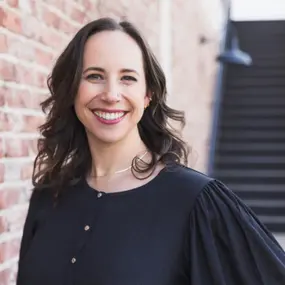
Co-Founder & CEO
Kristin Spiotto is the co-founder and CEO of Decoded. Coming from a background in tech, she cares deeply about businesses who sell an exceptional product, but struggle to clearly describe it. She has merged her love for great storytelling and powerful marketing to help her clients build a messaging strategy that wins more of the right customers.
In 2020 Kristin co-founded Decoded with her dear friend and longtime colleague Annie Mosbacher. They combined their strengths to build a marketing and retention strategies firm that is dedicated to delivering quick wins that yield long-term results.
Kristin lives in Los Angeles with her family and dedicates any extra time she has to playing Lego with her sons, cooking delicious food and making beautiful quilts.