Stopping SaaS Waste with BetterTracker (EP 967)
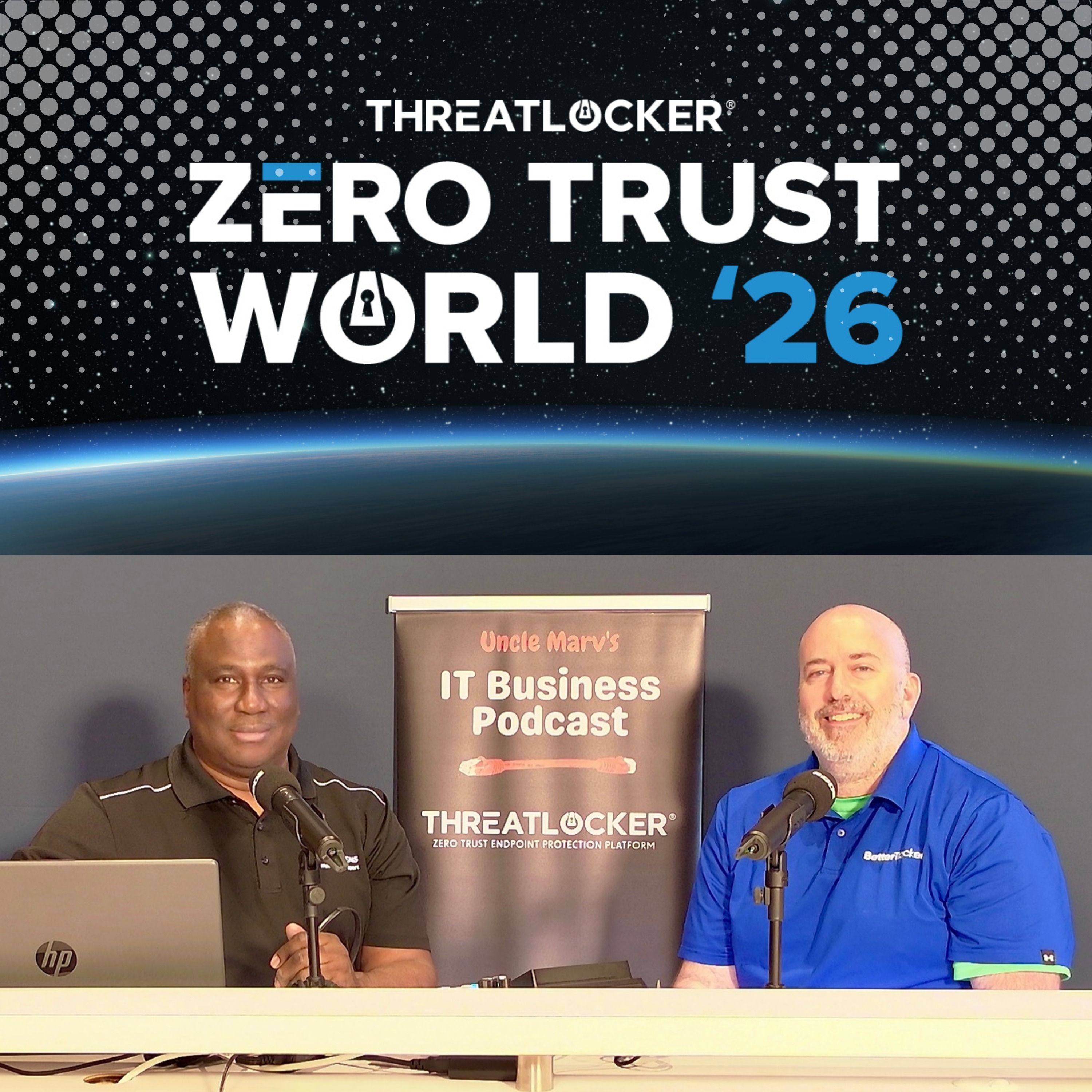
Recorded on-site at ThreatLocker’s Zero Trust World, this episode features Matt Solomon explaining how BetterTracker evolved from Channel Program into a full SaaS and subscription management platform for MSPs. Matt and Marv share examples of nonprofits, enterprises, and co-managed clients where better visibility into tech spend led to big savings and new recurring revenue.


If you’ve ever had a client ask, “How can we pay you less?” this episode gives you a better answer than discounting your services. Marv and Matt walk through practical ways to audit IT spend, expose hidden subscriptions, and use BetterTracker to deliver measurable savings that justify premium managed services.
Why Listen
- Learn how one MSP uncovered seven Amazon Business Prime accounts and eliminated instant waste.
- Hear the story of a nonprofit saving $1,000 a month by cleaning up tech subscriptions.
- Get an inside look at BetterTracker’s renewal alerts, price-increase monitoring, and financial visibility.
- See how Plaid integration and Scout 365 help find rogue SaaS and shadow IT across clients.
- Understand how to position SaaS management as a vCIO-level service that deepens client trust.
- Discover the new Stack Market feature and what MSPs are actually deploying in their stacks.
=== SPONSORS:
- Livestream Partner, ThreatLocker: https://www.itbusinesspodcast.com/threatlocker
- Technology Partner, NetAlly: https://www.itbusinesspodcast.com/netally/
- Technology Partner: Bvoip: https://www.itbusinesspodcast.com/bvoip
- Travel Partner: TruGrid: https://www.itbusinesspodcast.com/trugrid
- Digital Partner, Designer Ready: http://itbusinesspodcast.com/designerready
=== SHOW MUSIC:
- Item Title: Upbeat & Fun Sports Rock Logo
- Item URL: https://elements.envato.com/upbeat-fun-sports-rock-logo-CSR3UET
- Author Username: AlexanderRufire
- Item License Code: 7X9F52DNML
=== Connect with Uncle Marv
🌐 Website: https://www.itbusinesspodcast.com/
🎙 Host: Marvin Bee
🛒 Uncle Marv’s Amazon Store (gear & tools I recommend): https://amzn.to/3EiyKoZ
☕ Support the show: https://ko-fi.com/itbusinesspodcast
If you found value in this episode, share it with another MSP, IT provider, or tech entrepreneur. Your support helps keep practical, no-nonsense IT business conversations coming every week.
Hello friends, Uncle Marv here coming at you with another episode of the IT Business Podcast. We are here live at Zero Trust World 2026 in Orlando, Florida. This is the partner slash user conference for ThreatLocker.
And I am recording here at the ThreatLocker Media Center. And I've got a guest with me here, Matt Solomon from BetterTracker. You may not have heard that, you know, before, but that's the company he's with.
And I actually have the product. Can't say that I've done a ton with it, but... We're going to fix that. After I share some of these success stories with you, you're going to change your mind and start using it more.
All right. So Matt, how you been? I've been great, man. I was actually off the road for like three or four weeks, which is good.
I lost like 12 pounds. I've been going to the gym for a lot. Get out.
Really? Got to get in conference shape? Yeah, I guess so. Or lose the weight before conference season. So it's the reverse of Naked and Afraid where they put weight on.
Yeah, exactly. Exactly. But I'm excited to be here.
This is the first time I've been to Zero Trust. Okay. I was going to say, I know I didn't see... I haven't seen you for a while, actually.
Yeah. Where were you at last that I saw you? Gosh, I don't even know now, you know? They all blend together. They do.
You've done so many. And I don't do as many as you guys either. Yeah.
It's been a while though. But I will say one thing. This is a small thing, but you go to conferences.
So, you know, the fact that they put soda and like Fiji water out the entire time. Oh, yes. That's like they're sparing no expense because you know that stuff is expensive.
And, but you know what? That's what people complain about the most. They're looking for water. They're looking for drinks.
I was looking for hot water because I'm doing teas. I'm like, but in the media room, they've got the hot water thing there. They've got a hot water thing here.
So very nice. That explains the price of the ticket. So let me see.
I think I talked with Kevin about BetterTracker before, but it was just coming out. So why don't we start with... It's been what? About a year and a half? Yeah. So maybe I'll take one step back because I know you mentioned, you said, oh, you might not have heard of BetterTracker.
Okay. All right. The company was originally Channel Program.
We basically shifted the platform. The platform is now BetterTracker. Everything an MSP could have done on the platform, build out their stack, look up reviews.
We got 6,500 product reviews. Everything they want to do to navigate around exploring the vendors in the space, they can still do today. It's just that BetterTracker is the platform and it also has a tool.
And so the tool itself is a SaaS and subscription management tool. So we're talking about giving full visibility into your expenses as a small business and managing all your vendor contracts and subscriptions in one place. So you never miss a contract renewal ever again.
And we are legitimately saving small businesses, MSPs and their customers serious money. I do have some examples I'd love to share with you, but it is unbelievable. I mean, the stories we hear, and I have one even just today to share.
I was going to say, I know that I've done this. So of course, BetterTracker works both for your IT business and for your clients. So you can either resell it or throw it in your stack or whatever.
I have one client that we did this with and I had told them before, listen, let's look through your IT stuff, see what you're spending on, because they would always come to me and go, how can we pay you less? I'm like, you really can't. I mean, do you say that to your staff every year and you keep adding stuff for me to do? I said, let's look at all of your expenses. And when they looked at all the stuff that they're doing that was technical, and I'm putting that in quotes, they had it under the IT budget, but either it wasn't IT or it was something that they didn't even use, we could get rid of, all that sort of stuff is, yeah, ways we can save them money.
Yeah. And you're getting visibility into their tech spend beyond what's in your stack with them. So it's even unlocking really interesting opportunities.
I'll share a couple of examples. Some are like small potatoes all the way up to some crazy examples. So one was just MSP rolled out to small business.
First thing they discovered, they had seven Amazon business prime accounts. That's six more than you need. So $1,200 savings in an instant.
Boom. Right. That's just one tiny example.
Evan MSP is local to us in Dripping Springs, Texas, actually, where I'm from. He shared an example where he saved one of his nonprofit customers $1,000 a month, so $12,000 a year, which is not small potatoes to any small business, but to a nonprofit, that's real significant. I mean, imagine if you told a nonprofit, hey, I could find $12,000 for you.
That's kind of that same feeling that they got. But it's gotten even crazier. I mean, we've had stories where an MSP knows a large customer, there's about an $8 million customer in terms of revenue.
He went through their, I want to say their AT&T bill, and it was like, this is a big business. And I guess they had been getting line item to death over the few years. They found $600,000 of wasted spend.
Get out. Swear to God. And then it turned into $90,000 in new ARR with that MSP.
Because you start saving people real money, they're going to spend more money with you. There's a trust factor. And this is, I mean, you're right here, you're in front of me.
He's got this today. This was an MSP. This is internal MSP.
Basically, he was going through a migration and he had forgotten about the notice dates that he had to give for the other stuff that he was leaving. And basically by having Better Tracker, it reminded him and he said he saved, he would have been stuck with $50,000 in bills if he hadn't gotten the alerts. One of those multi-year deals, huh? Yeah.
But I mean, that's the examples we're hearing like every day. And that's the coolest part about this is like every small business struggles with it. And I can tell you, I'm talking to, we're here talking, there's a lot of enterprise companies here, like big companies.
Every one of them, when I talk with them, they're like, oh yeah, we have the same problem. No one's managing any of this stuff. No one owns it.
It's shocking. We just took over, well, not just, but we got them in October, but we're now actually taking over because the previous admin gave notice. It was a co-managed situation.
So now the admin left and like, why don't you just take over everything? So now we're going through all the stuff they did and all the subscriptions that this person had for this company that management or ownership didn't know about. Accounting sort of knew about it, but they weren't able to question it. So now I'm coming in and being like, well, why do you have this? Why do you have that? And they're like, uh, we don't know.
Yeah. I mean, think about a couple scenarios. You know, if you're an MSP that's listening to this, if you have any customers that have a marketing person or a CMO or whatever, you know, decent level marketing, director of marketing, that person's probably connected to 20 to 30 SaaS applications.
And I can almost guarantee as a business owner, the owner doesn't know every application. And the second that marketing person walks out, you could be stuck on a bunch of contracts. And then just think about all these AI tools.
It's really making it worse because we're all having to react in real time to try to test out these tools. MSPs are right now testing all these new AI tools, figure out what's going to work for their customers and whatnot. You're doing free trials that go into contracts.
So everybody's signing up for all these new SaaS applications, but are they managing them and actually, you know, offboarding? Let me, let me ask you this question. This may go off topic and may not. One customer I'm dealing with where they have allowed their users to just go sign up for stuff.
You know, we always have had the issue where users will use their business email for personal subscriptions, personal shopping. We've got to stop all that. Well, I just ran into one where we're trying to figure out, okay, how many of them have signed up for their own Zoom accounts or Monday accounts or whatever, using the business address.
Has there been anybody that's asked you how we can address that in terms of a business? Not by going through, you know, our point of contact, but throughout a business realizing how many things are being done with those business email addresses. So there's a couple of ways we could go about that. So one way is if those people are still using like a corporate card to pay for that, even if it's, they're still going kind of rogue, but they're using a corporate card.
We have a Plaid integration that connects to bank accounts and credit cards associated with that organization. So yeah, if you Marvin went on your own, but you used a corporate card, I'd see you paid for a Zoom account. That's how we did that.
That one company found seven Amazon business prime accounts. So that's one way. The other way, and it's doesn't solve everything, but it is a, we have something called Scout 365.
So anything that anyone in that organization is using single sign on for 365, it'll alert you and let you know every application that they're logging in with their work email. So again, that might not fit everything that you're talking about, but it gets pretty close. And in the next month or two, we're coming out with a, and I don't know the final name for it, but we'll call it shadow it, I guess, a browser extension that will also go beyond 365 and start feeding into kind of exactly.
So I think between those three prongs, I think you're tapping into like 95% of the... All right. That may work. Yeah.
We knew about the corporate cards. That was the easy part, but it was for people that would sign up with their business address but use a personal card and people didn't know until they left. And we're, you know, somebody's going through their old emails and is like, what's the subscription due that's coming up? That sort of a thing.
All right. Before we started chatting, you talked about another feature that you guys have added that again, I did not know about. I apologize.
How long has this stack market been available? Yeah. So we just launched it last week, the stack market. And really the idea behind it is to just bring more transparency to the MSPs.
So if you go to bettertracker.com backslash stack market, it's basically looking at the top 50 categories or product categories in the MSP space and who are the top five players based on our universe of MSPs and the data that we have in our platform. So it is 100% controlled by the MSPs. So this isn't us interpreting us like who we think is best or it's nothing to do with product reviews.
This is straight up data that we're seeing in the platform. All right. I was going to ask you what the criteria was.
So it's not reviews. Is it people that said, yes, we signed up for this service or yes, we have these 10 items in our stack and that kind of helps with the... Yeah. So it was coming from a variety of data points.
So first, you might be familiar with our free tool, NaviStack. We've had 60,000 products added from just that. But then as MSPs and small MSPs are connecting contracts, bank accounts, things like that.
No, it's important to mention this is all anonymized information that we're sharing here. But we have billions of dollars of transactional data points that we're looking at. So it's being aggregated from a couple variety of sources.
But again, 100% controlled by MSPs. And the fact, folks, that if you go look at this, just first of all, the categories alone. If you're looking to see where gaps are in your stack, you just look at the categories and there's multiple backup and recovery categories from cloud storage to Office 365 on-premise, cloud backup versus cloud storage, BCDR.
Yeah, there's a lot of categories. And we started with 50. But we're talking about, well, certainly we just launched about 15 to 20 new AI categories in the platform.
Okay. We really want to start, and I saw Firefly's AI was one of the first trending AI companies in our platform. So we want to bring a lot more visibility as MSPs are trying to evaluate which AI tools to use.
But we can go beyond that. We can go into insurance companies that MSPs are using. And look, we know MSPs use peer groups.
That's definitely one place to get information about other vendors that your peers are using. Our product reviews is another piece. But this is empirical data.
This isn't just an opinion or a survey. This is empirical data from thousands of MSPs that are utilizing the tool. So, yep, bettertracker.com, folks.
A purely transparent company, their pricing is right on the page. I like that. I hate having to sign up for a demo and go through it, sign this and sign that before you can get pricing.
You can get started at 49 bucks a month, folks. Get access to Better Tracker Basic with NaviStack, centralize your expense tracking. And very nice, very nice.
And plus, if you're listening to this and you've listened to this far into the podcast, if you mention Uncle Marv on the call, and the call will probably be with Tom, our guy Tom, who's super educational about the space, we'll offer you a special deal. It's the Uncle Marv deal. I'll come up with what that means.
It's the way you said special. But one thing you mentioned, you used the word transparent. That is what we've tried to say from day one.
And I hope that people have been along our journey that we've proven to people time and time again, we're bringing more transparency to this industry. And it's not just the fact that yeah, we do list pricing there. But it's even like if you go to our platform, and you look up any one of the vendors that are part of our platform, they're answering questions, we're asking them questions that MSPs want to know before they get on a call.
Because you might have, I talked to a guy today, he's like, he refuses to sign anything more than a month-to-month contract. So if you go on our website, most vendors answer the question whether they have month to month or annual contract. So it's like, there's like five to 10 questions that MSPs don't want to waste time on.
We're answering those in the platform, and the vendors are answering them. So they're being more transparent, because we're, I guess, in some ways, forcing their hand to bring that. I think that's a big thing happening in our industry.
We listen, trying to be nice when I say this. But, you know, a lot of people are getting pissed off with how some of the things are done in our industry. And it's being done to us, and we're being asked to do it to our customers.
And our customers push back. And we're like, how do we deal with that? In the same time, we're trying to push back on our vendors by saying, listen, just sit down with me and talk, you know, company to company, how can we be better for our customers? And being transparent, I think, is one of the very first things that should happen. Yeah.
Yeah. And it's interesting is that, you know, as we've learned more about ourselves, and, you know, like, it's very easy for me, like, when I'm talking to an MSP, and they say, well, how much should I charge for this? And, you know, it's easy to throw out numbers that, you know, the common thing is like, well, if you get three customers paying this, it covers the cost or whatever it is. And I've done that in the past, and some totally legitimate use cases for it.
But, you know, like, as the market evolves, and pricing changes, I'm telling them exactly, like, I actually think you should either roll this out, this tool out at no cost, because of the data insights you're getting as into their technology spend, or charge them 10 to $30. Because it might be a psychological thing of like, a little skin in the game, right? That type of thing. So, you know, I'm not telling them to charge somebody $200, $300 for this product, saying, just charge them enough to where they have some skin in the game.
And get that insight, because it's going to allow you to have much more DCIO type of conversations and whatnot. And if you, if you package it, right, it could be something that they just accept as part of doing business, because the insight that they can get, because of this tool. Now, granted, they could probably go out and do it on their own, but then it's work that they've got to do.
Yeah, I mean, it's, even in the MSP industry, I mean, if I asked nine out of, you know, nine out of 10 MSPs are doing it through an Excel spreadsheet or Outlook, and it's not being proactive, like some have gotten smart with Excel, but it's, this is proactively alerting you, not just on the renewal notice dates, which is the most important. It's also increase in pricing. And I know that's a problem because I read all the Facebook groups.
So that's the other thing is like, get an alert when you pick whatever denomination of number of like, if it goes over $10 a month, like an increase of $10, I want an alert. Because you know, it's really hard when you've gone a year and your bill has been increased and you never said anything. It's hard sometimes to get the money back.
It shouldn't be. Technically, they may have overcharged you, but it's hard. But you know, it's not hard the first month you find out that you got overcharged and you take care of it.
It's just easier. That is true. That is true.
Well, Matt, I want to say thank you for taking some time here and setting up here at the booth. We got; it's not really a booth. I don't know what nice little table ThreatLocker did for us here.
So thank you. We are in the vendor hall. So yes, that's why you're hearing the noise in the background.
They just finished. It wasn't lunch. It was a midday snack.
And again, spared no expense. They had many hot dogs. They had BLT sandwiches, like a hummus and salsa bar.
Nice. Nice. So I'll let you get over to your booth because I know that you got a long night ahead with more booth duty and then a reception party tonight.
Yeah, I appreciate it. Thanks a lot, sir. Thank you very much.
And we'll be back, folks, with more from the booth here at Zero Trust World. I just, for some reason, you know what the problem is, is this hotel is used for so many tech conferences. I almost said another conference.
We'll be back here from Orlando, folks. We'll see you soon.

Co-Founder, Channel Program
Matt Solomon has worked in sales & business development for 16+ years. He had the unique experience of working with a start-up company (ID Agent) and helped it grow from 0 to 2,000 partners in a two-year period through acquisition, then later to 4,000+ partners, making it one of the fastest-growing companies in decades within the channel. Matt has spoken at more than 150 industry events in six countries and received 40 awards in recognition.
Post-acquisition, he took on the role of Channel Chief for a multi-billion-dollar organization.
After 2.5 years, Matt started a consulting company, Channel Halo, working with vendors and MSPs on their go-to-market strategies. After having many of the same conversations, Matt and his former CEO Kevin Lancaster decided to team up again and launched Channel Program.
Channel Program is a platform designed to bring together the most innovative technologies in front of Channel Partners (MSPs, MSSPs, VARs, IT Services Providers) and give them a voice in how companies present, enter, and succeed in the channel.