


Culture Falling Apart? Try Internal Podcasts (957)
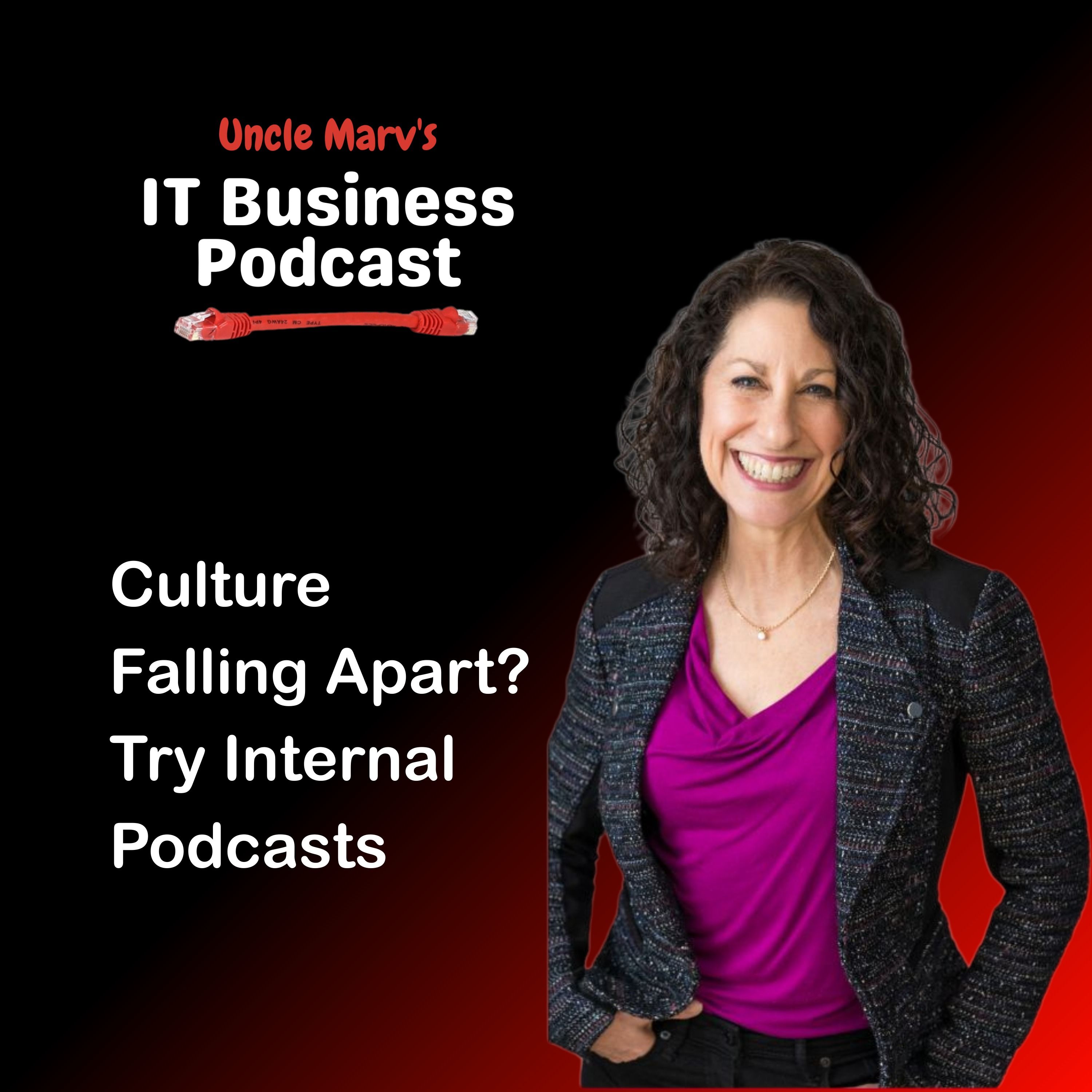
Uncle Marv welcomes back Zen Rabbit founder Lori Saitz to talk about her shift from digital nomad life to planting roots in Charlotte and intentionally building community. They dig into her work creating internal podcasts for midsize companies, her passion for gratitude and connection, and how personal transitions, including the loss of her father, reshaped her sense of home and relationships.


Hello friends, Uncle Marv here, and today I am bringing back a guest that I've been, I would love to say I was trying to get her for a while, and she was super, super busy, but that's not really the case. But nonetheless, I am here with Lori Saitz, and it has been quite some time since I've had her on the show, and we are going to talk about a lot of things. But first, let's get to this.
Lori, welcome. Thank you. Thank you.
You know, I will always carve time out of my calendar for you. Well, thank you very much. You don't have to lie to everybody.
I'm not lying. So those of you that have heard her on the show before, Lori owns a company called Zen Rabbit, and when we last talked, we talked about a couple of things based around the attitude of gratitude. We talked about the life of digital nomading, and I believe, was it the end of 24, beginning of 25, when you decided you were going to stop nomading? Yes, at the end of October of 24, I parked myself in Charlotte, North Carolina.
Oh. Oh. And first I thought, okay, what was it that got you stuck there? Now, we've talked since then.
I don't want to give the listeners an idea that we haven't talked since, and you actually stopped by the office for a quick, I don't know, was it a brunch meeting? We didn't even, we didn't eat or anything, did we? No, we, I stopped by, well, I don't remember when I stopped by your office, but I, we had, we had like a, what they would call a girl dinner, like a bunch of appetizers and snacks. Yes, because Kim hates when people show up and we don't have something out on the table. So yeah, we had the finger foods.
All right, so let me just start by asking, what do you feel comfortable telling the listeners that you've been doing since we last spoke? Well, let's start with, I was, you're right. I was nomading for almost, for more, a little bit more than a year because I had been living in Northern Virginia, the DC Metro, and I knew I wanted to leave there, but I didn't know where I wanted to go. So I was nomad lifing, cat sitting, house sitting, mostly cat sitting, all in different places around the Southeast part of the US to figure out where I wanted to live and Charlotte wins.
So there are many, many reasons. I won't go into all of them about Charlotte, but it was just from the minute I got here, I felt like this, I like the vibe here. I like the energy here.
This feels comfortable. And so I kept coming back and kept confirming that it was Charlotte and I am so grateful and glad that I chose it because it's been everything that I was looking for, which was community, primarily community. But what the primary reason, you know, when I was nomading, everybody was asking, well, so when are you going to be done? When are you going to stop living out of your car? And my answer was always, I don't know when, when I feel ready, I'll be ready.
It made other people very uncomfortable, which I kind of like. Yes, it did. And of course, it's the joy of not knowing where you're going to be a month from now, two weeks from now, that would probably drive people nuts.
A lot of people that nomad, they usually will plan to stay in a place for two to three months. And then they, you know, assimilate and hang out and do that stuff. Sometimes you were as few as a couple of days.
Right, right. I really made an attempt to be someplace for at least a week, possibly two weeks. I didn't like to do just a few days, but yeah, it was, there was a lot of uncertainty and that was part of the beauty of it.
Like having, learning to live with uncertainty because that's really essentially how life is. You really don't know what's going to happen from day to day. You think you do, but then life throws in a wrench and you just don't know.
Yeah. So we're going to be approaching this podcast from two perspectives. One, the health perspective, because in my mind, that sounds unhealthy being out on the road and not knowing where you're going to go.
But from the other perspective, from the IT side, not knowing where you're going to go. You have a business where you've got to communicate with people on regular basis. You've got to have, you know, good internet all the time, a good space around you, because if I remember most of your videos, I mean, all of your training, you're doing videos, so you've got to have a good background and sort of stuff like that.
So two different perspectives, but same story. Yeah. Yeah.
Well, I, the reason I could do the nomading was because I can work from anywhere as long as I have my laptop and like you said, a strong internet connection. That's pretty much coverage, you know, unless I'm stuck up in the mountains. It's, I had that.
Yeah. So from the tech side, let's talk about this. Your business now, Zen Rabbit, now you've done a little bit of a change since we last had you on the show, but going to your LinkedIn page, the first thing I saw threw me for a loop because it says creating internal podcasts for leaders who care about amplifying culture and breaking down silos.
Yes. So you are a podcaster. I should let people know if you've not listened to any of the shows, Lori is a podcaster.
She's been doing it for quite some time, but what made you decide that doing it for companies internally was the way to go? I was thinking about what brings me the most joy. And as you said, I host my own podcast. We're coming up on five years.
It's been over 200 episodes and I love hosting my show, hosting guests on my show. It's called Fine is a 4-Letter Word. It's a passion project.
I don't make money from hosting my podcast. I don't have sponsors yet. So I was thinking about how can I do more of this and still pay my rent? So that's where I came up with the idea of, you know, a lot of multinational companies, Coca-Cola, Deloitte, P&G, they all have internal podcasts, but when you talk about an internal podcast to a midsize company, they have never heard of such a thing.
And essentially what it is, is back in the day, we used to have printed company newsletters. Do you remember those? Yeah. So this is the modern updated version of that.
It's a podcast for employees. It's a way to help the C-suite streamline communications and deliver information without having to go through five layers of management. It's a way for employees to get to know each other on a more personal basis so that they are more willing to collaborate and break down silos.
It's a way for people who don't have client facing jobs to understand better how the end user benefits from what they're doing. So it's really a way of bringing people together to connecting or for connecting, building culture, connecting, building community, and helping people understand that where their value is. Now from the tech perspective, I think when we've talked to our companies, let me rephrase that.
The phrase is said that everybody's got a podcast. So from that perspective, I would imagine that most companies have tried to do something internal, whether it's video meetings, Zoom calls. One of my clients is big enough where they've got monthly conference calls and they've got their video and stuff like that.
So are you running into companies that tried it and it failed or they got tired of doing it? Are you doing it for them? How does that work? Most companies have never heard of an internal podcast. Yes. Okay.
They don't. Maybe they're doing, what's it called, town halls or all hands meetings. Those may be once a quarter, maybe once a year.
They're not consistent. They're not ongoing communication. And yeah, it's kind of a new concept.
I mean, everybody's heard of a podcast, but most of them haven't heard of internal podcasts. And when I say midsize companies, I'm talking about 250 to 2,500 employees, let's say, because at a hundred, everybody kind of knows everybody. Once you start getting to 300, 500, a thousand, corporate culture starts getting diluted.
People don't know everybody. Not everybody has been in the break room with the CEO having pizza for a Friday afternoon. Hmm.
So when that happens, my first thought is the basic podcasts are going to be things about human resources. Everybody's got to wear their proper underwear or something along those lines. Oh my gosh.
Do you have to tell people in companies that they should be wearing underwear? What companies? Oh my gosh. That's a really dysfunctional It is. But I'm thinking of, I mean, what types of things outside of HR, maybe the CEO wants to get on and give an update for the quarter or the year and how do you get them to stay on some sort of regular schedule? Who does all that? Who does the content? Is that what you do for them? Yeah.
I have a turnkey offer. So I'm hosting, I'm producing, I'm handling the distribution, the organization, and the way I have it structured, I have what's called the core four cast. And the core four is the culture, communication, connection, and community.
We're doing 15-minute episodes, interviews with C-suite leaders. What's your initiative for this quarter or this month? What's going on? What's the news in the company that there's always something coming out of the C-suite, but it's not always being filtered down properly. It may have to go through five layers of management and some managers are better at delivering information than others.
So it's that, it's interviews with employees so they can get to know each other on a more personal basis. What I'm proposing is a weekly podcast that is the place that people can go for whatever information is going on within an organization. And a lot of organizations are going through transitions right now.
Maybe they're acquiring or being acquired or there are layoffs going on. Whatever's happening, there's a lot of transition. And when transition's happening and they're not getting true, honest information from leaders, that's when rumors start and that's when drama starts.
Hmm. And I imagine that this works really well for companies that have a lot of remote employees. Yeah.
Remote or even when you are within the same, even if everybody's working in an office with 500, a thousand employees, you don't know everybody. You don't always hear everything. Right.
Now, do they have podcast parties at offices that do have a bunch of people? Like, are they throwing it up on the big screen in the conference room or the break room or are they all listening to it at their computers? Have you heard any? I haven't heard of anybody having podcast parties. The concept of it is that you can listen whenever you have 15 minutes so that you don't have to all be on a Zoom call at the same time when it's actually happening, if it's going, if it's live. And it works great for people, for companies that have people in trucks that are, that are not in front of a computer every day, all day.
It works great for people who are maybe in manufacturing again, for the same reason. And those 15-minute episodes don't take up a lot of time. They're easy, easy to just plug in, listen.
Even if you're listening at 1.5 speed, then what is it? 10 minutes. So. All right.
Well, that makes a lot of sense in that regard. And I know that from the tech perspective, a lot of us probably have clients that this would be great for. So I imagine that one of my listeners at least will reach out to you and say, Hey, can you, can you help me do something or can you do something for me? Now you mentioned that this works better for the larger clients in our space.
Enterprise is basically 200 and above. Is there anything that works for the smaller companies? Well, it would still work for a smaller company. It's just that the smaller companies tend to not need it because everybody already knows everybody and everybody already hears everything that's going on in this, the, the challenge with this client or the, the crazy thing that happened over here with, uh, with the sales call over there.
People tend to hear all the news, but once they start getting bigger, that those channels don't aren't as effective. All right. You've got a newsletter called workplace Zen.
How does that play into this? Yeah, that's my LinkedIn newsletter. So the best place to find me or find reach out to me is really through LinkedIn because I am very active on there. So I post articles on there once in a about topics of communication and connection and because connection is so such an important topic, whether it's within companies or in people's personal lives.
All right. So you don't tie that into those internal podcasts. Cause I, I would imagine that that would probably be a way to do some stuff as well is to work in some culture, work in some, you know, Hey, maybe for something like, uh, the, the winter storm that hit South Florida, you know, people could do a podcast and say, uh, you might want to go get yourself a sweater and a heater and step over the iguanas when they fall.
We have to remember that podcast information lives on for a long time. So for bulletins like that, maybe not, but, but, but you could certainly do interviews with people about what they did as a per like personally to get to know people on an individual basis instead of just by their job title. Hey, what did you do during the winter storm of 26? All right.
All right. So now did this come to you after you decided to stop nomading or did you, were you building that during that time as well? Yeah, no, it came after I had been here in Charlotte for about three months. It was, yeah.
So it was like the end of 24 and I was just evaluating what I had been doing and what I might look forward to doing moving into 25. All right. So how much have you shifted away from what we last discussed on our show about, you know, the attitude of gratitude and, you know, helping people to connect? Yeah, that, well, the helping people to connect is, is the through line of everything I do.
And there's another piece of my business that I do that with as well, uh, with gratitude dinners. And I can come back to that in a moment, but the, the idea of helping people stay grounded and connected and tapping into the power of gratitude is actually a piece of the internal podcasts. It could be perhaps the bonus episodes of, Hey, let's throw in a bonus episode around, here's a grounding technique or grounding exercise you can use before you go into an, an important meeting that you're nervous about, or here's a grounding breathing technique you can use when you come out of a meeting that didn't go quite the way you were expecting it to, and you need to get back into focus so you can get back to work.
Okay. Yeah. So I'm still talking about those.
I mean, the, the concept of gratitude is so enormously important. I will never stop talking about gratitude and that will never, never not be, there's a double negative, never not be a part of what I'm doing. And so, yeah, I just mentioned these gratitude dinners that I'm also essentially what I do as, as a business and in my life in general is I bring people together in community.
And so whether that's through internal podcasts or around a dinner table with these gratitude dinners that I host for in my apartment. And then also now I'm starting to offer them for organizations so that they can bring teams together or clients or potential clients or board members for nonprofit organizations to bring them together to connect as humans, you know, outside of a normal networking where, what are you talking about? Sports weather, boring stuff. Don't you say that the Superbowl is coming up.
All right. Well, all right. Maybe not boring, but very surface level.
Okay. It's not, it's not true deep connection the way that these gratitude dinners inspire. All right.
Yeah. So, so gratitude. Yes.
To answer your question is still, and always will be a part of what I'm, what I do and who I am. All right. So that's a segment of your business.
And then of course you've got the podcast Fine is a 4-Letter Word where you, you still do a lot of interviews talking about, I see them still as personal journey stories, even though they may talk about letting go life isn't easy, all of that sort of stuff. Um, are you trying to tie all that together at some point or you, you like the way that they're separated now? The stories, the stories I, the people I'm bringing on as guests are tend to be business leaders. And the stories are, tell us about a time in your life when you said everything was fine and it was not fine at all.
And that could, and how did you lead through that with vulnerability with humanity and perhaps with humility? How, how did you get from that place to where you are now as a business leader? Okay. So I was trying to find a way to weasel into this question because one of your shows, I was like, Hmm, you got a guy to come on to talk about divorcing his parents. Oh yeah.
Andrew. And I'm like, okay, that's, that is a pretty exposing story. Uh, one that I did not think I would find within, I don't want to say your genre cause that's probably not the right word, but, uh, that's a pretty in-depth story.
He's the business leader and he has a story and he's willing to tell it and he's willing to tell it. But I think that's one of the coolest things about my show is, and I'm so honored that people are willing to come on and share these stories that listeners can learn from because whether you can, whether you've been through that experience or not in the key takeaways that I put together at the end of the show, it ties things together so that everyone who's listening can, can see how it can relate to their life. Maybe you've never divorced your parents.
Maybe you've never spent 36 years in prison for a murder you did not commit another past guest, but there are every, we're all human and there are so many common themes throughout our stories, regardless of what the story is. All right. Now, even though these stories are a lot personal, you know, all of that, you, you still want to really talk about connection and bringing people together.
So help me understand how all of this ties into that. I mean, when we talked about gratitude, it wasn't from the, I, you know, it wasn't from the point of view of connection. It was just, you know, let's live life.
Let's talk about, you know, when things aren't fine, let's stop lying to ourselves, you know, but now it's all about the word that keeps coming to my mind is koinonia, which is, I don't know if you know that word. No, that's a, that's one of those biblical terms for community. Community.
Yes. Well, even when I was talking about gratitude back the first show or the second show, it was about connecting with yourself and understanding who you are and finding gratitude within whatever it is you have going on in your life. And I think our, our, everyone needs to start from that place.
We cannot change other people. Once we realize that the only control we have is over ourselves, our own thoughts, our own actions, our own beliefs, everything changes. Everything, the way you see the world, the way you show up in the world all changes.
So if you can start from that place and connect with yourself, what is your heart telling you to do? Instead of asking, you know, your 5,000 followers on social, what should I do in this situation? If you can connect in with what is your heart telling you to do? What, what do you have to be grateful for? Where can you tap into that inner knowledge and wisdom that you have and start living from that place? That's where the connection starts. So once you're comfortable with who you are, then you can start going out and connecting with others and bringing value into other people's lives. All right.
Does that make sense? It makes sense. Okay. So was that the time when you got to the point of being in a sense content and grateful with your nomading that you found Charlotte, put down the roots and kind of said, okay, I'm, I'm good.
This is, this is where I'm supposed to be. Yes. And my intent when I got here was to build community.
My word of the year for 2025 was community. I came into Charlotte with full intentions of building a community. I knew like two people when I got here and after that year of nomading where you live somewhere for two, two weeks, three weeks, six weeks, you don't really belong anywhere.
So it wasn't part of a community. So I was so desperate. Isn't the right word.
It's not really tire. Right. I was very hungry for community and connection.
And I came here with the intention of building that. And, and that's what I did. Yeah.
I integrated myself into a lot of different places, a lot of different communities within Charlotte and started building my own. So we talked about when you nomad, you left a life before. Yeah.
So how many people from before stayed with you throughout the entire nomad life and are still a part of your community, even though they may be, you know, far away? That's an interesting question because several of my closest friends are not a regular part of my life anymore. Things I'm not the same person. Right.
And so some of those connections are, I don't, they're not, they're not as relevant as they used to be. Okay. That's a good way.
That's a good way to phrase that. Cause I was going to ask you, was it something where you were okay with it? And you're like, I, you realize that, okay, you know what? I, I don't need that anymore. That's not where I'm at.
Or was it them on their end saying, Hey, you're, you're not, you're not Lori anymore to us. I, it's kind of a mixed bag. Some of it has to do with things that they were going through that it wasn't that either party just decided we're not in touch anymore, but like we were both growing in different directions.
Right. And so that connection kind of just faded away or, um, somebody else has some major things going on in their life and they're just, they just don't have the energy for the relationship anymore. And so, yeah.
And you know, that's really, it's been really hard for me because I am always the one who wants to stay connected to everyone forever. I have friends that I've had since we were babies in a crib. In fact, I just celebrated a big birthday a few weeks ago and hosted a big party.
And one of those people, the one I'm thinking of who babies in a crib came, she came from Austin, Texas to Charlotte to help celebrate. So I make friends and build relationships with people and I fully intend that they will be there forever. Like once you're in my circle, that's it.
So it's been really difficult for me to let go of friendships and relationships that aren't meant to be anymore. Interesting. I come from the other perspective.
My dad was in the air force, so we moved around a lot when I was young. We did end up settling down when I was in elementary school into junior high. And then when my dad was about ready to be relocated again, my parents divorced and I told my mom, I want to stay here.
Tired of moving. I'd like to have some friends. But I can see along the journey that I have when I went from high school to college, college to grad school, grad school to work and place to place.
I have friends from all of those places, but not to the point where, let me rephrase this. I'm going to upset somebody I know because I just had this conversation. I that was like, Marv, we got to stay in touch more.
And part of me was like, I'm busy. But at the same time, I wanted to tell the person, yes, we do. I don't want to apologize for being busy, but I also don't want to make the person feel like I don't want to hang with them, if that makes sense.
Yeah. Well, these relationships are two-way streets. And sometimes at the same time, they're two-way streets.
Sometimes one person has to take the initiative to maintain the bond. And typically that's been me. And I don't, that's okay.
I get it. Like my college roommate has said to me at many points since then, how grateful she is that I make the effort to stay in touch as well as I do with her. In fact, she's, she works, she's in the foreign service.
So she works for, she works at different embassies around the world. And right now she's posted in Tanzania and I went to visit her in August and September. This is because, because why not? Okay.
There was an opportunity to go and she's there and I had a place to stay and sure. Let's let me go. All right.
So it's, I get it. I was, I was the person that made the effort. I, you talked about newsletters before.
So let's see. So it was in college and, or a few years after I actually, I actually wrote a newsletter for several years and started Uncle Mar's paper. Was it, was it once a year? Was it like a holiday? It was, it was, I think I tried to do a quarterly.
Okay. Cause I think at one time, I think I called it Uncle Mar's quarterly and it was a combo. Before Facebook really got big, it was really a way to stay in touch with people.
Hey, let me share your story through this newsletter and stuff. And, and we had to write it, print it, mail it. And then I finally got to the point where, okay, I'm going to email it now.
And I forget what happened and why it went away, but I think Facebook, you know, once we got to the point where we could see each other online, I'm like the paper doesn't make sense anymore, but it was cool. And somebody actually showed me they have kept all their papers in a binder. That was pretty cool.
That's so fun. Well, you know, this all ties into that whole idea of community that you and I were talking about before we hit record and how important it is to health. Yeah.
Being part of a community. There have been studies done that show that the most important factor in longevity is not how well you eat or how healthfully you eat. Although that is important.
It is not whether you are otherwise healthy. You know, it's not heart disease. It's not cancer.
The biggest factor is connection. How connected are you to other people? Connection. And I would add purpose.
Yeah. I mean, are you getting up every day? Why are you doing what you do? Uh, do you feel a part of something? Do you feel needed, wanted, or do have a drive to do something? Right. And when people are part of a community and they are connected to others, my belief is then that their, their sense of, they have a sense of purpose that they wouldn't otherwise have.
All right. And you found yours in Charlotte. I found mine for now.
Yeah. All right. So let me ask you this.
Are you in Charlotte proper or are you kind of off, you know, what are the burbs? Charlotte is a very big city. That's why I asked. Yes.
But yes, I am in Charlotte, actually in Charlotte. My mailing address is Charlotte, but I'm also like five miles from uptown. Okay.
So it's not really a suburb, but it's not right in the middle of, they call it uptown, not downtown, but right in the middle of the city. But you can see the city from my apartment, not my, from the resident lounge in my apartment building. You can see the city.
I am close. Kind of like here. So yeah, I'm technically in Fort Lauderdale slash Oakland park, but I can see the city.
I'm just a few minutes away. No skyscrapers, you know, down the block or anything like that. Not that Lauderdale has skyscrapers.
Yes. And so I would not say I am in a suburb necessarily. It is Charlotte proper.
Is there anything that you miss from nomading? No. Really? It was a fantastic experience. I loved it while I was doing it and it gave me an opportunity to meet people that I had only known online to have, like you and I had the opportunity to meet in, in real life in person.
So I did appreciate being able to do that. And the uncertainty we, you know, we talked about that. I don't miss that.
I didn't dislike it. It's hard. It is hard to do.
And so I, I do appreciate now having my own home and having a place. I call it my nest. I appreciate having my own nest and being able to come, you know, come back and sleep in my own bed.
The biggest, one of the biggest factors I'll be vulnerable here. One of the biggest factors of why I decided to stop nomading was that my dad passed away in August of 24. And I was there with him in South Florida.
And afterwards, after the funeral, the thing I most wanted to do was come home and sleep in my own bed, but I didn't have one. And that's what started me thinking, okay, maybe the time for this nomading is over. Uh, and maybe I'm ready to find where I want to park myself.
And it still took a few more months before I decided definitely Charlotte, but that was a, that was a factor. All right. Thank you for being vulnerable.
Yeah. So for people that want to reach out to you, uh, we talked about the internal podcasting. Is that something where you're okay with businesses reaching out to you? Do you need introductions to people or can I help? Sure.
People can certainly reach out to me directly. I am happy to have conversations with anybody about internal podcasts, about hosting gratitude dinners, about bringing people together in any form. Uh, if somebody has a great story to be on the podcast on Fine is a 4-Letter Word, reach out to me.
So yes, find me on LinkedIn. That's the best place. Um, yeah.
Introductions always happy to take introductions to C-suite C-level business leaders in especially midsize companies, but even smaller if in terms of bringing teams together, whether it's through internal podcasts, like I said, or through those, uh, small group intimate dinner settings. All right. So I know I pretty much dominated our conversation with questions and stuff.
So I'll give you the opportunity. The interviewer, it's your show. You're supposed to ask questions.
I know, but I like it to be interactive stuff. So I thought it was interactive. I mean, it was interactive, but I like for you to be able to, you're a podcaster, you know, you're used to asking questions.
What do you have in that head of yours? I, I asked you this earlier because I, you have a Buc-ees cup behind you and this show is about health and Buc-ees is nothing having to do with health. And I told you the story, but have your listeners heard the story? Yeah. Well, perhaps they're interested.
So, okay, here's, you just asked me to ask a question. You did. You did.
And I'm going to give you the answer. So first of all, I never, ever had an interest to go to Buc-ees kind of like, I never had an interest or an attraction to Wawa. Yes.
So Wawa is huge down here all of a sudden. And it's one of those where people go to Wawa for lunch. And my thought is, why would you go to a gas station for lunch? They do actually have very good tuna sandwiches.
Okay. There you go. So it still didn't attract me, but apparently in the Midwest or some other parts of the country, Buc-ees is the deal.
And I just always assumed it was the Buc-ees hair, care, tire, the Walmart of gas stations. And I was going to a conference in Dallas and I had this tech buddy of mine who lived in Oklahoma that convinced me to fly into Dallas for the conference and then drive home with them to their home in Oklahoma. And, oh, on the way, we're going to stop at Buc-ees.
That was their ultimate goal was to get you into a Buc-ees. I don't know if that was the ultimate goal, but we did end up seeing, I think, three or four other conference attendees at the Buc-ees. Wow.
Okay. It was a little ridiculous. And to see, I mean, listen, if there are these things that in life that you should do, I would not call it a Bucky, a bucket list at Buc-ees.
Buc-ees is not a bucket list. I agree. But if you're going to go, you got to look at the wall of jerky.
And I just, I just, I mean, it was one of those things where, yes, it was intriguing. The clothes section was ridiculous. Yeah.
They are building them in Florida now. So, and I mean, and they're strategic too. They're building it where, you know, along the interstate on the west side of the coast where there's like nothing.
Yeah. They're building an exit for the Buc-ees. Wow.
Okay. Yeah. I know about Buc-ees because I also, while I was nomading, I thought I've heard about these things.
I should stop and just see what it's about. And like you, I never do, I do not ever need to go to one again. I don't see the attraction.
Buc-ees is definitely never going to become a sponsor of your show, but you don't know that. After this, they're not. I can be pretty convincing.
It is. It is an interesting place. And that's, that's all I'll say.
Okay. It's an interesting place. And, you know, I talked about my, my word for 2025, my, my phrase to keep myself sane, which I am bringing into 26 is people are interesting.
That's your phrase. Huh? Yeah. Well, it's just, it's a mantra.
I have to run in my head when I'm out. And I think it could apply to if you're at Buc-ees people are interesting. Okay.
Bless your heart. So I just looked up the phrase is jerky healthy. It can be.
Yes. It as part of a healthy diet in moderation but depends a lot on the brand and your overall health goals. So just for those people that are like, okay, what's this got to do with health? Well, jerky is high in protein.
It is as long as it doesn't have a whole bunch of other like weird preservatives and ingredients that really shouldn't be in there. It could definitely be healthy. Well, you have to avoid the ones with high sodium.
Yes. Which is a lot of them. And let's see what else here.
So it does provide iron zinc and vitamin, vitamin B. And it's usually low in carbs. Yes. Usually low in carbs.
Also, I would imagine the vitamin content would depend on what kind of jerky, because there's all kinds, there's beef, there's venison, there's fish, there's like salmon jerky, turkey jerky, all different kinds. All right. So I'm going to type in.
There's even a vegan jerky. I discovered it when I was in Louisville. Okay.
That doesn't even sound right. Because that's where the company is based. Like the impossible burger.
Hey, don't mess my burgers. All right. So I just typed in what's the healthiest jerky at Buc-ees.
So, so of course they don't publish the list, but they just talked about looking for turkey, zero sugar or no sugar added, low sodium and go for short ingredient list like meat, salt, basic spices. Yes. There you go.
There's your health advice for jerky. And the suggested serving ounce, I mean, the suggested serving size is one ounce. Yeah.
I don't know anybody who's going to be eating one ounce of jerky, but sure. All right. It's like, what's the serving size of, you know.
Bowl of ice cream. All right. Well, Sites, it's good to have you back.
Well, it's good to be here. We're going to have to catch up. Sharing healthy advice.
Yeah. Yeah. So trying to think, I'm not sure if I'll be in Charlotte again.
I do have relatives there. None of our tech conferences are there. Well, what's up with that? The only tech company in Charlotte is what? Oracle? There are plenty of tech companies.
Charlotte is growing immensely. Yes, it is a banking capital. Yeah.
Most of Charlotte is all about banking, but there's also a lot of tech coming in and a lot of entrepreneur ventures. 157 people a day are moving to Charlotte. Okay.
Palm Beach used to say that. All right. We'll have to do a deep dive on Charlotte.
Charlotte is, you know what? Don't come to Charlotte, personally. Well, anybody who's listening is considering moving to Charlotte. Don't do it.
Charlotte's closed now that I'm here. We're done. Yeah.
Are the roads keeping up? That's a whole other story. Okay. They just voted to increase the sales tax for transportation issues to build and support transportation issues.
Have they upgraded? What is it? 77? Yeah. I don't spend a lot of time on 80, what is it? 85 and 77. So well, I-40 comes in from Raleigh, right? Or is it 40 and 85? Yeah.
40 comes in there. 77. And I know all that because I used to drive over from Raleigh when I went to grad school.
77, I would drive down to Rock Hill, South Carolina. Yes. Yes.
And people in Charlotte complain about the traffic a lot. And it is getting worse because all these people are coming here. But having come from DC and last week I was at a conference in Atlanta, y'all got nothing to complain about here in Charlotte.
Well, Atlanta, yeah. Atlanta is, it's one of the worst, even though they don't- At DC, yes. They don't think they are, but- Oh, they know.
They know. And down there in South Florida, driving around Miami, it's a little rough. I could have told you, don't go to Miami.
Don't go to Miami. Yeah. I agree.
Do not. Don't go South of the Glades Interchange. It's what I tell people.
Yeah. Right. So yeah.
Anyway, if you do come to Charlotte, I will be here to greet you. Okay. We can go find somewhere that doesn't serve jerky and enjoy a meal.
There's a lot of, God, there, oh. All right. I'll have to look for it off air.
I kept thinking there was something near there that somebody was talking about as one of the places to go food-wise, and I can't remember if it was a bar. I'll figure it out. We don't need to- Charlotte has a ton of breweries.
Yeah. Yeah. I think it was a brewery and it was a weird name.
There's so many breweries in Charlotte. It's crazy. All right.
Well, friends, thank you for listening. You have been tuning in to me with Lori Saitz with Zen Rabbit, and I'll have all of her information in the show notes. You can catch up with her.
And if you are a part of an organization where you think you need some internal podcast or you want to put that in the ear of your C-level people, Lori's the person to do that. If you just want to talk about gratitude and connection, or if you have a story to share on horror, find is a four-letter podcast. Reach out.
Find is a four-letter word. Find is a four-letter word. Thanks, Marv.
Thanks for having me here. All right, Lori. We'll catch up a little bit here.
Those of you that are listening, thank you for tuning in and watching. We'll see you soon. And until then, holla.
(0:02 - 1:29)
Hello friends, Uncle Marv here, and today I am bringing back a guest that I've been, I would love to say I was trying to get her for a while, and she was super, super busy, but that's not really the case. But nonetheless, I am here with Lori Saitz, and it has been quite some time since I've had her on the show, and we are going to talk about a lot of things. But first, let's get to this.
Lori, welcome. Thank you. Thank you.
You know, I will always carve time out of my calendar for you. Well, thank you very much. You don't have to lie to everybody.
I'm not lying. So those of you that have heard her on the show before, Lori owns a company called Zen Rabbit, and when we last talked, we talked about a couple of things based around the attitude of gratitude. We talked about the life of digital nomading, and I believe, was it the end of 24, beginning of 25, when you decided you were going to stop nomading? Yes, at the end of October of 24, I parked myself in Charlotte, North Carolina.
Oh. Oh. And first I thought, okay, what was it that got you stuck there? Now, we've talked since then.
(1:29 - 8:18)
I don't want to give the listeners an idea that we haven't talked since, and you actually stopped by the office for a quick, I don't know, was it a brunch meeting? We didn't even, we didn't eat or anything, did we? No, we, I stopped by, well, I don't remember when I stopped by your office, but I, we had, we had like a, what they would call a girl dinner, like a bunch of appetizers and snacks. Yes, because Kim hates when people show up and we don't have something out on the table. So yeah, we had the finger foods.
All right, so let me just start by asking, what do you feel comfortable telling the listeners that you've been doing since we last spoke? Well, let's start with, I was, you're right. I was nomading for almost, for more, a little bit more than a year because I had been living in Northern Virginia, the DC Metro, and I knew I wanted to leave there, but I didn't know where I wanted to go. So I was nomad living, cat sitting, house sitting, mostly cat sitting, all in different places around the Southeast part of the US to figure out where I wanted to live and Charlotte wins.
So there are many, many reasons. I won't go into all of them about Charlotte, but it was just from the minute I got here, I felt like this, I like the vibe here. I like the energy here.
This feels comfortable. And so I kept coming back and kept confirming that it was Charlotte and I am so grateful and glad that I chose it because it's been everything that I was looking for, which was community, primarily community. But what the primary reason, you know, when I was nomading, everybody was asking, well, so when are you going to be done? When are you going to stop living out of your car? And my answer was always, I don't know when, when I feel ready, I'll be ready.
It made other people very uncomfortable, which I kind of like. Yes, it did. And of course, it's the joy of not knowing where you're going to be a month from now, two weeks from now, that would probably drive people nuts.
A lot of people that nomad, they usually will plan to stay in a place for two to three months. And then they, you know, assimilate and hang out and do that stuff. Sometimes you were as few as a couple of days.
Right, right. I really made an attempt to be someplace for at least a week, possibly two weeks. I didn't like to do just a few days, but yeah, it was, there was a lot of uncertainty and that was part of the beauty of it.
Like having, learning to live with uncertainty because that's really essentially how life is. You really don't know what's going to happen from day to day. You think you do, but then life throws in a wrench and you just don't know.
Yeah. So we're going to be approaching this podcast from two perspectives. One, the health perspective, because in my mind, that sounds unhealthy being out on the road and not knowing where you're going to go.
But from the other perspective, from the IT side, not knowing where you're going to go. You have a business where you've got to communicate with people on regular basis. You've got to have, you know, good internet all the time, a good space around you, because if I remember most of your videos, I mean, all of your training, you're doing videos, so you've got to have a good background and sort of stuff like that.
So two different perspectives, but same story. Yeah. Yeah.
Well, I, the part of the reason I could do the nomadding was because I can work from anywhere as long as I have my laptop and like you said, a strong internet connection. That's pretty much coverage, you know, unless I'm stuck up in the mountains. It's, I had that.
Yeah. So from the tech side, let's talk about this. Your business now, Zen Rabbit, now you've done a little bit of a change since we last had you on the show, but going to your LinkedIn page, the first thing I saw threw me for a loop because it says creating internal podcasts for leaders who care about amplifying culture and breaking down silos.
Yes. So you are a podcaster. I should let people know if you've not listened to any of the shows, Lori is a podcaster.
She's been doing it for quite some time, but what made you decide that doing it for companies internally was the way to go? I was thinking about what brings me the most joy. And as you said, I host my own podcast. We're coming up on five years.
It's been over 200 episodes and I love hosting my show, hosting guests on my show. It's called Fine is a 4-Letter Word. It's a passion project.
I don't make money from hosting my podcast. I don't have sponsors yet. So I was thinking about how can I do more of this and still pay my rent? So that's where I came up with the idea of, you know, a lot of multinational companies, Coca-Cola, Deloitte, P&G, they all have internal podcasts, but when you talk about an internal podcast to a midsize company, they have never heard of such a thing.
And essentially what it is, is back in the day, we used to have printed company newsletters. Do you remember those? Yeah. So this is the modern updated version of that.
It's a podcast for employees. It's a way to help the C-suite streamline communications and deliver information without having to go through five layers of management. It's a way for employees to get to know each other on a more personal basis so that they are more willing to collaborate and break down silos.
It's a way for people who don't have client facing jobs to understand better how the end user benefits from what they're doing. So it's really a way of bringing people together to connecting or for connecting, building culture, connecting, building community, and helping people understand that where their value is. Now from the tech perspective, I think when we've talked to our companies, let me rephrase that.
(8:19 - 8:58)
The phrase is said that everybody's got a podcast. So from that perspective, I would imagine that most companies have tried to do something internal, whether it's video meetings, Zoom calls. One of my clients is big enough where they've got monthly conference calls and they've got their video and stuff like that.
So are you running into companies that tried it and it failed or they got tired of doing it? Are you doing it for them? How does that work? Most companies have never heard of an internal podcast. Yes. Okay.
(8:58 - 11:08)
They don't. Maybe they're doing, what's it called, town halls or all hands meetings. Those may be once a quarter, maybe once a year.
They're not consistent. They're not ongoing communication. And yeah, it's kind of a new concept.
I mean, everybody's heard of a podcast, but most of them haven't heard of internal podcasts. And when I say midsize companies, I'm talking about 250 to 2,500 employees, let's say, because at a hundred, everybody kind of knows everybody. Once you start getting to 300, 500, a thousand, corporate culture starts getting diluted.
People don't know everybody. Not everybody has been in the break room with the CEO having pizza for a Friday afternoon. Hmm.
So when that happens, my first thought is the basic podcasts are going to be things about human resources. Everybody's got to wear their proper underwear or something along those lines. Oh my gosh.
Do you have to tell people in companies that they should be wearing underwear? What companies? Oh my gosh. That's a really dysfunctional It is. But I'm thinking of, I mean, what types of things outside of HR, maybe the CEO wants to get on and give an update for the quarter or the year and how do you get them to stay on some sort of regular schedule? Who does all that? Who does the content? Is that what you do for them? Yeah.
I have a turnkey offer. So I'm hosting, I'm producing, I'm handling the distribution, the organization, and the way I have it structured, I have what's called the core four cast. And the core four is the culture, communication, connection, and community.
(11:09 - 12:16)
We're doing 15-minute episodes, interviews with C-suite leaders. What's your initiative for this quarter or this month? What's going on? What's the news in the company that there's always something coming out of the C-suite, but it's not always being filtered down properly. It may have to go through five layers of management and some managers are better at delivering information than others.
So it's that, it's interviews with employees so they can get to know each other on a more personal basis. What I'm proposing is a weekly podcast that is the place that people can go for whatever information is going on within an organization. And a lot of organizations are going through transitions right now.
Maybe they're acquiring or being acquired or there are layoffs going on. Whatever's happening, there's a lot of transition. And when transition's happening and they're not getting true, honest information from leaders, that's when rumors start and that's when drama starts.
(12:17 - 14:30)
Hmm. And I imagine that this works really well for companies that have a lot of remote employees. Yeah.
Remote or even when you are within the same, even if everybody's working in an office with 500, a thousand employees, you don't know everybody. You don't always hear everything. Right.
Now, do they have podcast parties at offices that do have a bunch of people? Like, are they throwing it up on the big screen in the conference room or the break room or are they all listening to it at their computers? Have you heard any? I haven't heard of anybody having podcast parties. The concept of it is that you can listen whenever you have 15 minutes so that you don't have to all be on a Zoom call at the same time when it's actually happening, if it's going, if it's live. And it works great for people, for companies that have people in trucks that are, that are not in front of a computer every day, all day.
It works great for people who are maybe in manufacturing again, for the same reason. And those 15-minute episodes don't take up a lot of time. They're easy, easy to just plug in, listen.
Even if you're listening at 1.5 speed, then what is it? 10 minutes. So. All right.
Well, that makes a lot of sense in that regard. And I know that from the tech perspective, a lot of us probably have clients that this would be great for. So I imagine that one of my listeners at least will reach out to you and say, Hey, can you, can you help me do something or can you do something for me? Now you mentioned that this works better for the larger clients in our space.
Enterprise is basically 200 and above. Is there anything that works for the smaller companies? Well, it would still work for a smaller company. It's just that the smaller companies tend to not need it because everybody already knows everybody and everybody already hears everything that's going on in this, the, the challenge with this client or the, the crazy thing that happened over here with, uh, with the sales call over there.
(14:30 - 15:13)
People tend to hear all the news, but once they start getting bigger, that those channels don't aren't as effective. All right. You've got a newsletter called workplace Zen.
How does that play into this? Yeah, that's my LinkedIn newsletter. So the best place to find me or find reach out to me is really through LinkedIn because I am very active on there. So I post articles on there once in a about topics of communication and connection and because connection is so such an important topic, whether it's within companies or in people's personal lives.
(15:14 - 15:42)
All right. So you don't tie that into those internal podcasts. Cause I, I would imagine that that would probably be a way to do some stuff as well is to work in some culture, work in some, you know, Hey, maybe for something like, uh, the, the winter storm that hit South Florida, you know, people could do a podcast and say, uh, you might want to go get yourself a sweater and a heater and step over the iguanas when they fall.
(15:42 - 21:13)
We have to remember that podcast information lives on for a long time. So for bulletins like that, maybe not, but, but, but, but, but you could certainly do interviews with people about what they did as a per like personally to get to know people on an individual basis instead of just by their job title. Hey, what did you do during the winter storm of 26? All right.
All right. So now did this come to you after you decided to stop nomading or did you, were you building that during that time as well? Yeah, no, it came after I had been here in Charlotte for about three months. It was, yeah.
So it was like the end of 24 and I was just evaluating what I had been doing and what I might look forward to doing moving into 25. All right. So how much have you shifted away from what we last discussed on our show about, you know, the attitude of gratitude and, you know, helping people to connect? Yeah, that, well, the helping people to connect is, is the through line of everything I do.
And there's another piece of my business that I do that with as well, uh, with gratitude dinners. And I can come back to that in a moment, but the, the idea of helping people stay grounded and connected and tapping into the power of gratitude is actually a piece of the internal podcasts. It could be perhaps the bonus episodes of, Hey, let's throw in a bonus episode around, here's a grounding technique or grounding exercise you can use before you go into an, an important meeting that you're nervous about, or here's a grounding breathing technique you can use when you come out of a meeting that didn't go quite the way you were expecting it to, and you need to get back into focus so you can get back to work.
Okay. Yeah. So I'm still talking about those.
I mean, the, the concept of gratitude is so enormously important. I will never stop talking about gratitude and that will never, never not be, there's a double negative, never not be a part of what I'm doing. And so, yeah, I just mentioned these gratitude dinners that I'm also essentially what I do as, as a business and in my life in general is I bring people together in community.
And so whether that's through internal podcasts or around a dinner table with these gratitude dinners that I host for in my apartment. And then also now I'm starting to offer them for organizations so that they can bring teams together or clients or potential clients or board members for nonprofit organizations to bring them together to connect as humans, you know, outside of a normal networking where, what are you talking about? Sports weather, boring stuff. Don't you say that the Superbowl is coming up.
All right. Well, all right. Maybe not boring, but very surface level.
Okay. It's not, it's not true deep connection the way that these gratitude dinners inspire. All right.
Yeah. So, so gratitude. Yes.
To answer your question is still, and always will be a part of what I'm, what I do and who I am. All right. So that's a segment of your business.
And then of course you've got the podcast Fine is a 4-Letter Word where you, you still do a lot of interviews talking about, I see them still as personal journey stories, even though they may talk about letting go life isn't easy, all of that sort of stuff. Um, are you trying to tie all that together at some point or you, you like the way that they're separated now? The stories, the stories I, the people I'm bringing on as guests are tend to be business leaders. And the stories are, tell us about a time in your life when you said everything was fine and it was not fine at all.
And that could, and how did you lead through that with vulnerability with humanity and perhaps with humility? How, how did you get from that place to where you are now as a business leader? Okay. So I was trying to find a way to weasel into this question because one of your shows, I was like, Hmm, you got a guy to come on to talk about divorcing his parents. Oh yeah.
Andrew. And I'm like, okay, that's, that is a pretty exposing story. Uh, one that I did not think I would find within, I don't want to say your genre cause that's probably not the right word, but, uh, that's a pretty in-depth story.
(21:14 - 22:35)
He's the business leader and he has a story and he's willing to tell it and he's willing to tell it. But I think that's one of the coolest things about my show is, and I'm so honored that people are willing to come on and share these stories that listeners can learn from because whether you can, whether you've been through that experience or not in the key takeaways that I put together at the end of the show, it ties things together so that everyone who's listening can, can see how it can relate to their life. Maybe you've never divorced your parents.
Maybe you've never spent 36 years in prison for a murder you did not commit another past guest, but there are every, we're all human and there are so many common themes throughout our stories, regardless of what the story is. All right. Now, even though these stories are a lot personal, you know, all of that, you, you still want to really talk about connection and bringing people together.
So help me understand how all of this ties into that. I mean, when we talked about gratitude, it wasn't from the, I, you know, it wasn't from the point of view of connection. It was just, you know, let's live life.
(22:36 - 24:49)
Let's talk about, you know, when things aren't fine, let's stop lying to ourselves, you know, but now it's all about the word that keeps coming to my mind is koinonia, which is, I don't know if you know that word. No, that's a, that's one of those biblical terms for community. Community.
Yes. Well, even when I was talking about gratitude back the first show or the second show, it was about connecting with yourself and understanding who you are and finding gratitude within whatever it is you have going on in your life. And I think our, our, everyone needs to start from that place.
We cannot change other people. Once we realize that the only control we have is over ourselves, our own thoughts, our own actions, our own beliefs, everything changes. Everything, the way you see the world, the way you show up in the world all changes.
So if you can start from that place and connect with yourself, what is your heart telling you to do? Instead of asking, you know, your 5,000 followers on social, what should I do in this situation? If you can connect in with what is your heart telling you to do? What, what do you have to be grateful for? Where can you tap into that inner knowledge and wisdom that you have and start living from that place? That's where the connection starts. So once you're comfortable with who you are, then you can start going out and connecting with others and bringing value into other people's lives. All right.
Does that make sense? It makes sense. Okay. So was that the time when you got to the point of being in a sense content and grateful with your nomading that you found Charlotte, put down the roots and kind of said, okay, I'm, I'm good.
(24:49 - 26:51)
This is, this is where I'm supposed to be. Yes. And my intent when I got here was to build community.
My word of the year for 2025 was community. I came into Charlotte with full intentions of building a community. I knew like two people when I got here and after that year of nomading where you live somewhere for two, two weeks, three weeks, six weeks, you don't really belong anywhere.
So it wasn't part of a community. So I was so desperate. Isn't the right word.
It's not really tire. Right. I was very hungry for community and connection.
And I came here with the intention of building that. And, and that's what I did. Yeah.
I integrated myself into a lot of different places, a lot of different communities within Charlotte and started building my own. So we talked about when you nomad, you left a life before. Yeah.
So how many people from before stayed with you throughout the entire nomad life and are still a part of your community, even though they may be, you know, far away? That's an interesting question because several of my closest friends are not a regular part of my life anymore. Things I'm not the same person. Right.
And so some of those connections are, I don't, they're not, they're not as relevant as they used to be. Okay. That's a good way.
That's a good way to phrase that. Cause I was going to ask you, was it something where you were okay with it? And you're like, I, you realize that, okay, you know what? I, I don't need that anymore. That's not where I'm at.
(26:51 - 30:32)
Or was it them on their end saying, Hey, you're, you're not, you're not Lori anymore to us. I, it's kind of a mixed bag. Some of it has to do with things that they were going through that it wasn't that either party just decided we're not in touch anymore, but like we were both growing in different directions.
Right. And so that connection kind of just faded away or, um, somebody else has some major things going on in their life and they're just, they just don't have the energy for the relationship anymore. And so, yeah.
And you know, that's really, it's been really hard for me because I am always the one who wants to stay connected to everyone forever. I have friends that I've had since we were babies in a crib. In fact, I just celebrated a big birthday a few weeks ago and hosted a big party.
And one of those people, the one I'm thinking of who babies in a crib came, she came from Austin, Texas to Charlotte to help celebrate. So I make friends and build relationships with people and I fully intend that they will be there forever. Like once you're in my circle, that's it.
So it's been really difficult for me to let go of friendships and relationships that aren't meant to be anymore. Interesting. I come from the other perspective.
My dad was in the air force, so we moved around a lot when I was young. We did end up settling down when I was in elementary school into junior high. And then when my dad was about ready to be relocated again, my parents divorced and I told my mom, I want to stay here.
Tired of moving. I'd like to have some friends. But I can see along the journey that I have when I went from high school to college, college to grad school, grad school to work and place to place.
I have friends from all of those places, but not to the point where, let me rephrase this. I'm going to upset somebody I know because I just had this conversation. I that was like, Marv, we got to stay in touch more.
And part of me was like, I'm busy. But at the same time, I wanted to tell the person, yes, we do. I don't want to apologize for being busy, but I also don't want to make the person feel like I don't want to hang with them, if that makes sense.
Yeah. Well, these relationships are two-way streets. And sometimes at the same time, they're two-way streets.
Sometimes one person has to take the initiative to maintain the bond. And typically that's been me. And I don't, that's okay.
I get it. Like my college roommate has said to me at many points since then, how grateful she is that I make the effort to stay in touch as well as I do with her. In fact, she's, she works, she's in the foreign service.
So she works for, she works at different embassies around the world. And right now she's posted in Tanzania and I went to visit her in August and September. This is because, because why not? Okay.
(30:33 - 31:58)
There was an opportunity to go and she's there and I had a place to stay and sure. Let's let me go. All right.
So it's, I get it. I was, I was the person that made the effort. I, you talked about newsletters before.
So let's see. So it was in college and, or a few years after I actually, I actually wrote a newsletter for several years and started Uncle Mar's paper. Was it, was it once a year? Was it like a holiday? It was, it was, I think I tried to do a quarterly.
Okay. Cause I think at one time, I think I called it Uncle Mar's quarterly and it was a combo. Before Facebook really got big, it was really a way to stay in touch with people.
Hey, let me share your story through this newsletter and stuff. And, and we had to write it, print it, mail it. And then I finally got to the point where, okay, I'm going to email it now.
And I forget what happened and why it went away, but I think Facebook, you know, once we got to the point where we could see each other online, I'm like the paper doesn't make sense anymore, but it was cool. And somebody actually showed me they have kept all their papers in a binder. That was pretty cool.
(31:59 - 32:22)
That's so fun. Well, you know, this all ties into that whole idea of community that you and I were talking about before we hit record and how important it is to health. Yeah.
Being part of a community. There have been studies done that show that the most important factor in longevity is not how well you eat or how healthfully you eat. Although that is important.
(32:22 - 32:29)
It is not whether you are otherwise healthy. You know, it's not heart disease. It's not cancer.
(32:29 - 33:15)
The biggest factor is connection. How connected are you to other people? Connection. And I would add purpose.
Yeah. I mean, are you getting up every day? Why are you doing what you do? Uh, do you feel a part of something? Do you feel needed, wanted, or do have a drive to do something? Right. And when people are part of a community and they are connected to others, my belief is then that their, their sense of, they have a sense of purpose that they wouldn't otherwise have.
All right. And you found yours in Charlotte. I found mine for now.
(33:15 - 33:26)
Yeah. All right. So let me ask you this.
Are you in Charlotte proper or are you kind of off, you know, what are the burbs? Charlotte is a very big city. That's why I asked. Yes.
(33:26 - 34:18)
But yes, I am in Charlotte, actually in Charlotte. My mailing address is Charlotte, but I'm also like five miles from uptown. Okay.
So it's not really a suburb, but it's not right in the middle of, they call it uptown, not downtown, but right in the middle of the city. But you can see the city from my apartment, not my, from the resident lounge in my apartment building. You can see the city.
I am close. Kind of like here. So yeah, I'm technically in Fort Lauderdale slash Oakland park, but I can see the city.
I'm just a few minutes away. No skyscrapers, you know, down the block or anything like that. Not that Lauderdale has skyscrapers.
Yes. And so I would not say I am in a suburb necessarily. It is Charlotte proper.
(34:21 - 36:36)
Is there anything that you miss from nomading? No. Really? It was a fantastic experience. I loved it while I was doing it and it gave me an opportunity to meet people that I had only known online to have, like you and I had the opportunity to meet in, in real life in person.
So I did appreciate being able to do that. And the uncertainty we, you know, we talked about that. I don't miss that.
I didn't dislike it. It's hard. It is hard to do.
And so I, I do appreciate now having my own home and having a place. I call it my nest. I appreciate having my own nest and being able to come, you know, come back and sleep in my own bed.
The biggest, one of the biggest factors I'll be vulnerable here. One of the biggest factors of why I decided to stop nomading was that my dad passed away in August of 24. And I was there with him in South Florida.
And afterwards, after the funeral, the thing I most wanted to do was come home and sleep in my own bed, but I didn't have one. And that's what started me thinking, okay, maybe the time for this nomading is over. Uh, and maybe I'm ready to find where I want to park myself.
And it still took a few more months before I decided definitely Charlotte, but that was a, that was a factor. All right. Thank you for being vulnerable.
Yeah. So for people that want to reach out to you, uh, we talked about the internal podcasting. Is that something where you're okay with businesses reaching out to you? Do you need introductions to people or can I help? Sure.
(36:39 - 37:41)
People can certainly reach out to me directly. I am happy to have conversations with anybody about internal podcasts, about hosting gratitude dinners, about bringing people together in any form. Uh, if somebody has a great story to be on the podcast on Fine is a 4-Letter Word, reach out to me.
So yes, find me on LinkedIn. That's the best place. Um, yeah.
Introductions always happy to take introductions to C-suite C-level business leaders in especially midsize companies, but even smaller if in terms of bringing teams together, whether it's through internal podcasts, like I said, or through those, uh, small group intimate dinner settings. All right. So I know I pretty much dominated our conversation with questions and stuff.
So I'll give you the opportunity. The interviewer, it's your show. You're supposed to ask questions.
(37:41 - 38:49)
I know, but I like it to be interactive stuff. So I thought it was interactive. I mean, it was interactive, but I like for you to be able to, you're a podcaster, you know, you're used to asking questions.
What do you have in that head of yours? I, I asked you this earlier because I, you have a Bucky's cup behind you and this show is about health and Bucky's is nothing having to do with health. And I told you the story, but have your listeners heard the story? Yeah. Well, perhaps they're interested.
So, okay, here's, you just asked me to ask a question. You did. You did.
And I'm going to give you the answer. So first of all, I never, ever had an interest to go to Bucky's kind of like, I never had an interest or an attraction to Wawa. Yes.
So Wawa is huge down here all of a sudden. And it's one of those where people go to Wawa for lunch. And my thought is, why would you go to a gas station for lunch? They do actually have very good tuna sandwiches.
(38:49 - 40:03)
Okay. There you go. So it still didn't attract me, but apparently in the Midwest or some other parts of the country, Bucky's is the deal.
And I just always assumed it was the Bucky's hair, care, tire, the Walmart of gas stations. And I was going to a conference in Dallas and I had this tech buddy of mine who lived in Oklahoma that convinced me to fly into Dallas for the conference and then drive home with them to their home in Oklahoma. And, oh, on the way, we're going to stop at Bucky's.
That was their ultimate goal was to get you into a Bucky's. I don't know if that was the ultimate goal, but we did end up seeing, I think, three or four other conference attendees at the Bucky's. Wow.
Okay. It was a little ridiculous. And to see, I mean, listen, if there are these things that in life that you should do, I would not call it a Bucky, a bucket list at Bucky's.
(40:03 - 40:10)
Bucky's is not a bucket list. I agree. But if you're going to go, you got to look at the wall of jerky.
(40:13 - 40:22)
And I just, I just, I mean, it was one of those things where, yes, it was intriguing. The clothes section was ridiculous. Yeah.
(40:24 - 40:37)
They are building them in Florida now. So, and I mean, and they're strategic too. They're building it where, you know, along the interstate on the west side of the coast where there's like nothing.
(40:37 - 41:01)
Yeah. They're building an exit for the Bucky's. Wow.
Okay. Yeah. I know about Bucky's because I also, while I was nomading, I thought I've heard about these things.
I should stop and just see what it's about. And like you, I never do, I do not ever need to go to one again. I don't see the attraction.
(41:02 - 41:14)
Bucky's is definitely never going to become a sponsor of your show, but you don't know that. After this, they're not. I can be pretty convincing.
(41:14 - 41:20)
It is. It is an interesting place. And that's, that's all I'll say.
(41:20 - 41:34)
Okay. It's an interesting place. And, you know, I talked about my, my word for 2025, my, my phrase to keep myself sane, which I am bringing into 26 is people are interesting.
(41:36 - 41:49)
That's your phrase. Huh? Yeah. Well, it's just, it's a mantra.
I have to run in my head when I'm out. And I think it could apply to if you're at Bucky's people are interesting. Okay.
(41:50 - 42:02)
Bless your heart. So I just looked up the phrase is jerky healthy. It can be.
(42:02 - 42:19)
Yes. It as part of a healthy diet in moderation but depends a lot on the brand and your overall health goals. So just for those people that are like, okay, what's this got to do with health? Well, jerky is high in protein.
(42:20 - 42:34)
It is as long as it doesn't have a whole bunch of other like weird preservatives and ingredients that really shouldn't be in there. It could definitely be healthy. Well, you have to avoid the ones with high sodium.
(42:35 - 43:07)
Yes. Which is a lot of them. And let's see what else here.
So it does provide iron zinc and vitamin, vitamin B. And it's usually low in carbs. Yes. Usually low in carbs.
Also, I would imagine the vitamin content would depend on what kind of jerky, because there's all kinds, there's beef, there's venison, there's fish, there's like salmon jerky, turkey jerky, all different kinds. All right. So I'm going to type in.
(43:07 - 43:17)
There's even a vegan jerky. I discovered it when I was in Louisville. Okay.
That doesn't even sound right. Because that's where the company is based. Like the impossible burger.
(43:18 - 43:25)
Hey, don't mess my burgers. All right. So I just typed in what's the healthiest jerky at Bucky's.
(43:29 - 44:13)
So, so of course they don't publish the list, but they just talked about looking for turkey, zero sugar or no sugar added, low sodium and go for short ingredient list like meat, salt, basic spices. Yes. There you go.
There's your health advice for jerky. And the suggested serving ounce, I mean, the suggested serving size is one ounce. Yeah.
I don't know anybody who's going to be eating one ounce of jerky, but sure. All right. It's like, what's the serving size of, you know.
(44:14 - 44:21)
Bowl of ice cream. All right. Well, Sites, it's good to have you back.
(44:22 - 44:27)
Well, it's good to be here. We're going to have to catch up. Sharing healthy advice.
(44:27 - 44:32)
Yeah. Yeah. So trying to think, I'm not sure if I'll be in Charlotte again.
(44:32 - 44:48)
I do have relatives there. None of our tech conferences are there. Well, what's up with that? The only tech company in Charlotte is what? Oracle? There are plenty of tech companies.
(44:48 - 44:53)
Charlotte is growing immensely. Yes, it is a banking capital. Yeah.
(44:53 - 45:11)
Most of Charlotte is all about banking, but there's also a lot of tech coming in and a lot of entrepreneur ventures. 157 people a day are moving to Charlotte. Okay.
Palm Beach used to say that. All right. We'll have to do a deep dive on Charlotte.
(45:13 - 45:20)
Charlotte is, you know what? Don't come to Charlotte, personally. Well, anybody who's listening is considering moving to Charlotte. Don't do it.
(45:21 - 45:42)
Charlotte's closed now that I'm here. We're done. Yeah.
Are the roads keeping up? That's a whole other story. Okay. They just voted to increase the sales tax for transportation issues to build and support transportation issues.
(45:43 - 46:08)
Have they upgraded? What is it? 77? Yeah. I don't spend a lot of time on 80, what is it? 85 and 77. So well, I-40 comes in from Raleigh, right? Or is it 40 and 85? Yeah.
40 comes in there. 77. And I know all that because I used to drive over from Raleigh when I went to grad school.
(46:08 - 46:13)
77, I would drive down to Rock Hill, South Carolina. Yes. Yes.
(46:15 - 46:30)
And people in Charlotte complain about the traffic a lot. And it is getting worse because all these people are coming here. But having come from DC and last week I was at a conference in Atlanta, y'all got nothing to complain about here in Charlotte.
(46:31 - 46:41)
Well, Atlanta, yeah. Atlanta is, it's one of the worst, even though they don't- At DC, yes. They don't think they are, but- Oh, they know.
(46:43 - 46:51)
They know. And down there in South Florida, driving around Miami, it's a little rough. I could have told you, don't go to Miami.
(46:52 - 46:57)
Don't go to Miami. Yeah. I agree.
Do not. Don't go South of the Glades Interchange. It's what I tell people.
(46:58 - 47:12)
Yeah. Right. So yeah.
Anyway, if you do come to Charlotte, I will be here to greet you. Okay. We can go find somewhere that doesn't serve jerky and enjoy a meal.
(47:13 - 47:21)
There's a lot of, God, there, oh. All right. I'll have to look for it off air.
(47:21 - 47:37)
I kept thinking there was something near there that somebody was talking about as one of the places to go food-wise, and I can't remember if it was a bar. I'll figure it out. We don't need to- Charlotte has a ton of breweries.
(47:37 - 47:41)
Yeah. Yeah. I think it was a brewery and it was a weird name.
(47:42 - 48:24)
There's so many breweries in Charlotte. It's crazy. All right.
Well, friends, thank you for listening. You have been tuning in to me with Lori Saitz with Zen Rabbit, and I'll have all of her information in the show notes. You can catch up with her.
And if you are a part of an organization where you think you need some internal podcast or you want to put that in the ear of your C-level people, Lori's the person to do that. If you just want to talk about gratitude and connection, or if you have a story to share on horror, Fine is a 4-Letterpodcast. Reach out.
(48:24 - 48:38)
Fine is a 4-Letter Word. Fine is a 4-Letter Word. Thanks, Marv.
Thanks for having me here. All right, Lori. We'll catch up a little bit here.
Those of you that are listening, thank you for tuning in and watching. We'll see you soon. And until then, holla.

CEO
Lori Saitz is the founder and CEO of Zen Rabbit and host of the podcast “Fine is a 4-Letter Word.” An award-winning author, speaker, and broadcaster, Lori is on a mission to teach the world to be calm and grounded no matter what’s going on.
High achievers come to her because they have a strong drive to be productive, but at the end of the day never feel accomplished enough. As a nationally recognized gratitude and meditation expert, Lori guides those entrepreneurs and business leaders from stressed and chaotic to peaceful and focused and shows them how to live a sabbatical life. Then they start seeing sales increase, relationships strengthen, and overall health improve.
In August 2022, Lori took a month-long sabbatical road trip with her 19-year-old cat. You can often find Lori in her sanctuary, aka the weight room at the gym. She also loves cupcakes, Thai food, and classic rock music.


