


Break-Fix to Breakthrough Mindset (961)
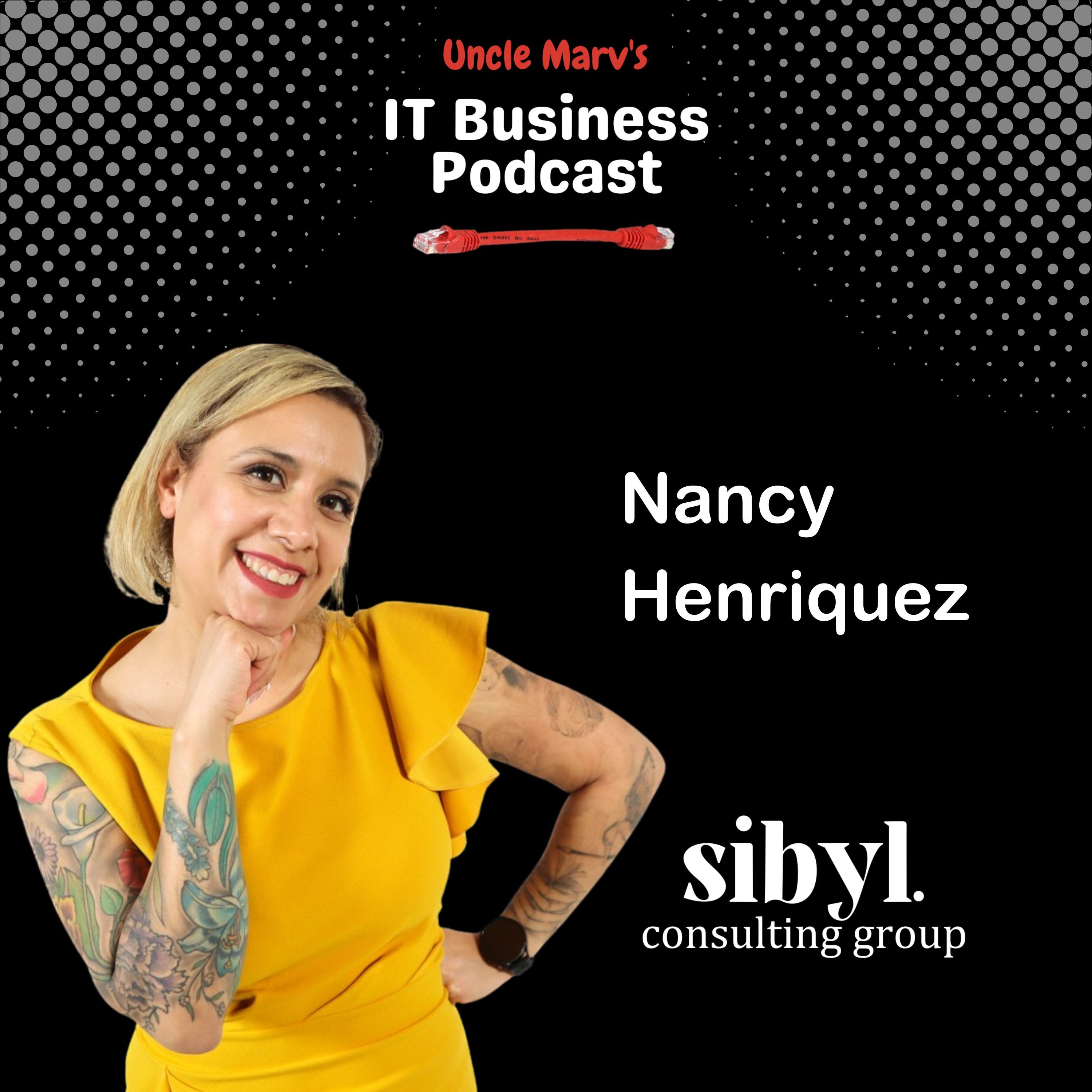
Tired of reactive MSP chaos? Nancy Henriquez delivers battle-tested wisdom from her book "Break-Fix to Breakthrough," showing how she lived her own advice amid family health crises while restructuring Sibyl Consulting. This episode arms you with the mindset upgrade every IT pro needs to scale without burnout.


Nancy Henriquez of Sibyl Consulting Group returns to share her journey from building and exiting an MSP to authoring "Break-Fix to Breakthrough." She discusses shifting from reactive leadership to proactive mindset, redefining success around purpose and fulfillment, and applying book lessons during family challenges. MSP owners get real talk on mindset shifts for sustainable growth.
Why Listen:
- Shift from reactive leadership causing sales slumps to proactive strategies that align with your purpose.
- Redefine MSP success beyond endpoint counts or exits—focus on fulfillment and team impact.
- Learn from Nancy's real story: building/exiting MSPs, writing amid grief, and coaching inflection points.
- Tackle limiting beliefs and "work on, not in" your business for true breakthroughs.
- Prep for MSP Expo with insider tips on leadership transitions any size MSP can use.
Mentioned Entities with URLs
- Break Fix to Breakthrough: https://amzn.to/4ql21G5
- John Maxwell Leadership: https://www.maxwellleadership.com/
- MSP Expo: https://events.channelpronetwork.com/msp-expo
- Fort Lauderdale: https://www.fortlauderdale.gov
- SuperOps: https://superops.com/
=== SPONSORS:
- Livestream Partner, ThreatLocker: https://www.itbusinesspodcast.com/threatlocker
- Technology Partner, NetAlly: https://www.itbusinesspodcast.com/netally/
- Technology Partner: Bvoip: https://www.itbusinesspodcast.com/bvoip
- Technology Partner, Liongard: https://www.itbusinesspodcast.com/liongard
- Travel Partner: TruGrid: https://www.itbusinesspodcast.com/trugrid
- Digital Partner, Designer Ready: http://itbusinesspodcast.com/designerready
=== SHOW MUSIC:
- Item Title: Upbeat & Fun Sports Rock Logo
- Item URL: https://elements.envato.com/upbeat-fun-sports-rock-logo-CSR3UET
- Author Username: AlexanderRufire
- Item License Code: 7X9F52DNML
SHOW INFORMATION:
- Website: https://www.itbusinesspodcast.com/
- Host: Marvin Bee
- Uncle Marv’s Amazon Store: https://amzn.to/3EiyKoZ
- Become a monthly supporter: https://ko-fi.com/itbusinesspodcast
Hello friends, Uncle Marv here with another episode of the IT Business Podcast, the show for IT professionals and managed service providers where we help you run your business better, smarter, and faster. Well, today is a Monday and the only reason I'm saying that it's the day after the Super Bowl and it's the day before the Hashtag Tech Super Show, Hashtag MSP Expo, Hashtag IT Expo, Hashtag whatever Expo you want to throw at it. That is a big event that is happening here in Fort Lauderdale this week.
I've talked about it before on previous shows, but just so that you know, I will not be available for a live show on Wednesday. There is a dinner that I will be attending that night, all part of the Expo. And ahead of that Expo is somebody that I should be seeing down here in Florida.
And my guest today, Nancy Henriquez from Sibyl Consulting Group. Nancy, how are you? I'm good. How are you? I am good.
So just to let the listeners know, if you're going to see her, why don't you do the podcast there? And the short answer is, we don't know our schedules and things are hectic. I will not be doing podcasting at the Expo. So you never know.
But I may carry a microphone around just to see what happens. You know, those seem to be some great shows whenever they're, you know, like pop-up shows. Why not? So it's been a while since you've been on the show.
I believe it was last April or May. Does that sound about right? Mm-hmm. All right.
And so you've been busy with Sibyl Consulting. So why don't we do a little catch-up with that? How did last year end up and what are we looking like for this year? Yeah, well, life happened last year. Oh.
Well, let me start there. Okay. No, Sibyl Consulting Group was going really well.
We were working with several MSPs in multiple different capacities. And then life hit me in the face. And I had to kind of take a step back and assess life in the sense that, so I got the difficult news that my grandmother's cancer had come back.
And my mom was the one that is her primary caretaker. And at that time, she said, I need some help. And thankfully, I had some amazing partners.
And so in the middle of all this, let me say that I was also writing a book. And so I had to prioritize and say, okay, can I actually take the advice that I was writing in the book? Can I eat my own dog food here and actually do what I needed to do in order to be there for my family? And so, as I was saying, I had some great partners. We did some restructuring around Sibyl.
And so while Sibyl is still around, I'm focusing on coaching certain clients. So I'm working exclusively with certain clients only. And then my partners are handling everything else.
And so that's where it's beautiful that we could do that and that I could get to take a step back in that sense and really focus in on what I am really, really good at and also be there for my family during that difficult time. All right. Well, without getting too far into it, I will say that I understand and I can actually say that because my mom has been going through her own battles with cancer for the last five years and she's hit a bit of a rough patch.
So I get it. You know, having to cancel weekend activities to run up to visit her and to coordinate things with the sisters, it's it's it's a lot of work. Yeah.
So aside from that, so you kind of it sounds like you. Allowed Sibyl to do stuff, it wasn't like Sibyl stopped working, it's just that you weren't a main part of it. How has how has it been kind of getting back into the groove? It's been good, you know, it's one of those where having some time off isn't a bad thing, it refreshes your mind, it sharpens things where you didn't realize you need sharpening and things like that.
So for me, it was a really good experience in the sense that because I was working only exclusively with certain clients in certain ways, it allowed me to really hone in on that transformation aspect. And so for during this time, it was saving me mentally just as much as I'm ultimately speaking, saving these clients that were looking for a way to transform their business. And so it was very gratifying.
And now I'm slowly kind of bringing or kind of getting back into the groove of things and finding my finding my way in my new reality, as I like to say, because going from being a now a primary caretaker for someone to getting back to work, that's been yeah, it's a process. It's a process, but we're getting there. All right.
So let's go ahead and let's go ahead and do this shift. You mentioned the book in its title, Break Fix to Breakthrough. I have a link to it in the show notes.
And you mentioned that because life happened, you had to actually look at the fact that are you eating your own dog food in a sense? So let's start with, you know, the book, because you talked about trying to live what you had written about. What's the book about and when did it actually get finished? So the book is really it starts off with the life lessons that I've learned in this industry over the last 20 years that I've been in this industry. And so I started writing it because I wanted to help other MSPs, other business owners that may not have had any kind of business education because most of us have not.
And so where can I take the life lessons that I've learned throughout my experience and kind of condense it and make it so that someone else can read this book and possibly save themselves years of mistakes and or hard trials that I went through. And it's so it dives into some of my experience of starting an MSP from scratch, scaling it, exiting what I learned, what I've learned since then and working with other MSPs as well, and then also bringing it into what were the actual things that made it difference. Mindset, leadership, you know, all these things that usually we don't talk about that are a part of forging ourselves as leaders within our businesses and learning to let go sometimes so that we can grow in a lot of ways.
And so it's ironic because some of these early lessons for me came from my grandmother and she's very much a part of the book, which was very difficult to realize that I was writing some of the life lessons that she taught me before even knowing what I was going to go through with her towards the end. And so I ended up finishing the book. John Maxwell Leadership is the company that published the book and the book was published right before my grandmother fully went into hospice.
And so I could not bring myself to even open the box when it arrived in my house. But it was something that I was also able to kind of show her a copy of it and say, hey, look, I'm an author and you're a part of that. And so it was also a moment where she was very proud at the same time.
I bet she was. So the book really, like you said, chronicles your journey and it sounds like, you know, from the face of the book, it looks like it's going to be something that a lot of us always hear about. Here are the things you need to do to, you know, go from break fish to being a true managed services.
Here's pricing here. Here's this. Here's your stack.
But you talked about, you know, having a mindset to deal with as well as, you know, learning how to become a leader, which I think those are the things that really get us a lot of times. It's yeah, it's easy to throw together checklists and repeatable processes and stuff. But being in the mindset of a leader, somebody that's actually going to grow a business.
What were some things that you were able to put into the book so that others understand? Yeah, I mean, if we really think when I started to write the book and started to really think about what was my mindset during certain times when I was going through the transition of a break fish shop to an MSP, I realized that as I was building my MSP, I was still very much in a reactive mindset. So my leadership was very much reactive. So even if my service offering was managed services and more proactive, my leadership was not.
And there was that was causing friction at some point in time. That friction led to what I would say personal problems as well. And so I realized that I was running a business that was not necessarily going at the same pace as I was because I was still reactive in many ways.
And so I had to change how I was approaching leadership within itself. And so many of us talk about, you know, running like working on your business, not in your business, which is one of those aspects of being a proactive leader rather than a reactive leader. But that's just the surface.
Right. We have to deal with limiting beliefs that we walk into our businesses with day in and day out that we don't realize impact what we do, how we make certain choices, what we focus on, what we what we choose to ignore or to avoid just because it makes us uncomfortable. You know, those are all things that are more so in line with being a reactive leader than a proactive one.
And that's something that I realized I needed to completely change within my business if I wanted it to grow beyond where I was at. And I've noticed that same thing over and over again, even in managed service providers that have made that transition or that even started off as proactive managed service providers, but continue in a reactive mindset. And so then they're wondering, why are my sales not growing? Why is my marketing not working? You know, so all of these symptoms come from the fact that as leaders, we're still in a reactive mindset.
One of the things I think that gets us. Is that in the beginning, we start out with that technical mindset, we're not thinking about being leaders, we just want to own a business or get away from another company that we worked for because we can do it better or whatever. We're natural fixers.
Yes, we are natural fixers. But one of the things that I don't know if this is going to be a big focus this year, but one of the things that I've been talking with people about, it hasn't transitioned to the to the show yet, but I think it's going to is that a lot of times we don't start with the end in mind. We just start with we're going to fix this or we're going to do it better, but yet there's not a true end in sight.
And a lot of that has to do with what do we believe. And MSP looks like or what do we believe success looks like and. Let me ask you the question and then I'll follow up because I didn't I was just thinking of something, I'm like, oh, that's going to turn a sideways, but for you, what is your personal definition of success, one for you and how you ended up and then to what you're telling MSPs now as part of Sibyl? Well, that's a powerful question, Marvin.
So, you know, it's funny because my definition of success has changed over the years. I used to think that success for me looked like exiting at a certain point at a certain dollar amount X, Y, Z type of deal. And while that may be a goal that to me, I've been there, I've done it.
And what was the result of that? Right. Me looking for the next thing, me continuing to push the line on what success was this year because of what I've been through this year, I had to completely redefine what success looked like for me. And it's this year.
It was a year of clarity and purpose. And so for me, success now looks like, am I fulfilling my purpose? Am I am I fulfilled at the end of the day? Am I can I be grateful and sit in that gratitude for what I do have and how I'm able to serve others? And so because of that shift. For me, I'm looking at success in the terms of how are the people around me succeeding? Are they meeting their goals? Are they are they satisfied in their lives? Are they fulfilled in their lives? Because if I can help impact that, then I'm also fulfilled, which for me that there is no greater impact than that.
Right. And so for me, that is success at this point. But from the MSP standpoint, we're told MSP success really ends in the sale of your business or X number of endpoints at X number of dollars per seat.
Which is something that. I struggle with. Because I don't live that way, I don't run my business that way, but it is a struggle because my definition of success doesn't match what everybody else's definition of success is.
So what are you saying to MSPs when, you know, they have to start looking at their business and figure out one, are they happy to are they successful? How are you helping? Yeah, so I think that certain outcomes are a natural a natural way of getting to that. Right. So.
As a. Whether you're an individual MSP or an MSP that is an MSP owner that is running a 20 person, 20 tech company, your goals are going to be based off of your individual fulfillment, because everybody is different. How we define success and how we feel that success is completely different. So for me, it's not a matter of following somebody else's template or the way that they've done it.
It's more so of discovering what is your purpose, how are you fulfilled and how are you building a business around that? Everything else in terms of whether the business itself is healthy and whether you can have a great exit are natural outcomes in my mind of that, because if. If you are aligned with your purpose, how you're fulfilled, who you're helping, and then you can focus on those the different steps within the business in order to make it a healthy business. You're going to get an exit if that's what you want.
You're going to be able to hand it off to somebody else if that's what you want. Some people's goal in life is to hand their business over to their children. You know, so it's a generational thing.
So it really depends on is your business aligned and can you can your business run in a way that supports your life in the way that you are trying to live and not the other way around? Because once you turn that around, now you're talking about really working, working in a business. Now you're a slave to your business, which puts you in the exact same position as working for somebody else that you weren't happy with. So why would you put yourself in that situation instead of just figuring out what is best for you? Especially if you find out that you're just unhappy with yourself as you were with that other person, a very enlightening situation.
All right. So I did ask you this question before, but I'm going to try to ask it in a different way. Having gone through what you've gone through, you're a year or so later into the journey.
You've mentioned your change in perspective. So if somebody were to question, you know, how is civil consulting? Different than all the other MSP, you know, coaches, growth experts, whatever we want to call them. There's a bunch of them.
What makes you stand out? Well, the very first thing is I want to know and understand what you are wanting. So for me, we start off with clarity. And we start out with clarity by really defining your purpose.
And a lot of people don't understand or know what their purpose is. And even if they do, they feel like, OK, I think I've got it. But a lot of the times it's not truly aligned with the business.
And so that's where I start off. It is very much a beginning with the end in mind, but beginning with the end in mind in the sense of your purpose. And then how do we back the business into that? And so for me, it's a little bit different because it's a it's a little nonconventional.
I'm not starting with your operations and your marketing and what's not working there because I can tell you just by hearing where you're at in business. A lot of the times I can understand where those pain points and why that's happening. And a lot of the times that's connected to your mindset.
So that's where I start. And then we go into everything else when it comes to the business so that we can start aligning it. A lot of that means transformation across the board.
Which I love seeing and I love being a part of. And it's also very hard. I've had some clients tell me like they tell me, you know, you're my therapist, right, without being my therapist.
And I'm like, no, I'm not. I'm not your therapist. That is not what I am doing.
But there is an element, a very human element to growing a business that we need to address that a lot of us are not addressing. And so we're going surface level when it comes to everything else. And then we're running into issues like, why isn't this working? Why doesn't this template work? Why doesn't, you know, I did the exact same thing that this person did and it's not working for me.
And that's because we're all different and we need to individually figure that out before we even go into anything else. All right. So having said that, when you're evaluating who you're going to work with, an MSP reaches out and says, hey, I want to give you a shot.
I want to give you a try. How do you define your ideal MSP client? And I'm going to ask you this in terms of size, in terms of maturity and pain points. Since you mentioned pain points a lot, you mentioned, hey, you're my therapist.
When you're when you're trying to identify that MSP client, what is what is your scale when it comes to size, maturity and current pain points? So I would say that it's less about size and maturity. It's more so of an inflection point in leadership. And a lot of the times that can happen as an individual.
So a one man shop who's trying to determine where do I fit in this MSP world? What how am I trying to build a business? So very beginning aspect of it. And at the same time, I've worked with teams, management teams that are running multiple departments within an MSP and figuring out how are they aligning? And the reason why is because there's transitions that are happening across the board and trying to get all of that done most of the time because the owner is trying to step out in one way or another. And so it's really not about size or maturity level.
It's more so of those inflection points that happen right before transition. And that's why I talk about pain points a lot, because you feel those pains as they're happening or right before they're about to happen. All right.
So her book Break Fix to Break Through is out on the Amazon. You can get it in paperback and you can get it in Kindle form. Stop reacting.
Start leading a proven path for MSP or MSPs ready to break through. She is Nancy Henriquez of the Sibyl Consulting Groups. I almost called you Sibyl, which I've done before.
Yes. All right. So you're going to be here in Fort Lauderdale soon.
Part of the IT MSP Expo and everything. And probably going to work on that tan, too, aren't you? I am. Absolutely.
All right. Well, Nancy, hopefully I will get to see you when you're here. Thank you for coming on the show.
And folks, if you want to check her out, find all of the links in the show notes and check her out. Vance, thank you. Thank you for having me.
All right. That's going to do it, folks. We'll be back with more from the IT Business Podcast soon.
Follow us on your favorite pod catcher. Check out everything over at ITBusinessPodcast.com. We'll see you out there. Until then, Holla!

CEO
Nancy Henriquez is the CEO of Sibyl Consulting Group, a firm specializing in helping managed service providers (MSPs) and small businesses optimize their sales, marketing, and client onboarding processes to drive sustainable growth.
Sibyl Consulting Group is not a typical consulting firm. The team consists of technology and business executives with hands-on experience, providing integrated solutions in marketing, sales, and operations. Their mission is to support small businesses and MSPs in overcoming challenges such as stagnation, inefficient processes, and competition, ensuring clients not only survive but thrive.
Nancy is a highly regarded leader in the MSP and IT consulting space, leveraging her entrepreneurial background and industry recognition to help MSPs and small businesses grow through Sibyl Consulting Group. Her approach is grounded in real-world experience, a strong focus on efficiency, and a commitment to client-centric strategies.


