

 Apple Podcasts
 PocketCasts
 Overcast
 Spotify
 Podcast Addict
 Amazon Music
 iHeartRadio
 PlayerFM
 TuneIn
 Audible
 Castbox
 Podchaser
 Goodpods
 Pandora
 Audacy
 Deezer
 Spreaker
 Don’t Be the Single Point of Failure (EP 1071)
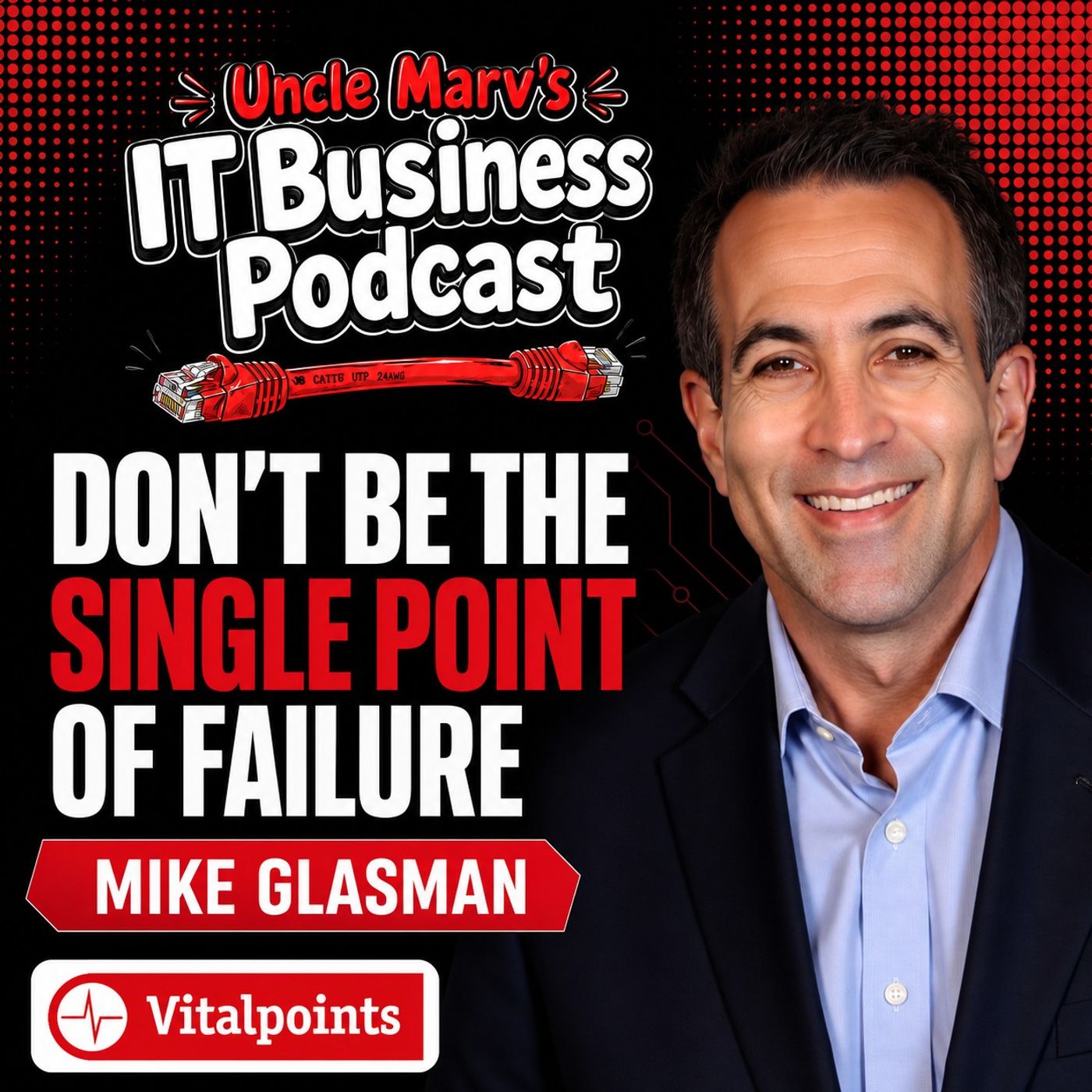
Mike Glasman built his MSP while keeping his day job, then designed the business from day one so clients would rely on a help desk and team instead of one owner’s cell phone. We talk about using enterprise experience to stand out, choosing tools based on the real problem, and protecting both your clients and your lifestyle.
I had a great conversation with Mike Glasman, president of Vitalpoints IT Services in Los Angeles, because he came into the MSP world from a path many of us did not take. Mike spent years in channel and enterprise technology sales, working around major vendors and large solution providers before he became an MSP owner. That background taught him how to get in front of customers, ask better questions, evaluate vendors, and build credibility around difficult technical problems, even though he does not position himself as the person who has to fix every ticket.
What really stood out to me was Mike’s insistence that the owner cannot be the single point of failure. He outsourced help desk work from the beginning, built a bench of people he could call on for specialized projects, and trained clients to use the support process instead of calling him directly. We also get into the realities of growing on the side, the high cost of client acquisition, one-year agreements, avoiding unnecessary tool commitments, and why your standard stack still needs room for exceptions when a client has an unusual backup, Wi-Fi, Mac, or large-data problem
=== Chapters
- 00:33 Meet Mike Glasman of Vitalpoints IT Services
- 01:44 From Technology Sales to MSP Ownership
- 03:06 Why Mike Skipped the MSP Franchise Model
- 05:56 Growing an MSP While Keeping a Day Job
- 09:26 Vitalpoints Services and Enterprise Sales Experience
- 11:16 Wi-Fi Expertise and Solving Difficult Client Environments
- 15:55 Vendor Management and Avoiding Trade Show Follow-Up
- 19:00 24/7 Support, Outsourcing, and MSP Contracts
- 23:02 Going Full Time and the Cost of Client Acquisition
- 30:22 Backup Strategy for Large Data Environments
- 36:06 Building an MSP That Does Not Depend on You
- 40:49 Why the Owner Cannot Be the Single Point of Failure
=== Guests: Mike Glasman
- Website: https://www.vitalpoints.net/
- LinkedIn: https://www.linkedin.com/in/michaelglasman
=== Resources / Companies / Products / Books / Podcasts
- Datto ALTO: https://www.datto.com/products/alto/
- Druva: https://www.druva.com/
- Veeam Backup & Replication: https://www.veeam.com/products/veeam-data-platform/backup-recovery.html
- Dell PowerProtect Data Domain: https://www.dell.com/en-us/shop/storage-servers-and-networking-for-business/sf/powerprotect-data-domain
- Pax8: https://www.pax8.com/
- RUCKUS Networks: https://www.ruckusnetworks.com/
- Cisco: https://www.cisco.com/
- Aruba Networking
- Website: https://www.arubanetworks.com/
- APC by Schneider Electric: https://www.apc.com/
- Autotask: https://www.kaseya.com/products/autotask-psa/
- Kaseya: https://www.kaseya.com/
- CDW: https://www.cdw.com/
- SHI International: https://www.shi.com/
- Insight: https://www.insight.com/
=== SPONSORS:
- Technology Partner, NetAlly: https://www.itbusinesspodcast.com/netally/
- Technology Partner: Bvoip: https://www.itbusinesspodcast.com/bvoip
- Travel Partner: TruGrid: https://www.itbusinesspodcast.com/trugrid
- Digital Partner, Designer Ready: http://itbusinesspodcast.com/designerready
=== SHOW MUSIC:
- Item Title: Upbeat & Fun Sports Rock Logo
- Item URL: https://elements.envato.com/upbeat-fun-sports-rock-logo-CSR3UET
- Author Username: AlexanderRufire
- Item License Code: 7X9F52DNML
=== Connect with Uncle Marv
🌐 Website: https://www.itbusinesspodcast.com/
🎙 Host: Marvin Bee
🛒 Uncle Marv’s Amazon Store (gear & tools I recommend): https://amzn.to/3EiyKoZ
☕ Support the show: https://ko-fi.com/itbusinesspodcast
If you found value in this episode, share it with another MSP, IT provider, or tech entrepreneur. Your support helps keep practical, no-nonsense IT business conversations coming every week.
[0:20] Hello, friends. Uncle Marv here with another episode of the IT Business Podcast, the show for IT professionals and managed service providers, where we help you run your business better, smarter, and faster.
[0:33] Well, folks, we are continuing on where I am interviewing other IT business owners, managed service providers throughout the month of August. So today I'm joined by Mike Glasman. He is president of Vitalpoints IT Services in Los Angeles, and he brings a little different perspective to the MSP world. And he started by building a career in technology sales in the channel. He worked with a lot of those major vendors before turning into MSP ownership. So we're going to get into that. Michael, welcome to the show. Thanks for having me. All right. So it's a little bit different. I've heard of some vendors where they may have started outside the technical role, I guess. Most of us were techs and we just thought we could do the job better than our owners and start our own business. Or we grew up geeking out over tech and decided that we can make money from it. Very few people come at it from a different perspective, at least as an MSP owner. Most go into vendor sales or something like that, uh, what made you decide to, to do the MSP?
[1:44] So I always wanted to run an IT services business, but the IT services business wasn't ready for me. So I got out of college with, and I started computer science, went to, what is it? MS, sorry, MSP. I went into MIS as a degree. So I had a good formal background on the business side as well. And I wanted to do consulting. That's what we all wanted to do back then. But I realized I didn't know how to get customers. So I went and said, I m going to go work for a VAR. I went to work for what ended up being one of the first Cisco VARs in Southern California. And his whole journey was, if I want to be an IT consultant, right, I need to learn how to get clients. And once you get into that track, it's not a bad gig being a sales guy. So I did this for decades and decades and ups and downs of good jobs, bad jobs. And one day, I supported a very large MSP as a sales rep and that person that I worked with moved on and had told me about the franchise model and so I was like, well, I can do this, this is great and he's like, you'd be great at this, you should go be a franchisee of course, I decided not to be a franchisee and went into the business.
[3:06] Oh, interesting. Now, when they told you could do it, obviously you probably were like, yeah, but, uh, had you, you know, witnessed other service provider shops? Did you have any that you modeled what you did after? No so i basically looked at this franchise model and i was like okay wait a minute so there's no golden arches you've never heard of them right, there's um they don't make anything they outsource the help desk it's not their help desk they tell you to get all their tests tell you get all these tools that i can get i was like so what am i getting from you guys I m not getting brand recognition, i know how this business works, i can assemble all these vendors without you and not pay your royalty fee. So I said, I'm just going to do it by myself. Hmm, interesting.
[3:54] So did you not buy any of the regular tools that most of us have? Oh, I did, but I wasn't ready for them. Oh, okay. And I said that all right, well, I need Autotask and I need a help desk. I need all these things. I signed up, I signed a year contract with Autotask and I didn't need it because I hadn't grown to the size where you need, you know, you need that type of tool. And then I kicked the tires. I hired a company for branding. I hired someone who had worked for Kaseya to help me with my branding and help figure out what RMM I was going to use. And ultimately, I had a good sales background. I didn't have a marketing background. So again, what.
[4:39] Were the franchisees that I interviewed telling me they were using to get leads and sales and referrals or whatever? And what, you know, what we recommend or what were we recommending for our service desk? Well, there's the guys in, you know, in India you could use. There's the guys in Massachusetts you can use. Go ahead and pick out who you want to use. We don't even care who you use. So I just started looking at these vendors and interviewing them and talking to them and saying, who's going to work for me? And ultimately, I ended up with this local IT service provider that basically was focused on one very niche vertical. And i said i you know i want to learn how to package how to price out or whatever and i went over and talked to the guy i said I ll try he was looking for a sales guy so i went over and interviewed him and he wasn't going to pay me much he was interviewing me and i was like you know what you'd be a really good service desk for me so instead of him hiring me i hired them as my as my uh as my service desk as my help nice and, so what did i use for a tool i was like you know what would be easy why don't you see an RMM they're using why don't what would be easier than using the same RMM they're using, right? So I'll take his stack and use his stack. Gotcha. All right.
[5:48] Now, how far into the business did you do that? Had you already been working for a year or two, or were you able to do this right at the beginning?
[5:56] So I, I had to find financial pressures that we all have. Right. I was, I have a family on the soul and the only income for, you know, for me, a wife and three children. Right. So going and walking away from a lucrative sales career as a, uh, to, to go and start my own business was not an option. And that was the other thing the franchisors wanted. They said that you got to commit to this full time. And I'm like, I'm not committing to anything full time. I'm committing to, I got bills to pay. And this is like a side hobby project that I'm just going to grow on the side. And that's what I did. I grew it on the side, and I kept on growing it to the point where one day this was enough to sustain me. Okay, that was nice. That's kind of the way I did it. I worked at a computer repair shop, and we got to do outside service. We had to do it on nights or weekends. And my boss had this stupid rule that if we needed to use parts, we got them from him.
[6:56] And at some point I'm like, you know what? He's charging me retail.
[7:02] So I got to go find my, uh, uh, my own, you know, distributors and stuff. And I did, I found one, uh, it got sent to the office by mistake. He found out and got mad. So, uh, but, um, I, I see where you're working. Yeah. You gotta do that. And then once I got to the point where I was making as much on the nights and weekends as I was at the day job, it was time to go. So very nice it wasn't even that easy for me i was making a lot of money on the side gig and it wasn't taking me a lot of time like the first cop client i had was a very large corporation that wanted like basically remote on-site it support in a bunch of cities and so i literally went out and figured out the staffing business around hiring various people in different cities to go out and do support for me and i would buy x and sell, y and i was working about two hours a week, two hours a week. And I was making six figures on this side gig. I was like, well, why would I kill? Why would I, why would I walk away from this full-time job while I'm doing this other thing? And that was not even my first incarnation because sales and IT sales can be a very tough gig. It is extremely lucrative. If you're politically polished, you want to say all the right things at all the right times and you don't make waves. But it can be, it can be treacherous as well. So I had times when I would lose a job because a company got bought out by another company, data sizing, whatever. And so first couple iterations was I was selling used equipment.
[8:31] Big deck alpha servers to my former clients. So it wasn't the first time I'd set up an S-corp. I knew how to do all those tactical things. I knew how to, you know, I had a family member who could do business tax returns for me. So this is literally the third incarnation. And I ran the staffing side for a very long time and just kept on, you know, pouring money into biz dev and finding a new client and, you know, how do you find a new client and tell them you have clients before, right? You know, you know, you know, so I got the, you know, I had this one staffing company that the company I was doing staffing for and they were big. So I, it's the credibility. We're doing, we're doing, uh, onsite IT support for a company with 1400 endpoints, right? They're referenceable. So that was part of the strategy too. And so that's what, that's who you use to help you support those other cities no.
[9:26] People okay to support those other cities okay now did you do that through your contact you know what let's step back because i want to i want to help people understand um first of all folks the website vitalpoints.net is where you can go see, uh what mike is doing and he's got and all the typical stuff we see 24 7 local it support uh wi-fi experts on staff HIPAA NIST compliance all of that but your sales background took you through companies, you know dell apc.
[10:02] Uh ruckus am i correct there uh aero electronics one of our early distributors right, But at a certain point, some of this stuff comes off, right? So I started out working for a $20 million IT solution provider. We were doing complicated stuff. You were like, as a sales guy, the only thing you didn't do was installation. Right. I mean, we're cracking open a book that looks like a phone catalog, like a two-inch catalog with deck alphas and configuring the keyboard, the monitor, the operating system, the this, the that. And next week, you're selling an HPUF system at the same thing. So I was selling Cisco routers before anyone was doing it. So from there, I go to work for Wiley. All we did was deck office. Great place to learn. And then from there, I went. I had some not-submit jobs as well. I had some jobs that did not make the resume, didn't stay. You don't see them. But I ended up at three different Wi-Fi companies. So after Dell, I was at three different Wi-Fi companies. I started out with Maru Networks.
[11:16] Then I ended up at Aruba for about two seconds. Then I ended up at Ruckus for a little bit of time. So one of the things I, you know, and you've got APC on there. So one of the things I walk into when I walk into an end user to a client and talk to them about their environment, I have this huge amount of credibility talking about how, you know, the types of implementations I've done. I've done massive data centers. I know more about, you know, closet cooling and data center cooling than anywhere you're going to find running an MSP. I know more about Wi-Fi than anywhere. So when we talk to clients, you know, how do I pitch clients? It's like, you know. How many of you have clients that aren't happy with, that you talk to, are actually happy with their Wi-Fi? None of them are happy with their Wi-Fi, right? But we all know how easy it is to fix, right? Wi-Fi is easy to fix if you know what you're doing. So that's one of the first great lead-in for me. Well, the other thing, too, it's easy to fix if you're willing to spend money. And so you worked at Ruckus and I'll, I'll, you know, I'll ask you this question because I went through a period of time where I was trying all the access points, and, and I just finally got to the point I was working with the medical office. They had a super dense environment.
[12:37] They were, they were on the third floor of an office building where there's, you know, a hundred other access points and everything's over bleeding. And they didn't want to spend money. And I'm like, look, if you want to fix this, I know a product that'll fix it is Ruckus. And it took them about a month of going through other products. I know Aruba. I tried them a couple of times. They were all right in my opinion and stuff. So working at Ruckus...
[13:06] How, let me ask this in a right way, because people, people want good, but they don't want to spend. And ruckus, ruckus is that one where, look, if you, if you want to get it right, spend with ruckus. How was that working there, selling that product, dealing with MSPs like me, who are dealing with customers that are price sensitive?
[13:30] So that was the best part we didn't deal with msps right now people you know no it's really funny if you look at the way this business is set up look at, and I ve talked before going full-time i want to go full-time into this thing it's like i like making two incomes it was great, i interviewed for a lot of jobs and they're like hey we want you to call on msps and you're going to laugh so I m going to tell you this might be the most interesting part of the conversation I'm like why would you want to call on these guys, they don't have a lot of accounts all their accounts are small you know.
[14:05] It doesn't scale that well wouldn't you rather call I called on large vars I called on, Did I call on CDW? Yeah, I worked with CDW. I called on massive VARs.
[14:20] And I worked for a cloud solution provider as well that basically sold a private, solution similar to Dropbox, an on-prem slash private cloud solution of a cloud file sharing solution. And so I was like, I was calling on SHI. I called on Insight. And they're calling on clients with thousands of endpoints and hundreds of endpoints. So when you look at who's selling to us they're typically working remote and they're on the other end of a phone line right that's who you get, not me I m going out as a sales rep and I m going out and visiting pc mall and insight locations once a week in Chicago and in Montreal whatever and I m face to face telling them why they need to sell equal logic, like heavy duty right 100 million dollar quota versus I m in wi-fi and i got like a four million dollar quota so uh I m not looking for msps I m going in to these you know to our national channel account manager who's calling on some giant massive apartment saying hey get me in the door over here because you know i can you know if we partner together if i partner with my with the i either was the channel manager i worked as an aeo as an end user guy at ruckus i worked, and Ruckus had, the guys I worked with were the best channel managers in the business. To this day, this guy's great, right? Versus ATC, I had to train someone who took credit for my efforts, right?
[15:49] I didn't care about you guys. I didn't care about us. And when I talk to vendors.
[15:55] As an MSP, you do vendor management, right? Yes. First thing I tell them is I'm small and they shouldn't care about me. But the second thing I say is I'm never going to waste your time. I used to be a salesman. I'm the leanest guy you're ever going to. When I call you, it'll be very infrequently. But when I do, you want to pick up the phone. So a very different approach to, you know, to, you know, understanding the business is imagine calling on a, on a, on a partner, business partner with 50 sales reps, 100 sales reps, where CDW's got like 3,000 sales reps. Okay. So now you're on the other side now. So obviously you have some insight, but now you are you feeling some of our frustration now where, you know, we're getting calls all day long from vendors in our space and, you know, somebody like you before maybe wouldn't call on us, but everybody's calling us. So how do we balance that? Don't take their call. My stack is good. Every day I get someone calling to pitch me something I don't need. It's no different than the guy calling and telling you he wants to remodel or renovate your house or tell you to build a secondary unit in your house. I'm like, look, I'm happy with my stack. I don't need you.
[17:17] It drives me crazy that every time I go to a trade show, I get like 50 calls. I think the best thing we could do is go to the trade show and Don't give anyone your card. Like, seriously, if you go to a trade show and you don't sign up for any raffles and you give your card out to one or two vendors that you actually think you really could do something with, either today or in the future, you're going to save yourself a lot of time. I hate those calls. Well, that's true. But here's the kicker now. They want to scan you. And if you even stop by the booth, I hold my hand over my badge saying. Right. I flip mine backwards. Or they get the list of all the attendees. so they get your name anyway. So that's what happens. So let's do this. Go ahead. Maybe get a second email account with a separate name and go incognito. Like seriously, maybe that's what I'm doing because honestly.
[18:07] First of all, I'm going to tell you something about trade shows. I didn't want to go to trade shows. One of our preferred VoIP vendor basically said, you should go to this event. I'm like, why? I'm used to being on the other side of the table talking to people. These are a waste of time he's like mike, i know you i know the way you ask questions i know the way you what you do i guarantee you if you go to a trade show you will get value out of it so I m like okay well as much as i think i know everything i went to a trade show and i got value out of it so now i will go to trade shows so, what was the first one you went to as an MSP, okay i do think why'd you go to that one it was that big uh, tell it channel um channel of partners, the one that's all voice. Okay. Yeah. In Vegas. And I got value out of it. Okay. I don't remember what value out I got. They had enough to basically say, I'm doing one of these again.
[19:00] Nice. Okay. So let's go ahead and shift now to your, your services and your stack, because you, uh, all of us MSPs, we always start out trying to be everything to everybody. And then we, we learn that we got to pare that down. We got to, you know, we got to standardize our stack. We've got to, you know, shrink our vertical and stuff like that. Um, and we got to do contracts. So your site is still pretty open in a sense of doing 24-7 local support, the HIPAA nest, you've got the business-focused stuff, and then you've got flexible contracts and flat rate monthly pricing.
[19:45] So where do you want to start? well, i mean so first off we from the very beginning i thought we needed to not be a one-man shop especially when the one man is not very technical so from the very beginning we offer 24 7 because i outsource my help desk right so uh, i don't want to i don't want to i don't want any issues scaling I m a sales guy and i don't want any, uh and i want north American support and i want to make sure that, uh you know that we're always available because one of the things you know you were competing in if you're the ms2 is a one-man shop and you're on vacation, or you're sick i picked up a client from someone who's who lost it that lost their business because they were sick during covid, that's not me yeah i want to always make sure that you know sales hat on we're responsive to clients and that means 24 by 7 help desk yep.
[20:38] So what's next on your list? Well, let me ask about the contracts, because that's a big debate in our space. A lot of people are still doing month to month or at least a 30-day out. And then, of course, we're being pitched. You got to do multi-years, because that's the best way to get value in your business and to get customers to commit to you. Yeah. Well, so it's a tough one because how much does it cost to acquire a company? We all know it's a client. It's massive, right? So we do one-year contracts.
[21:15] I don't have 30-day outs, but what I do think is your worst nightmare is a client, and I haven't had this, a client who doesn't want to be there, right? Can you imagine having a client in a contract who doesn't want to be there and or suing them and trying to figure out how to get them to pay, they can make your life a living hell. So, I mean, I really don't want a client that doesn't want to be there. Like I just don't. So that's never been a thing for me to worry about. I think multi-year, I hate when our upstream vendors want to put us, you know who I'm talking about, in three-year contracts and get money from us when we're not realizing revenue from it. So I like to avoid those like the plague right uh but for me I m good with a one-year contract and I m flexible on onboarding right for me onboarding is like guess what, you know I ll give you the first month free i don't need to charge you a lot of money to get you on because I m going to put you on a year contract and i know what I m going to be profitable and you know if you're going to put them, i haven't had someone ask me for a month to month but if they did i said guess what, sure i need to recoup the upfront cost of setting you guys up so you're going to be paying a lot more up front for that month to month.
[22:29] Interesting. So you're not charging a super high onboarding fee? There's just not much to it. No, we don't. Because again, think about what it costs to acquire a client. And what I'm going to do is remove roadblocks. I don't want them to have a reason not to switch. Gotcha. All right. Let me throw a curveball at you now. Was there a surprise that, you know.
[23:02] Was something that got your attention when you made the switch, when you actually went and did MSP full-time? What was the biggest surprise that you ran into when you switched side of the office? I mean, it was during COVID. There weren't no surprises. Okay. It's still, I think, as a guy who knows sales, I'm still continuing to learn about marketing, continuing to invest in the website, continuing to figure out how to do things. The cost of client acquisition is so high. It's so much work.
[23:38] And that wasn't a great time to do it. No. But you said you got clients during COVID, which actually a lot of us were just trying to hang on to what we had. Yeah. It was tough. I'd lost my job. And I've always said to myself, when my back's up against the wall, that's when I'm going to come to life on this thing. I've been kind of just sleeping and going through the motions, growing a little bit here, growing a little bit there. Um, and, and, you know, to, I want to, I want to talk about your part of when am I going to be full time in this business? Right. Um, and how you approached it. Honestly, I was like living a double life. I wasn't competing with anything that my, uh, my, uh, employer would have cared about. I was in a different space, selling a different solution, wasn't selling any equipment at the time. And I knew that they would hate this. So I had, you know, it was literally like I had two LinkedIn profiles. No one in my employers up until maybe the last one knew that I was doing this. Not a clue. And my clients, they were all small. They weren't looking at, you know, these SME clients, they're not looking at LinkedIn at the time. They weren't looking at LinkedIn profiles. They had no idea. And so for me, the big relief was not having to live this double life. It was difficult.
[25:07] I was going to say it you were probably uh burning the candle at both ends although the way you described it you know, and I ll i don't know how much you want to share on air when we talked off air but you know, when you started and you got that multi-office client pretty early how did you well let me start with how did you get that client was it a referral was it you know something that you go out and market even though you're not a marketer, it was a referral yeah because you we all know but the problem is we don't have a lot of clients it's hard to get referrals this was a buddy of mine that i had known um since my uh older than me like a mentor since my second job out of college we're still in touch he's, well in the retirement age and he got me into this account, nice okay i still sell them so at one point they basically said guess what we're bringing this internal i cut a deal with them to hire my guys, they paid me for the hiring of my guys, and they still buy equipment for me, they buy a lot of Dell for me. Great client. I've been working with them for probably 15 years. We do. And so this is the other part of it is my bench, right? Like I've got, coming from where I come from, I've got like a deep bench. I know people that when I need to do a project, I have connections with people with enterprise skill sets that I can pick up the phone and pay a lot of money to do projects.
[26:31] Do you have people that call you and say hey how can i get to where you are how can i get those types of connections, no one's ever asked me about that no it you know no one no one's asked me about that but you know i get people that like that you know that one guy that that's ran a multi-million dollar business and he's a citrus guru and so he goes out and does you know how often do you get one of those well you do want to have an enterprise client right and so it's one of the things that i I d been in a couple of networking groups, and i walked in and it was with a small client with, like 150 endpoints and I m like yeah you're not going to leave it these people have a data domain and the guy looked at me he's like what's a data domain and I m like, oh you guys don't really deal in this stuff right like you know, i was I d come from another world as far as you know the solutions they come out of nowhere Have you ever, and not to put you on the spot, have you ever heard of Druva? Yes.
[27:34] I had one of my buddies was working for Druva right so i needed to do a backup of some client with a bunch of small vms in their environment and we ran the numbers on it and i was like Druva is a great solution right for their particular environment versus you know a bunch of vms each one small not a lot of data Druva was a great solution no most msps are not selling Druva no right now, no but i mean I ve heard of it I ve never used it but I ve heard of it, great solution well here's the other thing mike, Druva is not running in our circles either.
[28:09] Right there's a lot of imagine you're in a room you know if we pulled your you the people in this podcast how many of them knew who data domain was uh.
[28:20] Well you I ll be honest i didn't know i saw i what is data domain but i sold one right okay competing with these guys right so it's you know um, having and again having that outsource bench right like if i was trying to support these guys this particular client um refused to put on this is you know again let's say 2015.
[28:47] Right whatever time it was 2016 i still have a full-time job uh and i get this client and they refuse to do any sort of antivirus and they get screwed royally, and they're doing like help desk on their servers only with us which I m outsourcing to my outsourcer at this point, and they need to recover off of the data domain and my the average MSP is going to be i don't know what to do with this stuff right but i happen to have my help desk is local, their strategic partner I m their only wholesale client. And so we go out and we sell that we spent three weeks recovering this thing. And I'm going to work every day and just knowing that it's getting done. All right. So I just did a quick lookup. So the data domain is the, uh, I'm assuming we're talking about the Dell power protect system. Right. So data domain was, uh, was a company EMC bought. They do enterprise, uh, you know, D do, there is a D do system. It's an on-prem D do system for backing up. Okay. So I'm an HP shop. So that, that may be one reason why I'd never heard of it. I thought you said you had, uh, okay. I mean, I've worked with Dell Systems, but we sell HP by default, HP servers and HP environment. When's the last time you had a client spend $150,000 on a backup solution? On a backup solution?
[30:15] Yeah.
[30:18] No, it was only $60,000. So that's the problem. So that's the whole thing.
[30:22] Our clients aren't spending $150,000 on backup. Right. Right? So now I'll give you an example. You want to talk about stack. I like my stack. Give me a quick stack. We're going to run out of time anyway. So we use Datto Altos for everything because they're cheap. Then I have no choice. I've got this one where Datto's don't make sense, and I go and I put in Druva at a certain point. Then I have a client. We have a lot of Mac expertise. Me and we have a really good Mac bench, people that like to do Mac. So we've got a couple of creative clients. So creative clients now have tons of data video whatever files they're massive try and back them up we have a client with 120 terabytes of backup, how are you going to back up 120 terabytes i don't have 150 000 there's 10 employees.
[31:17] What am I going to do to back up? So now I'm like spinning my wheels for these. First one was one with 20 terabytes. Same situation. 10 employees. I got a fair how to back up 20 terabytes. Oh, and they're on a Mac server. Guess what? Mac server's gone. Backing up Mac servers is not good, and there are no Mac servers. Other client, we get them on new server. They got 120 terabytes. By the way, now they're up to probably 200 terabytes. So we had to go find a solution, go out, and who do we talk to? Well, you know, Marv, you and I already talked about this on the prep call. At the time, I started leaning heavily on PAX 8. Because when I started working with them, these guys were great about telling me what solution to use for this, that, and the other thing. But on this one, they fell apart. I just started researching, looking, going through vendors. What are your pricing? What's it going to cost per terabyte? Can I put it on my storage? Because guess what? If I can't put it on my storage, meaning cheap cloud storage, it doesn't work when you're doing 120 terabytes. Here's one, Veeam, right? You like Veeam for backup?
[32:24] I'll be honest. I've heard of Veeam. I know about Veeam. I've evaluated them. I, again, don't use them. Great for five terabytes. But if you want to deduplicate, sorry, if you want immutability, they're going to shrink your footprint by 50%, and they're going to need two copies. So if you've got 120 terabytes to back up, it's going to take you 120 terabytes of space, right? I want to do it in 60. So I keep on looking until I find a vendor that's going to do that for me. I found one, right? So now I've got no choice. I'd like to move all the other vendor stuff to these guys, right? Because they check a lot of boxes. Cheap cloud storage, bring your own storage. Cheap monthly license per VM, whatever. What do they call it?
[33:11] Forever incremental? Got to have forever incremental when you're trying to back up 120 terabytes, right? You got to. So, I don't know. I feel like I, hopefully I'm not. No, you're not. I'm just sitting here thinking in my head, I'm thinking, okay, most of the listeners of this show are probably thinking if I only had a client, or if I only had a total of 120 terabytes across all my clients is probably what a lot of them are thinking. But now what's on my website? I'm going to tell you what's on my website. I was like, wow, this shit, this stuff is a pain in the butt to do. Right so let's make sure we have a something on our website about doing max support about supporting creative environments and knowing how to deal with large files let's solve problems that not everyone's you know it's just like the wi-fi, my story with wi-fi is guess what, cisco's got 95 whatever it is market share anyone can make wi-fi work in an office environment we know how to make Wi-Fi work in nasty environments. I did stadiums. I had Wi-Fi going. They're unbiased, but I had Wi-Fi for the playoffs for Dodger Stadium one year. We had cruise ships. By the way, this wasn't raucous.
[34:33] I've seen it all. And so I have credibility when talking about it. So, I mean, it's one of those things that, you know, it's like when you've got
[34:40] the scars on your back from going through the battle, you know how to talk about it. Yeah. So for, now there are listeners that are, let me say, I'll say I've got several that are, you know, 2 million to 5 million, and they're looking to take that next step up. And they're probably hitting some of the same issues you did with our current vendors where they're not scaling with them. So do you have any advice for somebody that can kind of direct them? Where do they go to find some of these solutions that aren't cutting it right now? Would you want them to call you or are there places we can go? Are there conferences, that type of thing? It's just a research project. I still think that, for me, I do like the Pax8 guys a lot, right? And I haven't had to do this, but bringing them on and saying, hey, I'm trying to do this. Who's in your stack and who do you like and why do you like them? But then you have to do the research yourself, and you might have to go outside of it, right? You know, it's like there's so many great backup solutions, but which ones let me bring my own storage? Which ones are flexible? which one's got do they have good tech support right just you know without the tech support you're done.
[35:59] Well, especially if you're doing 24-7. Well, that's why I'm not doing it. That's why I'm outsourcing it, right? Yeah.
[36:06] But on the file recovery, some of this still lands on me. There's some stuff that, you know, that we, I basically, I tell my tech, as the non-technical guy, I, a couple years ago, I'd say, hey, we're doing this. And I'd try and get them to do it. And I'm like, if you don't want to do it, I will do it. Don't think for a second that I'm not willing to, you know, the dangerous part about me is that I'm, you know, I'm very, is that I'm capable. Capable of doing stuff. I choose not to. By the way, the other thing that comes across in this is when I'm analyzing this stuff, I don't ever want to fix anything. I want to make other people do it. I want to be a business owner operator. I don't mind getting my hands dirty and put on my big boy's pants when there's a fire and there's a flood and I need to go and the phone call rings. It happens two, three times a year. Sudden bad happens and my plans are changed and I don't get to sleep but the end of the day is you know i go on vacations people do work you know they interrupt me, uh and i live a very comfortable lifestyle of I m not the first person that you call right and so uh.
[37:16] I have had health issues that were easy to remediate but required me to have you know dangerous not dangerous surgeries and i would call my clients and say listen, I'm going to be gone for two weeks. And I tell him why. And they're like, oh boy. And I'm like, listen, you need to call the help desk. Sometimes you call me when you're not supposed to. And you know how I always answer the phone?
[37:40] Call the help desk, call someone. So here's your point of escalation for this account. It's this guy for this account to this person, whatever I get done. Of course, four days later, I'm bored and I'm in bed and I'm like, certain, I'm like, what are you doing? Two weeks later, I'm sitting there. I'm like, no one's calling me. I'm bored out of my mind. And so I've even taken, I take these clients out to lunch. I visit, they see that I'm walking, I'm talking, everything's great. You know what? They still don't call me because they've gotten trained out of calling Mike to calling the help desk for stuff they should have been calling the help desk anyway. So how many people on the end of this podcast are taking calls you're not supposed to be taking? Well, I was going to ask you about that, about how early you decided, because it sounds like you made that decision as you were starting the business, that you were going to put mechanisms in place that, one, other people would do the stuff that needs to be done on a regular basis. It wouldn't depend on you. Day one. And I'm not that technical. Right? So that made it easier. But what I am is very analytical, almost to a fault. So I analyze everything. And when my guys call me and they're more technical to me, they're like, hey.
[38:50] What's going on here? And I'm like, dude, try this, try that. I'm like, why didn't I think of that? I'm like, why didn't you think of that? Like, why didn't you do a simple web search? Like, seriously, I'm extremely analytical. So when I go, it's not a formal process. When I start calling vendors and asking them what they do and how they do it, whatever, you know, I just dig into the weeds. Is this going to do what we need it to do?
[39:14] And unfortunately, you can't outsource some of that. I have a mean technical lead. That's pretty much my business partner at this point.
[39:23] And it was like we're looking at different RMMs. And the first thing I said is I'm like, I don't want to make this decision. This is not my decision anymore. I want to walk away from that decision as the guy who's running the business and running sales. Not my decision. That doesn't mean I still don't make some decisions, right? But we had one where he had picked a vendor, and the vendor had deprecated their solution. So we went back to back state and they're like this solution I d already been selling great you like a solution that we've already been selling, and our guy my technical leads like great let's use it he wanted he wanted a solution that was um hands-off email protection right like we were just it just runs and you don't have to deal with it, so he had one it got deprecated we went back to the first one the pack seat got us still works great all right it's, So normally I try to ask, you know, for one bit of nugget that you could share as we head out of here. But I think you just shared it in the sense that from day one, you set up the business to where it didn't depend on you. And that's something that I know techs and owners are struggling with 15, 20 years into the business, trying to figure that out. You figured that out early.
[40:41] Yeah and i if I ll give you the quick story if you've got time okay yeah um.
[40:49] It's I m mid-career and i know someone who's offended in front of the family small company but a billion dollar organization and their it shop is like one guy and they said hey, do you want to be the it manager I m like i don't have experience he's like yeah but I m the cfo so you can have a job and i decided And so I decided I didn't want it. And I talked to a former boss who used to be an IT manager, became a sales manager. And I said, well, I said, I was thinking about taking this job. And he's like, are you out of your mind? You have the best lifestyle. You don't have any problems. You can do what you want. You know, people don't call you on the weekends and blah, blah, blah. And I remember going on camping trips with the kids. And there was the dad who worked for a very large.
[41:35] Company, and he managed their EMC network. He always showed up late and left early. I was like, I don't want to be that guy. So I learned very early on that, if the business has a single point, it's like your network. If the network has a single point of failure, is it a good network? If your storage array has a single point of failure, if you're, you know, I sold fault tolerance from day one, I was selling deck alphas with clustering. Before no one knew what a cluster was, I was selling people like us didn't know what a cluster was. So for me, I don't want to be the single point of failure, right? It's not in my interest. And moreover, it is not in your customer's best interest for you to be the single point of failure. And you're competing with guys as you're starting up and you're gals and guys and starting up and you're saying, hey, we're going to work with you and now you're out trying to run an MSP but you're doing a project for customer A and customer B has a problem during nine to five. It's not a good scale. How do you scale your business when you don't have redundancy built in? Listen, you can't duplicate you, so you can't scale you, right? Right. So you hand off as much as... Every time I have a choice of doing something or not doing something, I never do it. Nice. Nice. All right. I do billing.
[42:58] That's probably the one thing you shouldn't give up unless you're just really, really big. I do billing. And I make mistakes. So can you imagine someone else doing billing?
[43:07] All right. Well, Mike, thank you very much, sir, for joining the show and sharing a very interesting perspective. Folks, the website, vitalpoints.net, and we'll have both that link and some contact information in the show notes. Mike, we're probably going to have to ask you back, dig a little bit more into some of these things. I'm looking forward to being back and figuring out other stuff to talk about. All right, we will do that. Folks, thank you for tuning in and you've heard it here. We may find a way to weasel the title into something about single point of failure. So you don't want to be that for your customers. Mike has been able to grow a very nice business coming from the enterprise sales side and not being quite as technical as some of us but doing a pretty good job. So a lot of stuff we can learn from. That's going to do it, folks. We'll be back with more from the IT Business Podcast. Check out our other episodes on the website or find us in your favorite pod catcher if this is your first time. Until next time, keep building, keep improving. Remember, your clients don't just buy technology, they buy confidence. So we'll see you soon, folks. And until next time, holla.
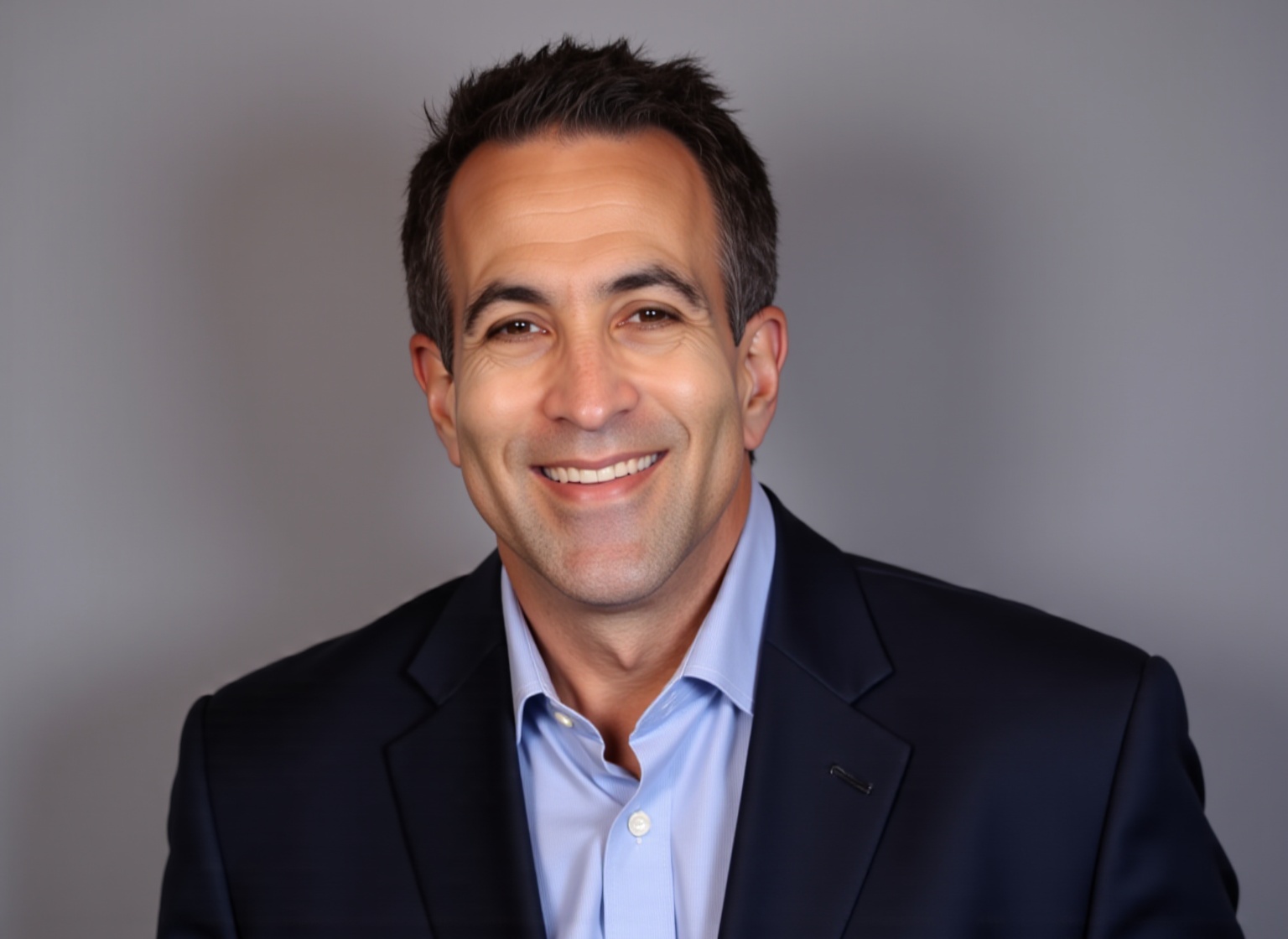
President
Mike Glasman is the President of Vitalpoints IT Services, a Southern California managed service provider helping businesses and nonprofits stay productive, secure, and supported through responsive remote and onsite IT services. Vitalpoints provides help desk support, cybersecurity, networking, Wi‑Fi, cloud solutions, compliance guidance, and technology consulting—with an emphasis on practical solutions that fit each client’s needs and budget.
Before founding Vitalpoints in 2013, Mike built a career in technology sales and channel leadership with organizations including Dell, APC by Schneider Electric, Ruckus Networks, Meru Networks, Accellion, and Arrow Electronics. His background spans enterprise infrastructure, networking, cloud, Wi‑Fi, channel strategy, and business development.


